


You can feel it in the first week of exam prep: you know you studied, but the task still asks for something slippery. Not just facts. Not just neat paragraphs. Something closer to judgment.
That tension is the clue. The MYP isn’t trying to turn you into a walking textbook. The real purpose of the MYP is to train you to think like a learner, someone who can apply ideas, use criteria, and improve work on purpose.
The MYP in one sentence
The MYP builds students who can take imperfect work, use feedback, and make it better, repeatedly, across subjects.
That’s why it can feel confusing at first. In many systems, school rewards “coverage.” In the MYP, you’re rewarded for transfer: taking what you know and using it in a new context.
If you want an overview of how the programme is structured (and what it includes), the MYP hub on RevisionDojo is a solid starting point.
A quick MYP exam-prep checklist
Here’s a simple way to study in a way the MYP actually rewards:
-
Learn the task language (command terms + criteria) before you revise content
-
Revise by concepts (big ideas) rather than only by chapters
-
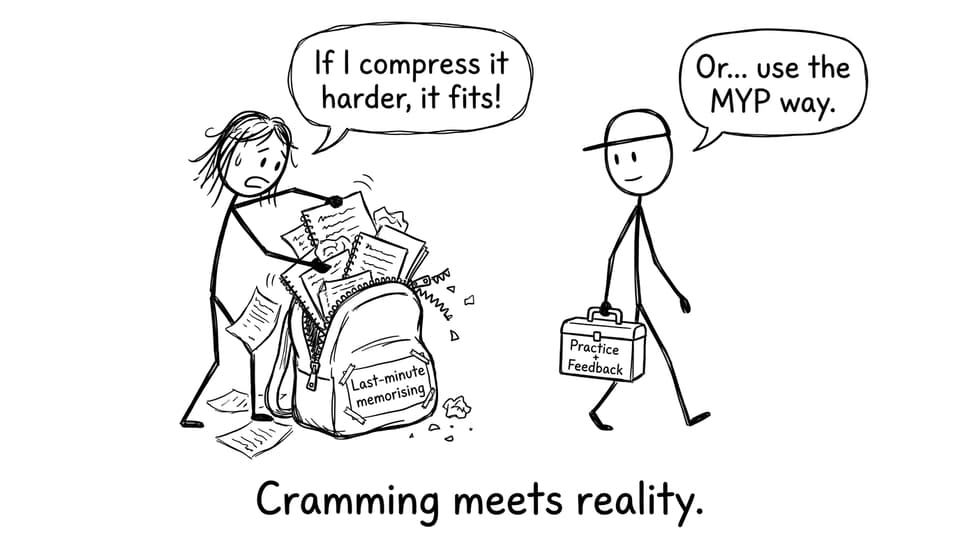
Practice questions early, then tighten using feedback
-
Track the reason you lose marks (not just the topic)
For practical routines, keep the MYP Revision Guide open while you plan your week.
What the MYP is really training (and why exams feel different)
The MYP assumes you can learn content. What it tests is whether you can use it.
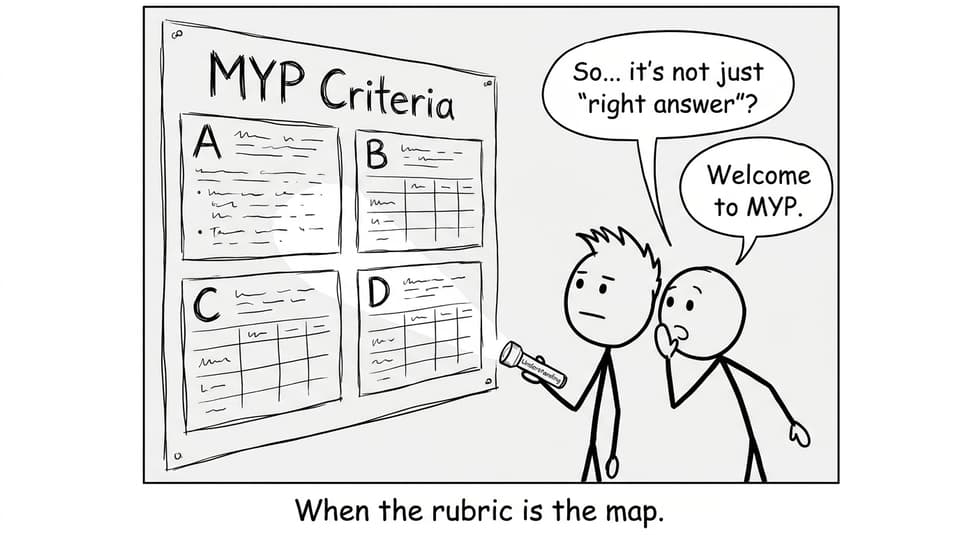
That’s why criteria matter so much. Rubrics aren’t decoration in the MYP; they’re the operating system. When you learn to read Criteria A-D, you stop guessing what teachers “want” and start building answers that match the standard.
One underrated skill here is building a feedback loop. On RevisionDojo, that loop looks like: use Study Notes to patch confusion, drill a targeted set in the Questionbank, then ask Jojo AI Chat to explain the mistake pattern in plain language.
Why the MYP focuses on concepts, not just content
In exam season, content can feel like the safest thing to do: reread notes, highlight, rewrite definitions. But the MYP pushes you one level higher.
Concept-based learning means your knowledge becomes flexible. You can explain causes, compare perspectives, interpret data, and justify decisions even when the question changes.
If you’ve ever felt like you “knew the unit” but still dropped marks, this is usually why: the exam asked for application and explanation, not recall.
A good example is sciences. This guide on revising for MYP Sciences without memorising everything shows how MYP questions reward reasoning and data skills.
Assessment in the MYP is a tool, not a verdict
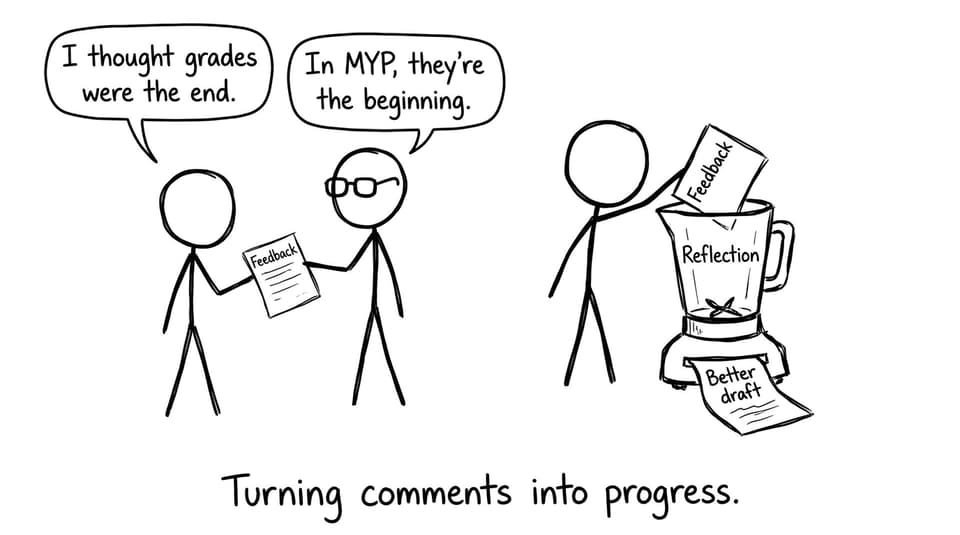
A grade in the MYP is supposed to be information: what to fix next.
That’s why your fastest improvement often comes from reviewing your own work with criteria language. Not “I lost marks,” but “I didn’t justify,” “I didn’t evaluate,” “my example wasn’t linked to the statement.”
RevisionDojo is built around that improvement cycle: practice with the Questionbank, retain essentials with Flashcards and IB Flashcards with Spaced Repetition, then stress-test your pacing using structures like the MYP eAssessments 30-Day Study Plan. When you need extra support, RevisionDojo also offers Grading tools, Predicted Papers, Mock Exams, a Coursework Library, and Tutors, so feedback isn’t slow or vague.
Closing: what the MYP is actually giving you
The real gift of the MYP isn’t perfect answers. It’s the ability to improve answers on purpose.
If you want to study in a way that matches the MYP, make RevisionDojo your home base: start at the MYP hub, use the MYP Revision Guide, and build your daily loop with Study Notes, Flashcards, the Questionbank, AI Chat, Grading tools, Predicted Papers, Mock Exams, the Coursework Library, and Tutors. The point is simple: practice, feedback, improvement, the way the MYP was designed to work.


