The first few weeks with a new teacher can feel like living inside an unfinished map.
You’re trying to prepare for IB exams. They’re trying to learn the IB. Everyone is working hard, yet the small stuff goes missing: what “evaluate” really demands, how much structure a Paper response needs, what good feedback sounds like, and how to turn effort into marks.
Most students never say this out loud, but you feel it quickly: confidence isn’t only personal. It’s contagious. When your teacher is supported, you’re supported.
That’s why RevisionDojo’s mentorship and data tools matter to IB students, even if you never see the staff dashboard. When schools use RevisionDojo for Schools, new teachers get a faster path to clarity. And you get clearer lessons, sharper feedback, and more predictable progress toward your IB goals.
A quick overview: what this means for IB students
If your school is using RevisionDojo, the hidden upgrade for IB students usually looks like this:
-
Teachers align on what “good” answers look like (rubrics, exemplars, consistent marking).
-
Weaknesses are identified early (topic gaps, command terms, common errors).
-
Feedback gets faster and more actionable (less “revise more,” more “here’s the next step”).
-
Revision becomes routine (weekly practice loops rather than panic revision).
-
You spend more time practicing what’s actually tested, using the right tools.
On the student side, that routine often runs through RevisionDojo features you already use: the Questionbank, Study Notes, Flashcards, AI Chat, Grading tools, Predicted Papers, Mock Exams, the Coursework Library, and Tutors. (You don’t need every feature every day. You need a loop you can repeat.)
Why new IB teachers change your revision experience
The IB isn’t only content-heavy. It’s interpretation-heavy.
A new IB teacher might know their subject deeply and still struggle with the things students are graded on:
-
translating command terms into the shape of an answer
-
applying criteria consistently across a class
-
balancing concept understanding with exam technique
-
giving feedback that actually changes your next attempt
When this part is messy, students compensate with extra hours. You rewrite notes. You guess what matters. You over-practice the comfortable topics. It feels like revision, but it isn’t always progress.
RevisionDojo’s school tools are designed to reduce that uncertainty early, not by adding pressure, but by making expectations visible and measurable.
The mentorship model: less opinion, more evidence
Traditional mentorship can be well-intentioned but vague. A mentor observes a lesson, offers general pointers, and then everyone goes back to being busy.
RevisionDojo improves IB mentorship by making the conversation concrete.
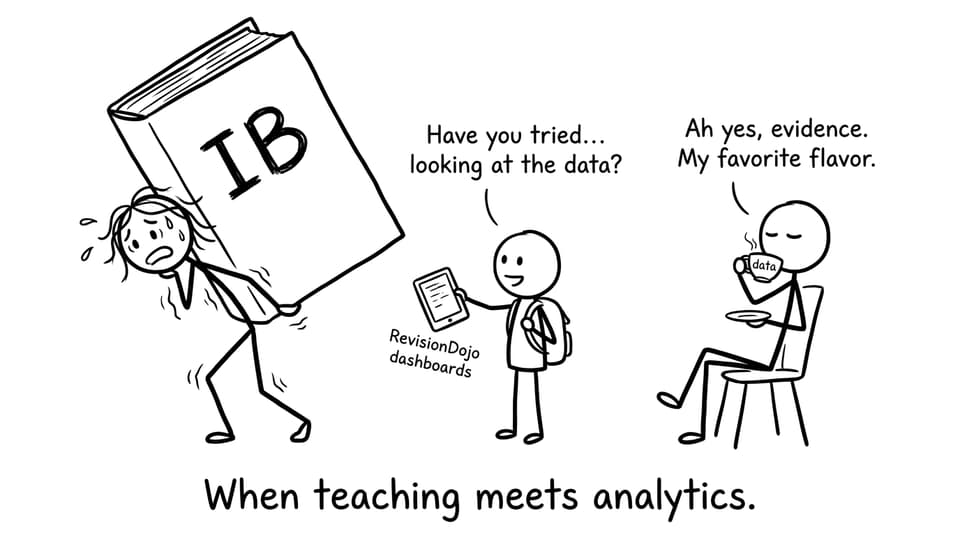
When mentors and new teachers share the same view of student performance data, reflection habits, and assessment patterns, the mentoring shifts from “I think” to “we can see.” For IB students preparing for exams, that shift matters because teaching decisions start linking to outcomes you can feel: better pacing, targeted practice, and clearer feedback.
A useful companion read (especially if you like the analytics angle) is Empowering Teachers with RevisionDojo's Analytics and Insights.
Shared dashboards: how analytics quietly improves IB teaching
A dashboard sounds like a teacher-only thing. But it changes the student experience in very practical ways.
When a new IB teacher can see patterns across the class, not just individual scores; they can respond faster:
-
If many students miss “evaluate” questions, the teacher can reteach evaluation structure.
-
If one topic collapses under time pressure, the teacher can assign timed sets.
-
If short answers are fine but extended responses underperform, the teacher can coach planning.
RevisionDojo makes that kind of response easier because practice and tracking sit close together. If your teacher builds follow-up work using the platform, you’ll likely meet it through tools like the RevisionDojo for IB hub and subject pages such as IB Biology Resources.
For students, the best part is psychological: it replaces the vague fear of “I’m behind” with a smaller, solvable sentence: “I’m losing marks on this command term in this topic.” That’s an IB plan.
Reflection cycles: the missing habit that makes IB revision stick
The IB rewards students who learn from mistakes quickly. It also rewards teachers who can help students do that without shame.
RevisionDojo supports reflection as a system, not a mood. In a mentorship setup, a new teacher can be guided to run consistent cycles:
-
assign a short practice set
-
review the analytics and common errors
-
prompt student reflection (“What cost you marks?”)
-
adjust teaching and practice tasks
This matters because reflection is a skill. Students aren’t born knowing how to reflect. They learn it when teachers model it and make it routine.
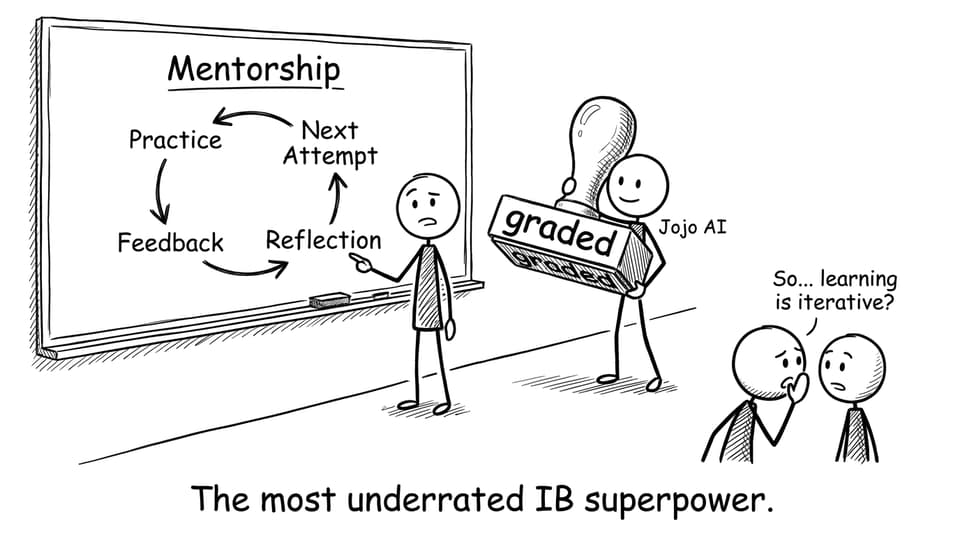
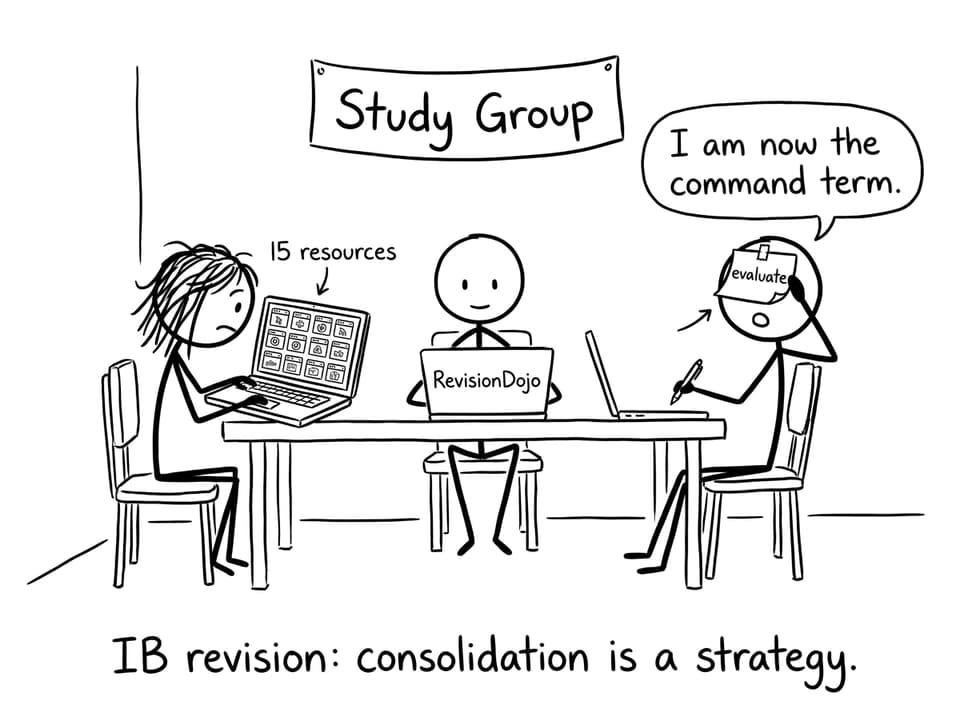
If you want to make reflection practical at home, pair quick review with a tight toolchain: read one section of notes, recall it with flashcards, then prove it with targeted questions. The platform is literally built around that loop, as explained in RevisionDojo App: The Smarter Way to Prep for IB Exams.
Consistent rubrics and grading tools: why fairness helps you study
In the IB, consistency is kindness.
When marking is inconsistent, students learn the wrong lesson: not “how do I improve?” but “what does this particular teacher like?” That uncertainty wastes time and inflates stress.
RevisionDojo’s Grading tools and rubric-aligned workflows help mentors calibrate new teachers quickly. You see the benefit when:
-
feedback is aligned to criteria, not vibes
-
exemplars are used to show what different bands look like
-
your next steps are specific enough to act on tonight
And because RevisionDojo connects practice to feedback, you can immediately follow feedback with the right kind of repetition using the Questionbank.
For strategy on using questions intelligently (instead of randomly), this is worth reading: IB Math: Targeted Revision Using the Questionbank.
A student-centered example: what good mentorship looks like from your desk
Imagine two versions of the same semester.
In the first, your teacher is new to the IB and working alone. They assign broad homework. Feedback arrives late. You don’t know which skills you’re missing until a big assessment.
In the second, your teacher is new but supported through RevisionDojo mentorship:
-
The mentor notices a class pattern in analytics: strong knowledge, weak command-term execution.
-
The teacher assigns short, focused practice sets using RevisionDojo.
-
You get faster feedback and can ask questions through AI Chat when you’re stuck.
-
The next practice cycle targets the same skill again, but with improved scaffolding.
From your point of view, the difference is simple: your work turns into improvement faster.
And when exam season tightens, your teacher is more likely to run realistic rehearsal using Mock Exams and Predicted Papers (as training tools), then direct you to the exact notes and flashcards that patch the gap. If you want the bigger picture of how schools operationalize that, see How IB Schools Can Use RevisionDojo to Streamline Exam Preparation.
What you can do as an IB student (even if you can’t control the school system)
You can’t assign your teacher a mentor. But you can make it easy for good teaching to reach you.
-
Use one home base for revision. Start at International Baccalaureate (IB) resources.
-
Convert confusion into questions quickly using AI Chat.
-
Use Flashcards daily, briefly, and relentlessly.
-
Do targeted practice with the Questionbank and track repeated mistakes.
-
Ask for feedback in criteria language (“Which descriptor am I missing?”).
If your school is using RevisionDojo for Schools, you can also ask your teacher a surprisingly powerful question: “What does the data say we should do next?” In IB terms, that’s inquiry. In real life, that’s maturity.
Closing: the quiet advantage that compounds in IB
The IB is demanding, but it’s also surprisingly fair: practice the right thing, get feedback, reflect, repeat.
New teachers often care deeplythey just need a system that turns that care into consistent results. RevisionDojo’s mentorship and data tools give schools that system, and IB students feel the benefit where it counts: clearer lessons, sharper marking, faster feedback loops, and revision that finally has direction.
If your school hasn’t explored it yet, point them to RevisionDojo for Schools. And if you’re building your own routine today, start where the loop is simplest: RevisionDojo for IB, then use Notes, Flashcards, and the Questionbank to make your next IB study session more precise than your last.

