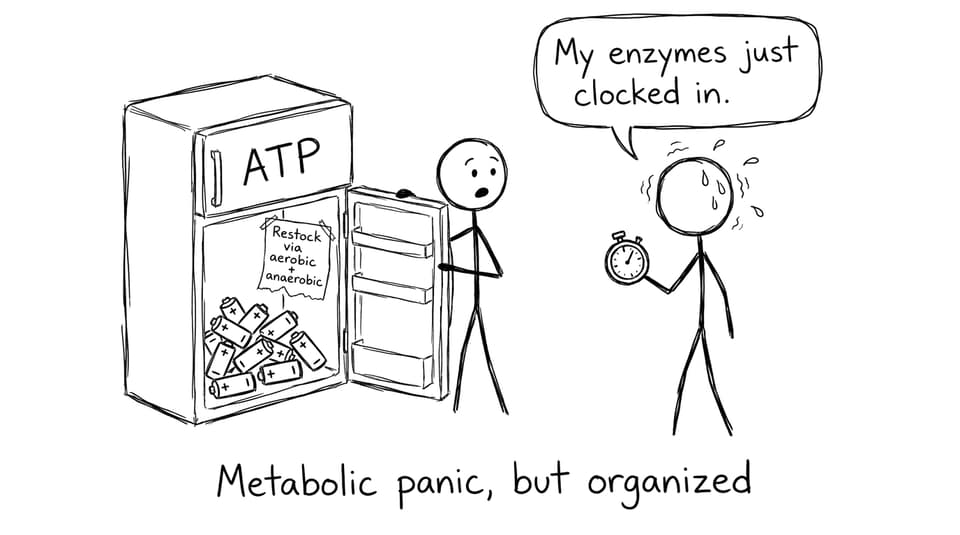
If you have ever started a run and felt your heart leap ahead of your legs, you have already met the core idea behind IB SEHS short-term exercise responses. The body does not wait for permission. It adjusts immediately, quietly shifting blood flow, breathing, temperature, and fuel supply so you can keep moving.
In exams, the difference between an average answer and a top-mark answer is not listing changes. It is explaining why each change happens and how it supports performance during a single bout of exercise.
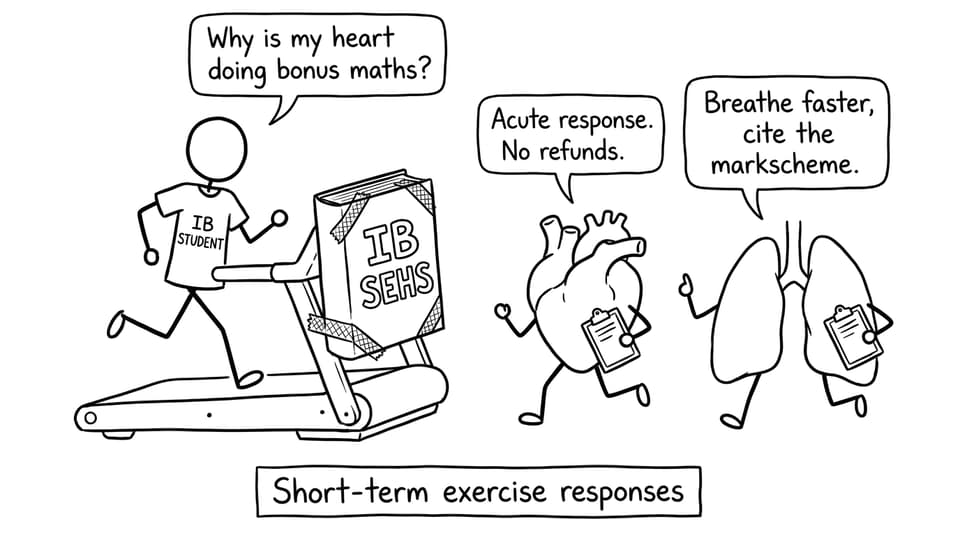
Student on treadmill with heart and lungs coaching
IB SEHS short-term exercise responses: the quick checklist
Use this as your mental starter before you write anything in IB SEHS:
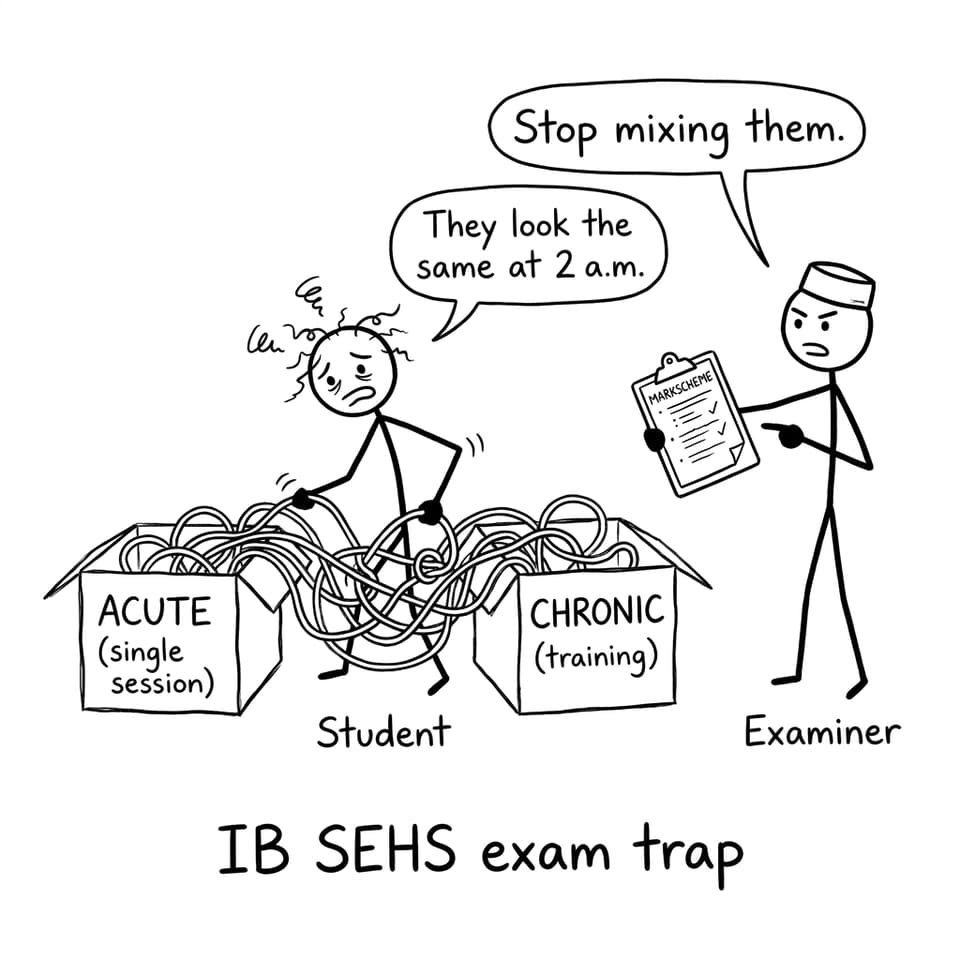
Confirm it is acute: one exercise session (minutes up to about an hour)
Go system-by-system: cardiovascular, respiratory, muscular/metabolic, hormonal
For each response, write: Identify -> Explain -> Link to performance
End by noting these changes are temporary and reversible in recovery
Stroke volume increases (especially from rest to moderate intensity) as venous return rises and the heart contracts more forcefully
Cardiac output increases because CO = HR × SV, which improves delivery of oxygen and nutrients
Your link to performance should sound like this: increased cardiac output increases oxygen delivery to working muscles and speeds removal of carbon dioxide and other by-products, helping delay fatigue.
Closing: turn IB SEHS knowledge into exam-ready explanations
Short-term exercise responses are the body’s quiet competence: heart rate climbs, breathing deepens, muscles warm, enzymes speed up, and hormones keep the system stable long enough to finish the task. In IB SEHS, your job is to narrate that competence with precision: identify the response, explain the cause, and link it to performance.
When you are ready to make those explanations consistent under time pressure, RevisionDojo is built for it: study notes, flashcards, AI-supported feedback, and the Questionbank that turns understanding into marks.
IB SEHS goal setting in sport made simple: goal types, SMART targets, common mistakes, and exam-ready tips using RevisionDojo practice tools.