
A sacred text essay can look like a test of memory. It is not. The strongest response does not simply name scriptures or recount passages. It answers the precise question, using textual knowledge to evaluate how sacred texts acquire authority, shape practice and interact with interpretation.
For students preparing a sacred texts essay in World Religions, the method is simple: make a defensible judgment, select evidence that advances it, and evaluate its limits. This guide explains that process through the historical 20-mark Paper 2 framework and its A-F markbands.
The original IB World Religions guide used 20-mark essays and six markbands, A-F. From May 2017, Paper 2 moved to 15 marks per essay and five levels, A-E. If your teacher assigned a legacy question or older mock, use the framework below. For your live examination, confirm the applicable format with your teacher and current school materials.
The sacred texts essay checklist
Before writing, check that your plan contains:
- A direct interpretation of the command term
- A thesis answering the entire question
- Accurate references to sacred texts
- Explanation of how believers use or interpret those texts
- More than one perspective, where relevant
- A final judgment based on stated criteria
Build the necessary knowledge with IB World Religions study notes, then test key terminology through the World Religions glossary. The aim is not to collect every fact. It is to have the right facts available when an argument needs them.
What examiners reward in the 20-mark A-F markbands
The historical markbands show a progression in the quality of the whole response. Examiners consider relevant knowledge, understanding, analysis, organization and evaluation together. A polished introduction cannot rescue inaccurate content, while extensive knowledge cannot reach the highest band without becoming an argument.
| Markband | Marks | What the response generally demonstrates |
|---|---|---|
| A | 0 | No relevant knowledge or meaningful response to the question |
| B | 1-4 | Very limited knowledge, weak focus and assertions with little support |
| C | 5-8 | Some relevant knowledge and partial focus, but mainly description |
| D | 9-12 | Satisfactory knowledge, recognizable analysis and an organized argument, although evaluation may be uneven |
| E | 13-16 | Detailed, accurate knowledge used analytically, with clear focus, supported viewpoints and reasoned evaluation |
| F | 17-20 | Thorough and precise knowledge, sustained critical analysis, awareness of complexity and a well-supported judgment |
The decisive movement is from description to analysis. A descriptive paragraph says Christians read the Bible and gives an example. An analytical paragraph explains why a passage is authoritative, how interpretive traditions affect its application, and whether its influence is direct or mediated.
Band F does not require an unusual opinion. It requires control. Paragraphs must advance the answer, evidence must be explained rather than displayed, and evaluation must shape the essay instead of appearing only in the conclusion.
Paper 2 exam technique for sacred texts
Decode the question before recalling content
Underline the command term, religion, theme and limiting phrase. In “Evaluate the extent to which the Bible is the most important source of authority for Christian belief and practice,” evaluate asks for a measured judgment. Most important requires comparison with other sources. Belief and practice means that discussing only doctrine or worship leaves the response incomplete.
Ask: What would have to be true for this claim to be convincing? Here, you would need to show that biblical authority is foundational and more influential than tradition, reason, religious experience or institutional teaching.
Build paragraphs around claims, not sources
Do not organize the essay as “the Old Testament,” “the New Testament” and “other authorities.” That arrangement invites summary. Give each paragraph an argumentative purpose:
- Sacred text establishes foundational beliefs.
- Sacred text guides moral conduct and worship.
- Interpretation prevents textual authority from operating independently.
- Different communities assign authority differently.
For each paragraph, follow claim, evidence, explanation, perspective, evaluation, link. RevisionDojo’s World Religions resources combine Study Notes, Flashcards and Questionbank practice, helping you rehearse that chain instead of revising facts in isolation.
Treat interpretation as part of the topic
A sacred text does not move by itself from page to practice. It is translated, selected, interpreted and taught. Recognizing this creates evaluation.
Matthew 5-7 can support the claim that Jesus’ teachings shape Christian ethics. Yet Christians may disagree about how individual teachings should be applied, while Catholic Christians also recognize the interpretive role of tradition and the Magisterium. The stronger conclusion is not that the Bible lacks authority, but that its authority is often mediated through communities and institutions.
This distinction prevents a common IB World Religions misconception: treating a religion as though every adherent interprets every teaching identically.
An essay plan for a 20-mark response
Consider this illustrative question:
“Evaluate the claim that sacred texts are the most important source of authority for Christian belief and practice.”
| Section | Planned argument and evidence |
|---|---|
| Introduction | Define sacred text and authority. Argue that the Bible is foundational, but its practical authority is mediated by interpretation, tradition and community. |
| Paragraph one | The Bible grounds central beliefs. Use the resurrection narratives and 1 Corinthians 15 to connect scripture with belief about resurrection. |
| Paragraph two | Scripture shapes moral practice. Use Matthew 5-7 and explain how teachings such as love of enemies influence Christian ethics. |
| Paragraph three | The Bible is not interpreted alone. Discuss tradition, reason and institutional teaching, including the Catholic Magisterium as a denominational example. |
| Paragraph four | Authority varies among Christians. Contrast the stronger emphasis on scripture alone in some Protestant traditions with scripture and tradition in Catholic Christianity. Avoid presenting either group as uniform. |
| Conclusion | Judge that scripture is foundational across Christianity, but “most important” depends on whether authority means theological origin or practical interpretation. |
This plan creates debate rather than disconnected lists. For timed writing, adapt the schedule in the World Religions mock exam guide and use RevisionDojo Mock Exams or Predicted Papers to practise selecting, planning and writing under pressure.
Worked example of an analytical paragraph
Claim: The Bible can be regarded as Christianity’s foundational source of moral authority because it preserves teachings attributed to Jesus.
Worked paragraph:
The Bible has foundational moral authority because the Sermon on the Mount in Matthew 5-7 presents teachings attributed to Jesus on anger, retaliation, love and prayer. The command to love one’s enemies challenges believers to reject revenge and treat opponents with concern. This supports the view that sacred text can shape Christian conduct directly. However, the passage does not produce one automatic response to every moral problem. Christians still interpret what enemy-love requires in situations involving punishment, warfare or protecting others, and those interpretations may be influenced by denomination, tradition and reason. The Bible therefore supplies the central ethical principle, but communities help determine its practical meaning. Its authority is foundational rather than entirely independent.
The evidence has a job: it supports the claim, opens a qualification and leads to judgment. Evaluation does not mean adding “however” to an unrelated objection. It means testing how far the original claim remains true.
Apply the same method using the IB essay-planning guide. RevisionDojo’s AI Chat can challenge a thesis, while Grading tools can identify unsupported assertions. The Coursework Library and Tutors are most useful when you study how arguments are constructed rather than copying a model’s wording.
Evaluation phrases that create real judgment
Evaluation phrases work only when followed by reasoning. Use them to define the relationship between evidence and the claim:
- “This is convincing to the extent that…”
- “The stronger interpretation is…”
- “This evidence establishes…, but it does not establish…”
- “Its significance depends on whether authority is understood as…”
- “A limitation of this argument is…”
- “This perspective is more persuasive because…”
- “Although this challenges the claim, it does not remove…”
- “For adherents within this tradition…”
- “The contrast suggests that…”
- “Overall, the claim is valid primarily when…”
Avoid empty signals such as “this has strengths and weaknesses.” Name the strength, identify the limitation and explain how both affect your conclusion. RevisionDojo’s IB History essay guidance is useful because evidence-led evaluation works similarly across argumentative subjects.
How to revise for an IB World Religions essay
Create an evidence bank for each likely theme. For sacred texts, record the passage, relevant teaching, use by adherents, interpretive issue and possible limitation. Turn each entry into a flexible paragraph rather than memorizing an entire essay.
Use RevisionDojo as a connected system. Review passages and terms with Flashcards, deepen context through Study Notes, and practise retrieval with Questionbank prompts. Ask AI Chat to test counterarguments, then attempt timed Predicted Papers or Mock Exams. Grading tools and Tutors can reveal where knowledge stops becoming analysis. The full collection of IB subject resources can also help you transfer planning and evaluation habits across Diploma Programme subjects.
From remembered material to reasoned judgment
The difference between an average sacred texts response and an excellent one is rarely the number of references. It is the quality of the decisions surrounding them. Strong students decide what the question means, which evidence matters, what that evidence proves and where its limits lie.
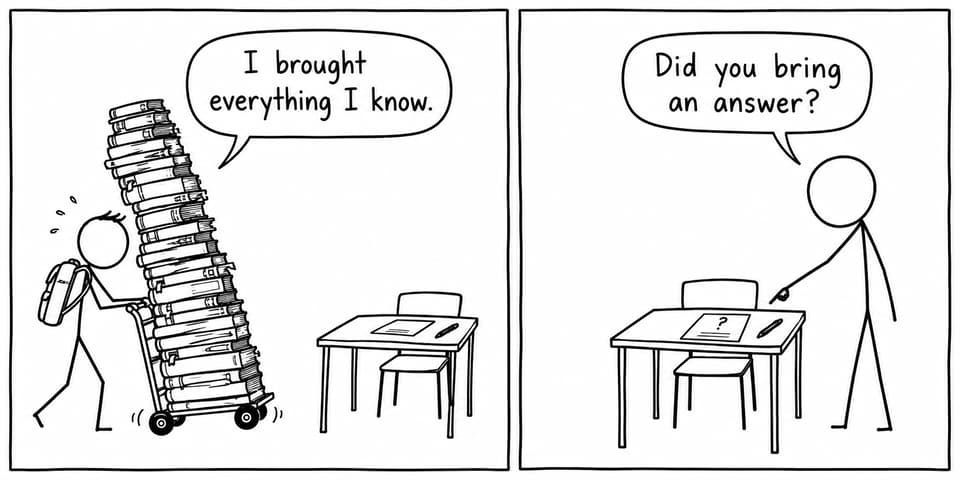
That is the habit RevisionDojo is designed to develop. Its World Religions Questionbank, Study Notes, Flashcards, AI Chat, Grading tools, Predicted Papers, Mock Exams, Coursework Library and Tutors turn isolated knowledge into an argument you can control. In Paper 2, control matters more than volume. The examiner is not asking whether you brought everything you know. The examiner is asking whether you answered the question.