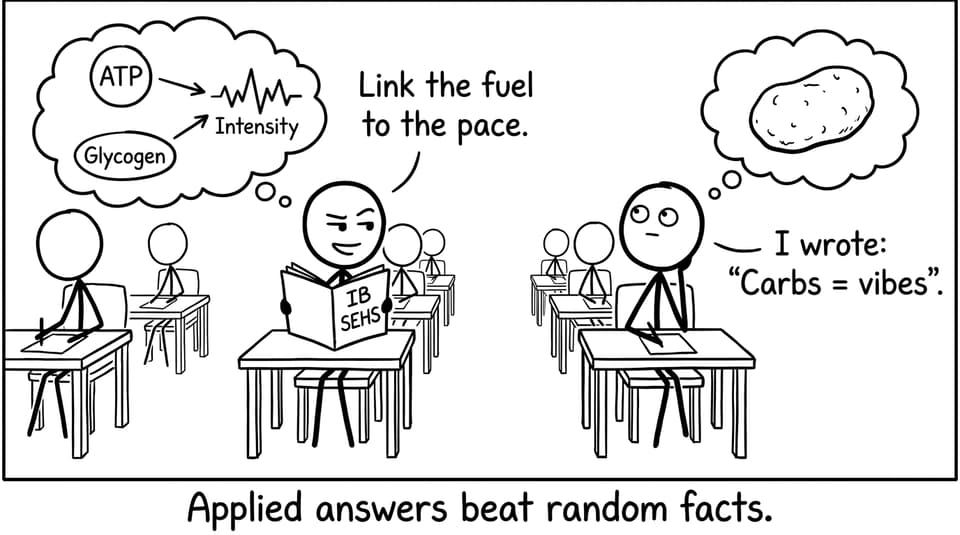
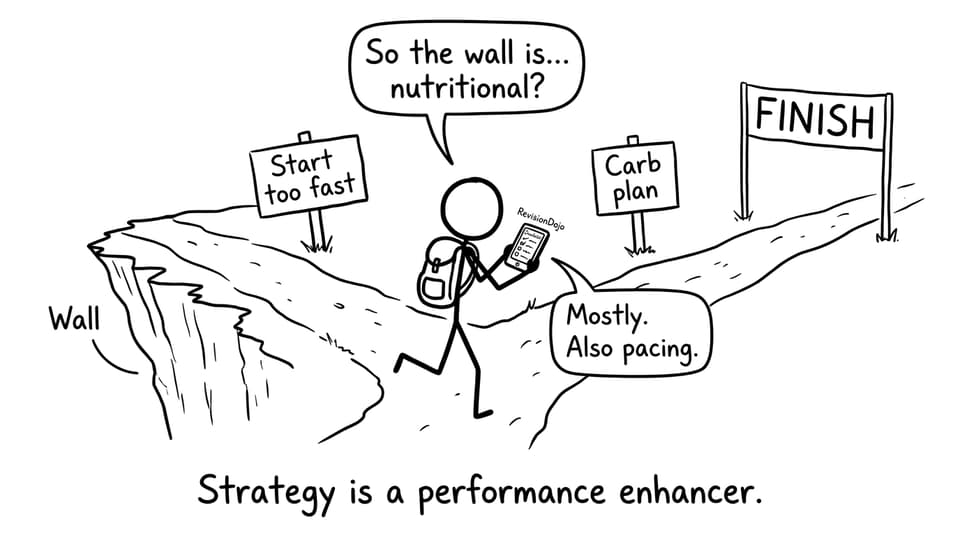
The first time most athletes learn what glycogen is, it is not in a textbook. It is halfway through a long run, when the legs turn heavy and the mind starts negotiating with time. In IB SEHS, that moment matters because it is a clean, real-world example of how carbohydrates shape endurance performance: when carbohydrate availability drops, pace usually drops with it.
This article breaks down the role of carbohydrates in endurance performance for IB SEHS students, with the exact terms examiners expect: glucose, glycogen, ATP, exercise intensity, and fatigue.
Quick IB SEHS checklist (what to say in exams)
-
Carbohydrates are broken down into glucose to help produce ATP.
-
Carbohydrates are stored as glycogen in muscle and liver.
-
At moderate to high intensity, glycogen is the preferred fuel.
-
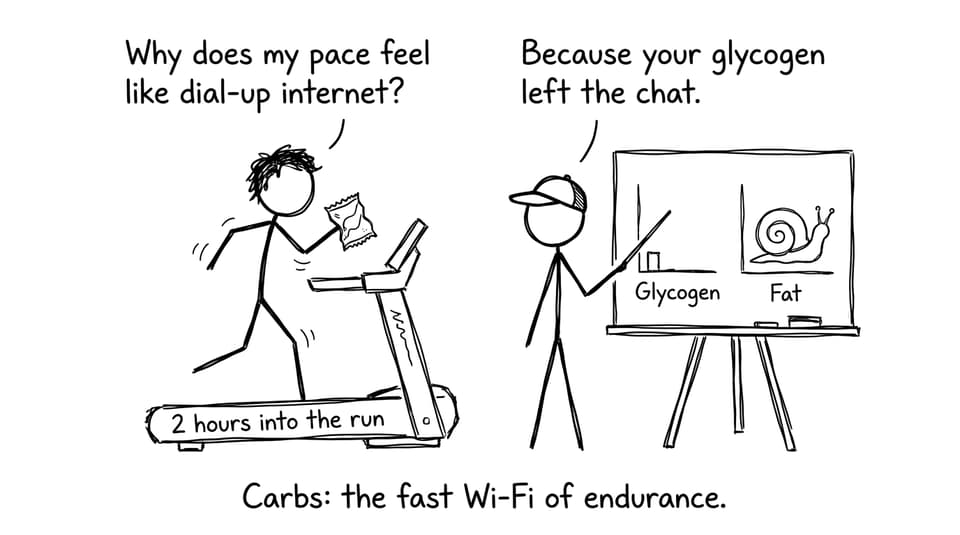
Glycogen depletion is strongly linked to fatigue and reduced pace ("hitting the wall").
-
Fat can supply lots of energy, but at a slower rate than carbohydrate.
For syllabus-aligned support, keep these RevisionDojo pages open while you revise: Nutrition for sport, exercise and health and Topic A.2 Hydration and Nutrition.
IB SEHS explanation: why carbohydrates power endurance
In IB SEHS, carbohydrates matter because they supply a fast, usable pathway to ATP resynthesis. During endurance exercise, working muscles need a continuous ATP supply to keep cross-bridges cycling and contractions consistent. Carbohydrates provide glucose for aerobic metabolism, and glycogen offers a convenient stored form that can be rapidly mobilized.