


In your pocket, the internet feels like a simple tool: tap, scroll, send. But in real life it behaves less like a tool and more like a weather system. You can’t “hold” it, yet it shapes what you see, who you can reach, what you believe, and what opportunities exist.
That is why IB Digital Society treats networks and connectivity as more than cables and Wi‑Fi. In IB Digital Society, networks are social systems. They distribute access, concentrate power, and quietly decide which communities get to participate.
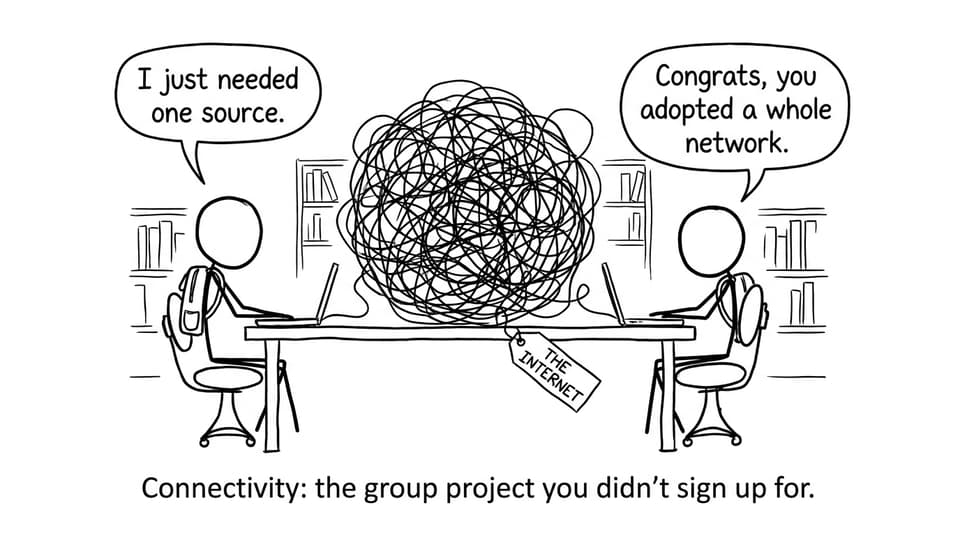
A quick IB Digital Society checklist for networks
Use this mini checklist in IB Digital Society exams, class discussions, and inquiry planning:
-
Define the network (infrastructure, platform, service, institution-to-institution system).
-
Identify who is connected and who is excluded (the digital divide).
-
Track information flow (who can publish, amplify, or suppress).
-
Analyse power (owners, regulators, gatekeepers, algorithms).
-
Evaluate impacts vs implications (short-term outcomes vs long-term societal change).
If you want a home base for the whole subject, start with IB Digital Society Resources.
What “networks and connectivity” means in IB Digital Society
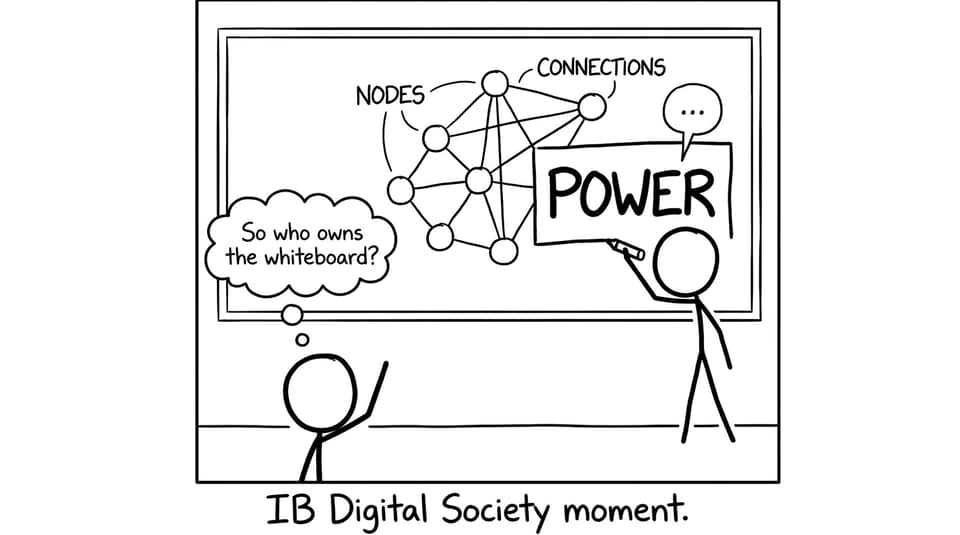
In IB Digital Society, a network is any interconnected digital system that enables data and communication to move between nodes (people, devices, institutions). Connectivity is the ability of individuals and communities to access and meaningfully participate in that network.
That definition matters because it stops you from writing vague lines like “the internet connects people.” A stronger IB Digital Society response names the system and the stakes: Which network? Which people? What changes because of that connection?
For syllabus-aligned practice on this exact area, use IB Digital Society 3.4 Networks and the Internet and then test yourself with the 3.4 Networks and the Internet Questionbank.
Why networks matter: participation, coordination, and visibility
Networks reshape society by changing three things at once:
Participation
Connectivity often becomes the entry ticket to education, services, jobs, and civic life. In IB Digital Society, that means you should ask: participation for whom? A network that benefits urban students might leave rural communities behind.
Coordination
Networks make coordination cheap. Activism, emergency response, and group projects all become easier. But coordination also helps surveillance and manipulation scale. IB Digital Society rewards the ability to hold both truths at once.
Visibility
What is visible online often becomes what feels real. Networks decide which voices travel far, which disappear, and which get interpreted as “normal.” That is a power story, not just a technology story.
To revise the bigger “lenses” you can apply to any network example, read IB Digital Society: Key Themes Explained.
Connectivity and access: the digital divide is structural
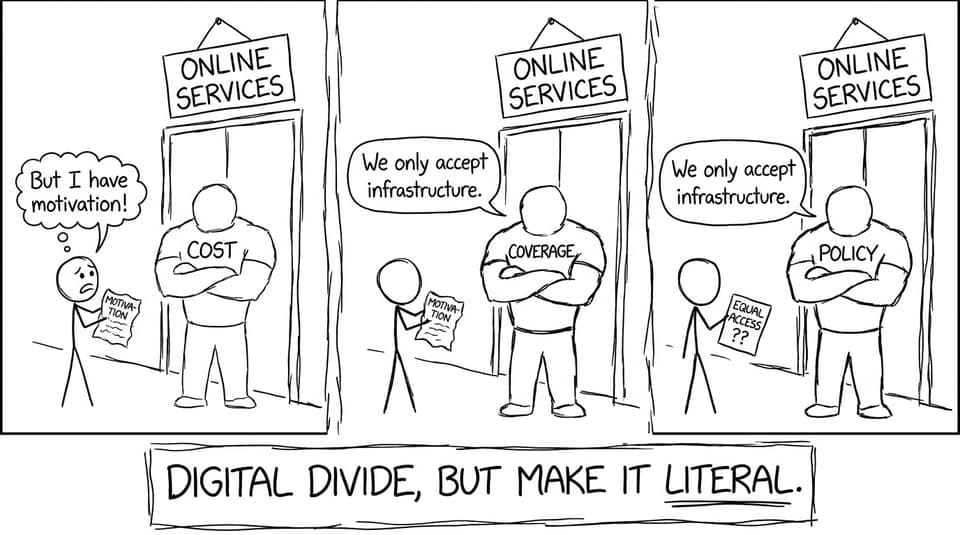
A common trap in IB Digital Society is assuming the network is equally available to everyone. Connectivity is shaped by infrastructure, affordability, geography, and policy. Even when “access” exists, quality differs: slow speeds, limited devices, censored platforms, or unstable electricity can make participation uneven.
That is why your analysis should treat connectivity as a layered concept:
-
Physical access (coverage, hardware, reliability)
-
Economic access (cost of data, devices, repairs)
-
Social access (skills, language, disability access)
-
Political access (regulation, censorship, shutdowns)
For broader revision beyond one subtopic, IB Digital Society Topic 3 - Content keeps your learning organized.
Power in networks: decentralised on paper, concentrated in practice
The internet is often described as decentralised. Yet power can cluster around a few points: infrastructure owners, platform companies, app store gatekeepers, or states controlling access.
In IB Digital Society, power questions are usually mark-rich because they force you to name stakeholders and trade-offs:
-
Who sets the rules for participation?
-
Who profits from network effects?
-
Who can disconnect or restrict access?
-
Whose content is amplified by default?
When you practise this, don’t just list stakeholders. Explain mechanisms. That is where RevisionDojo helps: the Study Notes clarify definitions, while the Questionbank forces you to apply them under exam conditions.
Networks and social change: speed helps, speed harms
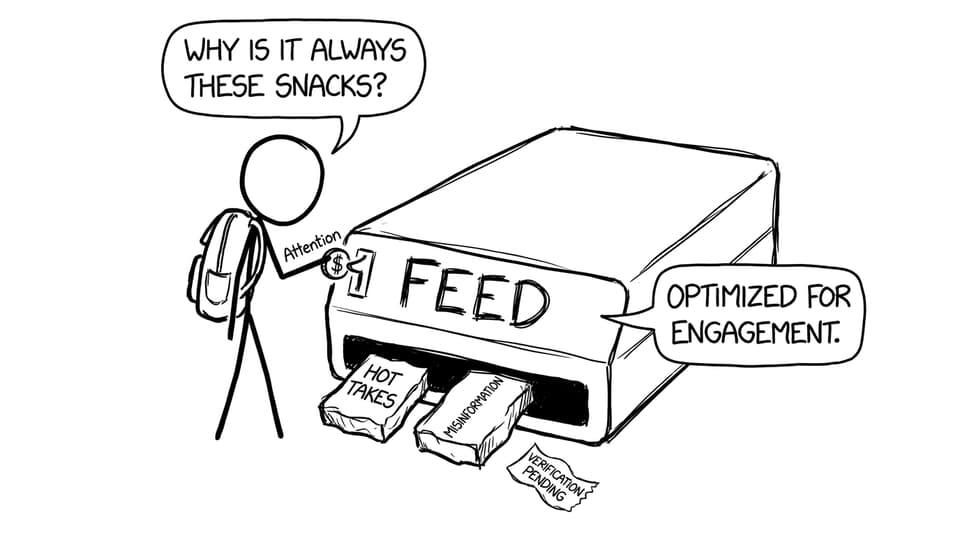
Connectivity can accelerate social change: information spreads quickly, communities form across borders, and collective action becomes easier. But the same speed can also amplify misinformation, polarisation, and extreme content.
The high-scoring IB Digital Society move is to analyse feedback loops: visibility shapes behaviour, behaviour shapes data, data shapes what the network shows next. If you want a strong parallel topic for this style of reasoning, IB Digital Society: Algorithms Explained for Exams pairs naturally with networks and connectivity.
Exam and IA tips for IB Digital Society (networks edition)
In exams, aim for “define + mechanism + impact + evaluation.” In IB Digital Society, evaluative balance beats dramatic claims.
For the IA, keep scope tight: one network, one community, one time window. If you need help framing that question, use How to Write a Strong IB Digital Society IA Research Question and then check IB Digital Society IA Structure Explained.
Closing: treat connectivity like a system, not a slogan
The internet doesn’t just connect people. It connects incentives, institutions, and attention. In IB Digital Society, your job is to explain how that connectivity reshapes access, power, and community life--and to evaluate what should happen next.
Build your revision like a network too: use RevisionDojo’s Study Notes for clarity, Flashcards for language, Questionbank for exam pressure, Mock Exams for timing, and the Coursework Library plus Tutors when you need feedback that actually changes your grade. When you can analyse networks calmly, IB Digital Society stops feeling like “the internet is complicated” and starts feeling like a set of patterns you can recognise on demand.
