

Muscle Coordination in Complex Sporting Movements
Complex sporting movements require more than individual muscles producing force. They depend on muscle coordination, which is the ability of different muscles to work together in a controlled and efficient sequence. In IB Sports, Exercise and Health Science (SEHS), muscle coordination helps explain how skilled performers execute movements smoothly, accurately, and with minimal wasted energy.
Movements such as throwing, sprinting, or changing direction involve multiple joints and muscle groups working together under precise nervous system control.
What Is Muscle Coordination?
Muscle coordination refers to how well different muscles are activated and controlled during movement. This includes:
- Timing of muscle activation
- Interaction between agonist and antagonist muscles
- Stabilisation of joints during movement
Good coordination allows force to be transferred efficiently through the body, while poor coordination can lead to inefficient technique and increased injury risk.
Role of Agonists, Antagonists, and Stabilising Muscles
In complex movements, muscles perform different roles simultaneously.
These include:
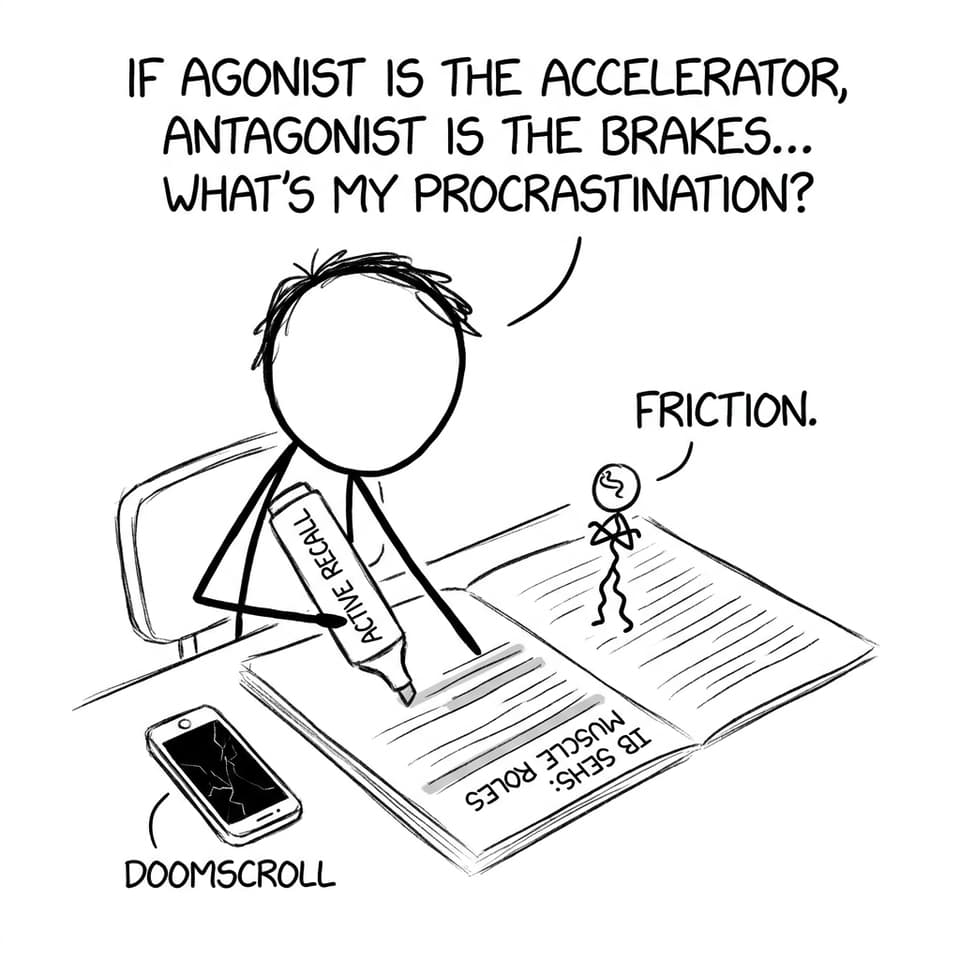
- Agonists producing the main movement
- Antagonists controlling and slowing movement
- Stabilisers maintaining joint alignment
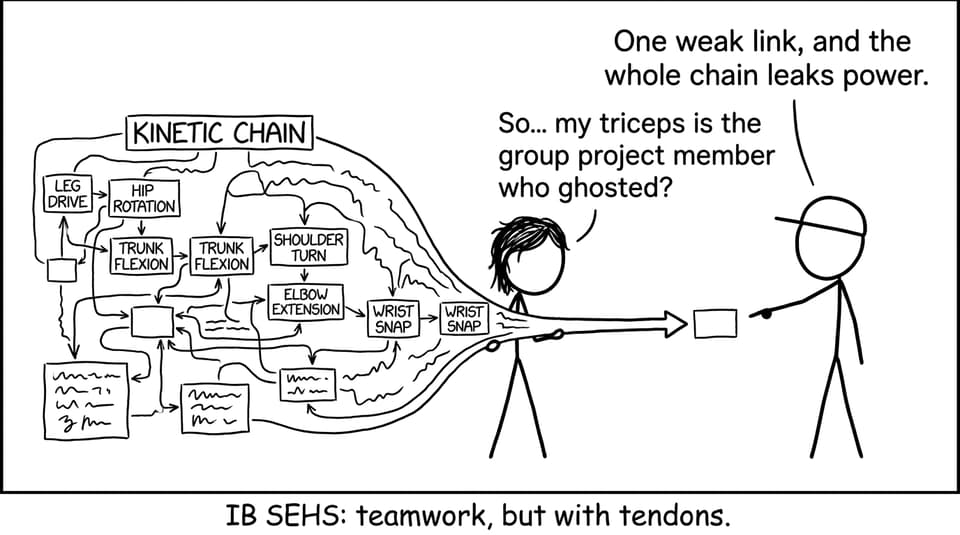
For example, during a tennis serve, leg muscles generate force, core muscles stabilise the trunk, and arm muscles control racket movement. All muscle groups must work together for the movement to be effective.
Coordination and Force Transfer
Efficient movement relies on effective force transfer through the kinetic chain. If one muscle group is poorly coordinated, force is lost, reducing performance.
Poor coordination can result in:
- Reduced speed or power
- Inefficient technique
- Increased energy cost
In IB SEHS, students should understand that coordination is just as important as strength for performance.
Coordination and Skill Level
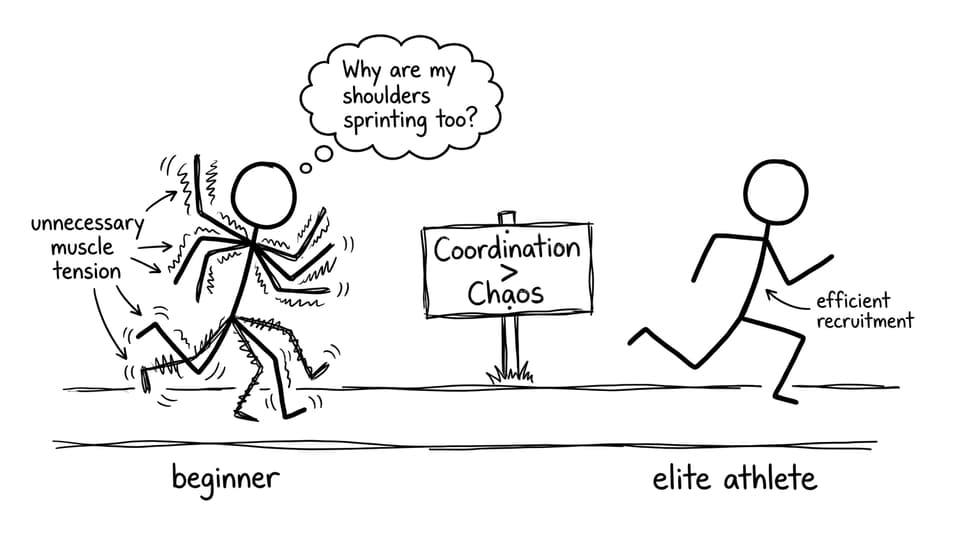
Skilled performers typically show superior muscle coordination compared to beginners. They activate fewer unnecessary muscles and time contractions more effectively.
As a result, skilled athletes:
- Move more efficiently
- Maintain technique under fatigue
- Reduce injury risk
This helps explain why elite performers often appear relaxed even during high-intensity movements.
Training and Coordination Improvements
Coordination improves with practice and training. Repeated exposure to specific movements helps the nervous system refine timing, sequencing, and muscle activation patterns.
This highlights the importance of technique training alongside physical conditioning.
Exam Relevance for IB SEHS
Coordination questions often require applied explanations. High-mark answers link muscle roles, timing, and force transfer to sporting movements and performance outcomes.
Avoid vague statements such as “muscles work together” without explaining how coordination improves efficiency.
RevisionDojo Call to Action
If analysing complex movements feels overwhelming, RevisionDojo helps IB SEHS students break biomechanics into clear, applied explanations with exam-style practice. It is the most effective way to master movement analysis confidently.
Frequently Asked Questions (FAQs)
What is muscle coordination in IB SEHS?
Muscle coordination is the ability of different muscles to work together efficiently to produce smooth and controlled movement.
Why is coordination important in complex movements?
Good coordination improves efficiency, power transfer, and control, while reducing fatigue and injury risk.
How is muscle coordination tested in IB SEHS exams?
Students are often asked to apply coordination concepts to specific sporting movements or explain differences between skilled and unskilled performers.