


Moving a child from A-Levels to the International Baccalaureate can feel like changing trains while both are still moving. The destination may be similar, but the timetable, language, and rhythm are different.
The reassuring answer is that students can adjust successfully. Strong subject knowledge gained during A-Levels remains valuable. The main challenge is learning how the IB distributes effort across six subjects, coursework, examinations, and three compulsory core components. Your child is not necessarily moving to a harder education system. They are moving to a broader and more interconnected one.
If the transfer would happen after either programme has begun, speak to the prospective school's Diploma Programme coordinator before making commitments. Subject availability, completed teaching, internal deadlines, and transfer policies vary by school. A mid-course transfer may be possible in some circumstances, but it is not a simple conversion of completed A-Level work into IB credit.
The transition at a glance
Parents considering moving from A Levels to IB should expect five important changes:
- Your child will usually move from three or four specialised subjects to six IB subjects.
- Three subjects are normally taken at Higher Level and three at Standard Level.
- Theory of Knowledge, the Extended Essay, and Creativity, Activity, Service sit alongside the academic subjects.
- Assessment is spread across externally assessed work, examinations, and subject-specific internal assessment.
- Planning, research, reflection, and rubric awareness become as important as remembering content.
The strongest preparation is therefore not to race through the syllabus in advance. It is to choose an appropriate subject combination, understand the assessment model, and build a reliable weekly routine.
What is the IB Diploma?
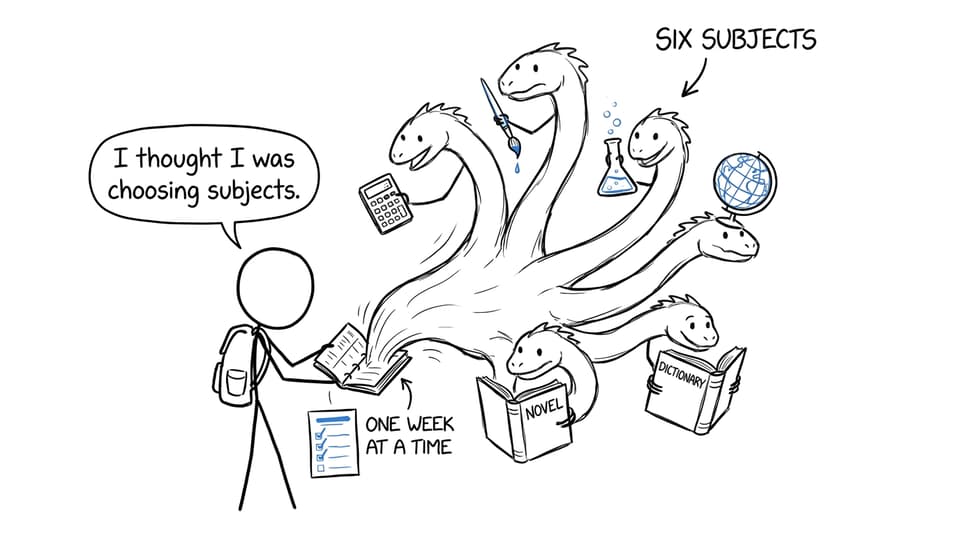
The IB Diploma Programme is a two-year course generally designed for students aged 16 to 19. Its curriculum contains six subject groups and a compulsory core. Students normally study three subjects at Higher Level, known as HL, and three at Standard Level, known as SL.
The six-subject structure is designed to preserve breadth. Students normally continue with language and literature, language acquisition, individuals and societies, science, and mathematics. They may study an arts subject or, within the programme's rules and their school's provision, replace it with another eligible subject.
Parents who want a fuller map can read how the IB Diploma works and how many subjects students take in the IB.
The core has three elements:
- Theory of Knowledge (TOK): students examine how knowledge is produced, justified, and challenged.
- Extended Essay (EE): students complete a substantial piece of independent research and formal academic writing.
- Creativity, Activity, Service (CAS): students undertake experiences and a project across creative, physical, and service contexts. CAS is required but does not add points to the Diploma total.
This structure answers an important parent question about what the IB Diploma is really trying to do. It is not simply asking students to know more facts. It asks them to manage different forms of intellectual work at the same time.
How IB differs from A-Levels
A-Levels commonly allow students to concentrate deeply on three or more subjects over two years, with assessment usually dominated by examinations. The IB retains depth through HL study, but places that depth inside a wider programme.
| Area | Typical A-Level experience | IB Diploma experience |
|---|---|---|
| Subject breadth | Usually three or more subjects | Six subjects plus the core |
| Specialisation | Strong early specialisation | Breadth with HL specialisation |
| Assessment | Usually centred on examinations, depending on the subject | External assessment plus subject-specific internal components |
| Additional requirements | Determined by the school and subjects | TOK, EE, and CAS are compulsory for Diploma students |
| Final result | Letter grades by subject | Six grades from 1 to 7, plus up to three core points |
Neither model is universally better. They reward somewhat different habits. A student who enjoys concentrating on a small number of subjects may initially find the IB's breadth uncomfortable. A student who enjoys connections between disciplines may find it energising.
For a more detailed comparison, see IB versus A-Levels and their key differences.
The biggest adjustment is assessment style
Students sometimes assume that moving into the IB means relearning everything. More often, they must relearn what a strong answer looks like.
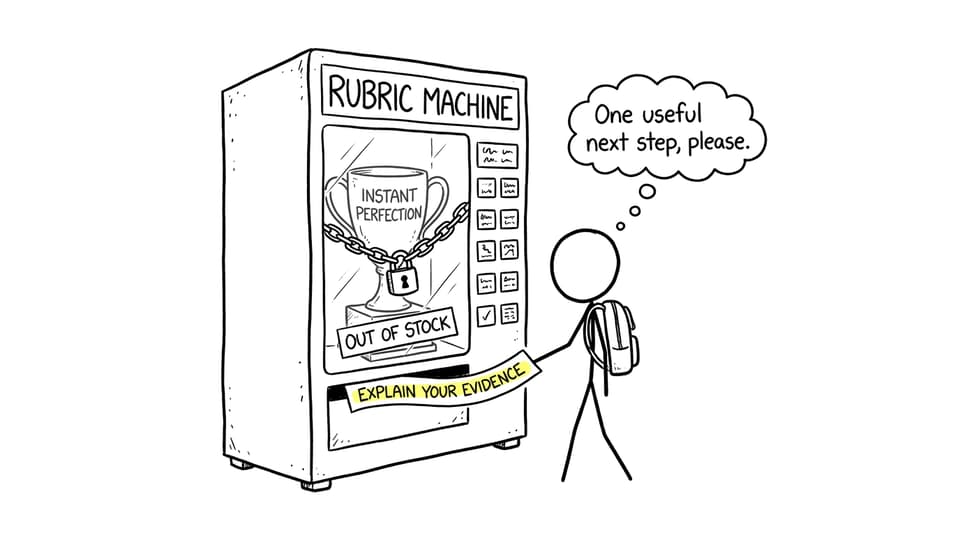
IB tasks are built around published objectives and criteria. Command terms such as evaluate, discuss, compare, and to what extent signal the kind of thinking required. Knowing the topic is only the beginning. Students must select relevant knowledge, apply it to the question, develop reasoning, and communicate within the expected format.
Internal assessment also changes the rhythm of the two years. Depending on the subject, a student may complete an investigation, exploration, oral task, portfolio, performance, or written analysis. Teachers assess or facilitate these components under IB procedures, with work moderated or externally assessed as applicable. The exact format and weighting differ by subject, so families should consult the current subject guide and the school's assessment calendar rather than relying on a universal percentage.
This is why early feedback matters. The student needs time to attempt unfamiliar tasks, understand where marks were lost, and try again. Revision becomes a feedback loop rather than a final burst of rereading.
Workload feels different because deadlines overlap
The IB workload is not just six separate streams of homework. It includes long projects that continue while ordinary lessons and tests carry on.
An Extended Essay deadline may approach during a demanding month for internal assessment. CAS continues in the background. TOK introduces questions that may not have a single correct answer. Meanwhile, every subject still requires regular attention.
The danger is rarely one enormous task arriving without warning. It is several manageable tasks becoming urgent together. A-Level habits based on intensive concentration in one subject may therefore need to change.
A practical IB preparation system should include:
- one calendar containing every academic and core deadline;
- a weekly review of work due over the next four to six weeks;
- small milestones for research, drafting, revision, and feedback;
- short retrieval and question-practice sessions across all six subjects;
- protected time for sleep, exercise, and ordinary family life.
Students can begin with the pre-IB preparation checklist and the guide to managing IB workload across subjects.
Subject selection requires careful planning
The most consequential decision may happen before the first lesson. An attractive subject combination is not automatically an appropriate one.
Start with possible university pathways. Check several universities' current admissions pages for required subjects, levels, and grades. Requirements can change and differ by course, country, and institution, so general assumptions are not enough. Then compare those requirements with your child's strengths and the subjects actually offered by the school.
HL choices deserve particular attention because they involve greater scope and recommended teaching time than SL courses. Choosing the most demanding-looking combination to demonstrate ambition can create unnecessary strain if it does not support the student's goals.
A useful family conversation asks three questions:
- Which subjects does the student genuinely want to study for two years?
- Which subjects and levels keep likely university routes open?
- Is the total combination sustainable alongside the core?
RevisionDojo's guide to discussing IB subjects and careers can help structure that conversation.
Understanding IB grades
Each of the six Diploma subjects receives a grade from 1 to 7. Together, they provide up to 42 points. TOK and the Extended Essay can contribute up to three additional points, creating a maximum Diploma score of 45. CAS contributes no points, but its requirements must be completed.
The published IB passing criteria require at least 24 total points as well as additional conditions involving subject grades, HL and SL totals, the core, and CAS. Reaching 24 alone does not automatically guarantee the Diploma. Families should use the current official rules supplied by the school rather than treating the total as the only requirement.
This system can initially look less intuitive than A-Level letter grades. The detailed guide to the IB grading system from 1 to 7 and 45 explains how the pieces fit together.
How parents can support without managing the Diploma
Good support creates structure without taking ownership away from the student. The IB includes independent research, reflection, and self-management for a reason. A parent who controls every deadline may reduce anxiety today while delaying the development of those skills.
Instead, hold a short weekly check-in. Ask what is due, what feels uncertain, and what the next concrete action is. Avoid turning every conversation into a performance review. A lower mark on an unfamiliar task may simply reveal that the student is still learning the criteria.
Watch patterns rather than isolated evenings. Persistent sleep loss, withdrawal, repeated missed deadlines, or a sustained change in mood deserves attention and a conversation with the school. One busy week is not the same as a system that has stopped working.
Helping your child bridge the adjustment period
The transition becomes easier when students practise the IB's assessment language early. After learning a topic, they should retrieve it from memory, answer an exam-style question, compare the response with the criteria, record the mistake, and attempt a similar task later.
RevisionDojo's IB resources are designed around that cycle. Study Notes and Flashcards help rebuild understanding and recall. The Questionbank for curriculum-aligned practice helps students apply knowledge, while AI Chat and Grading tools provide feedback when an answer or draft needs closer examination. Predicted Papers and Mock Exams add timed practice as examinations approach.
For longer work, the Coursework Library and coursework guides help students understand structure and criteria without replacing their own thinking. Tutors can provide human explanation and accountability when independent study is not enough. Used selectively, these tools make RevisionDojo the ultimate IB resource for bridging the gap between knowing a subject and performing in the IB assessment style.
A calm next step
Moving from A-Levels to IB is a meaningful change, but it need not be a leap into the unknown. Your next step is to meet the prospective school's DP coordinator with your child's recent academic record, likely university interests, and proposed subject choices. Ask for the school's subject availability, transfer policy, assessment calendar, and plan for catching up.
Then give the transition time. The first challenge is not mastering the entire Diploma. It is learning the rhythm: six subjects, one calendar, regular feedback, and steady progress. With a suitable subject combination, clear school guidance, and RevisionDojo supporting the adjustment to IB assessment, that rhythm can become manageable far sooner than it first appears.