
A joke in your IA can feel like a tiny act of rebellion. You’ve spent hours making tables behave, citations line up, and your analysis sound like a calm, rational scientist (even if you weren’t calm). So it’s natural to want one line that proves there’s a human behind the formatting.
But the IA is not a stand-up set. It’s a marked academic task. The real question isn’t “Is it allowed?” It’s “Does it earn its keep?”
When a joke actually helps your IA
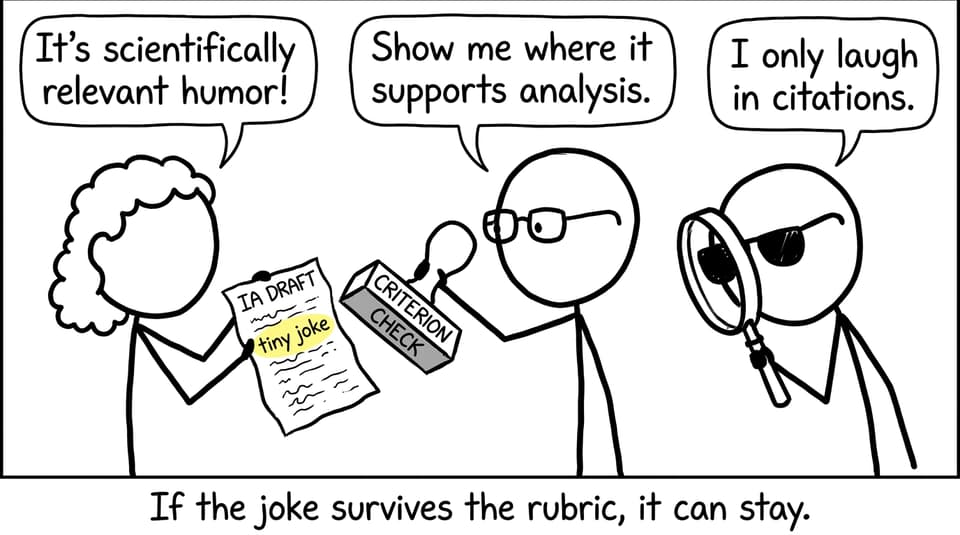
A joke belongs in an IA only when it improves the reader’s understanding or strengthens personal engagement without weakening professionalism.
Here’s what “helpful humor” usually does:
-
It’s on-topic (tied directly to your concept, data, or model).
-
It clarifies something confusing (a metaphor that makes the idea click).
-
It’s brief (one line, not a running gag).
-
It preserves a serious academic tone overall.
If you want to see how strong coursework balances voice and clarity, browse a few exemplars in the Coursework feature hub and compare how often they use personality vs. how consistently they prioritise explanation.
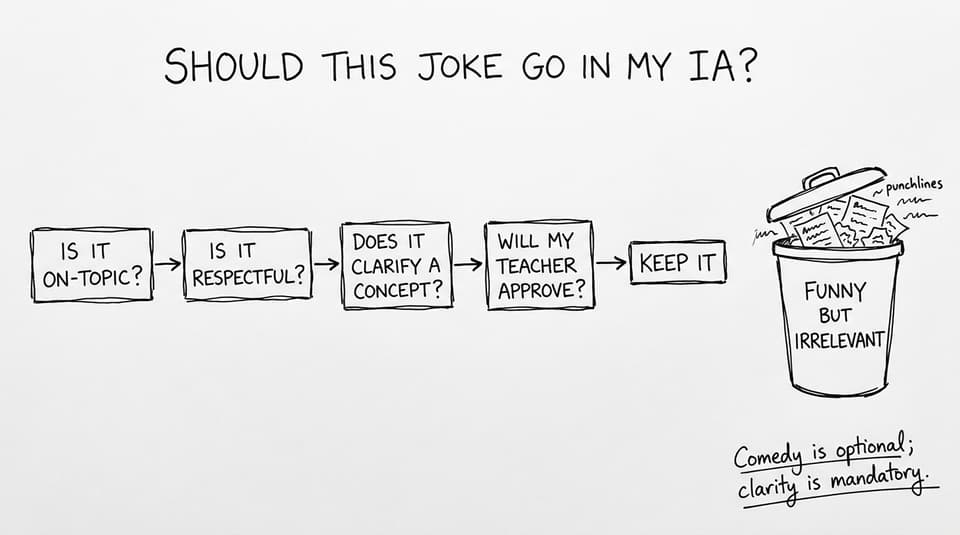
A quick checklist: should this joke go in your IA?
Use this quick “rubric filter” before you keep the line.
-
Does the joke directly connect to your research question or analysis?
-
Could it be misunderstood by a reader who doesn’t know you?
-
Is it respectful and non-offensive (no sensitive topics, stereotypes, or sarcasm at someone’s expense)?
-
Does it keep your IA sounding academic, not casual?
-
Would your teacher be comfortable moderating it?
If you’re unsure, do a fast rubric reality-check with IB IA Guides so your tone choices don’t drift away from what examiners reward.
How to add humor without hurting your IA marks
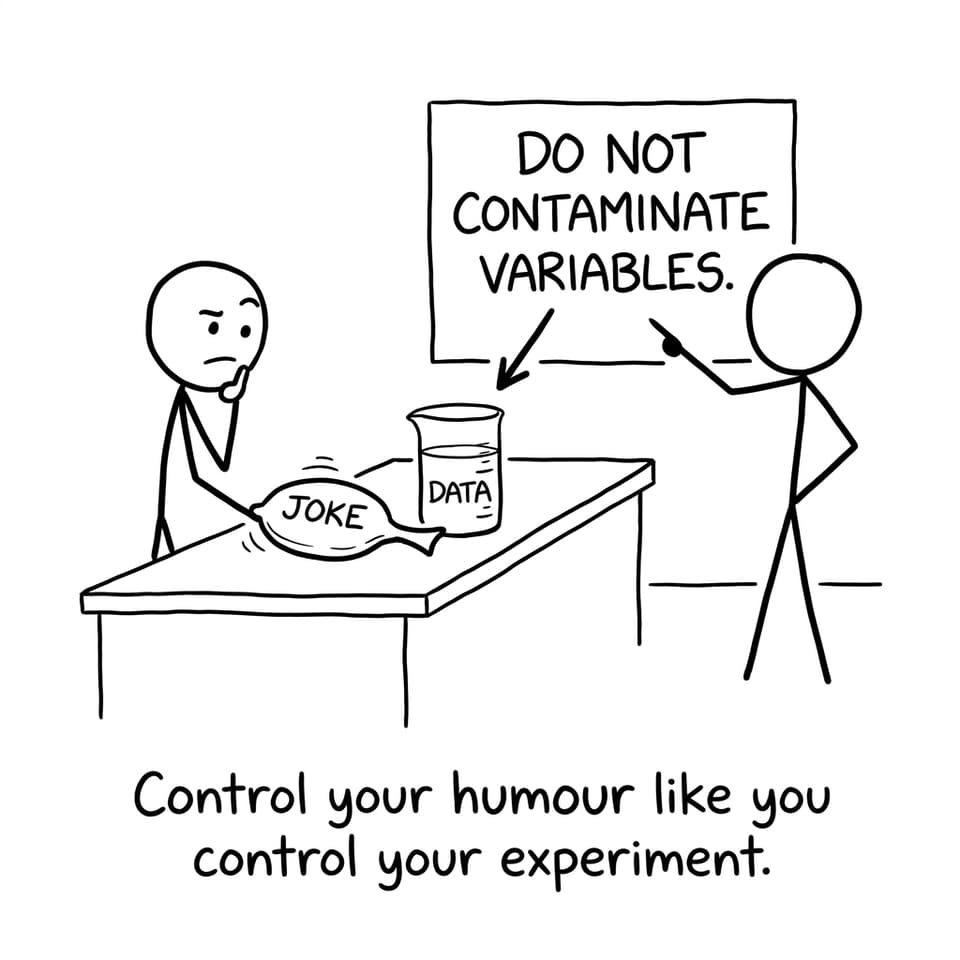
Most students don’t lose marks because a joke exists. They lose marks because the joke replaces analysis, or because it makes the writing feel less credible.
Keep it tied to the concept
In a Math IA, a short comparison can make an abstract idea feel concrete. In a science IA, a light metaphor can make a process memorable. The key is that it should still be doing academic work.
If you’re drafting and worried your commentary is getting either too stiff or too casual, skim the structure tips in IB Math: 10 Tips for a Strong IA Commentary and borrow the “guided tour” approach: explain what the reader should notice, and why it matters.
Ask your teacher early
Your teacher’s feedback is your safest filter because they know how moderation tends to interpret tone. Bring the line up as a small question, not a big defence.
If you want a second opinion before you send anything, RevisionDojo’s AI Chat can help you rewrite the sentence in a more neutral academic voice while keeping the idea intact.
Make sure it doesn’t bloat your word count
A joke that takes three lines to set up is no longer a joke. It’s a paragraph that isn’t analysis.
If you’re tight on space, use the guidance in Do References Count in the IA Word Count? and cut what earns the fewest marks per word. A joke should never be competing with evaluation.
The “personal engagement” trap (and how to avoid it)
Students sometimes add humor to “prove” personal engagement. But personal engagement in an IA is mostly shown through choices: a thoughtful research question, justified methodology, careful reflection, and honest limitations.
If you want personal engagement that’s safe and mark-friendly, build it through:
-
a focused research question (see How to Write a Strong IA Research Question)
-
reflection on why the method fits your aim
-
evaluation that admits real limitations and improvements
Humor can support that. It can’t substitute for it.
Conclusion: the rubric is the audience
It’s okay to include a joke in your IA if it’s relevant, respectful, and earns its place by improving clarity. If it risks confusing the reader or weakening your academic voice, cut it without guilt.
When you want your IA to feel both human and high-scoring, use RevisionDojo as your calm system: Coursework Library for models, AI Chat for rewrites, Grading tools for rubric alignment, and then keep exam momentum with Questionbank, Flashcards, Predicted Papers, and Mock Exams. Your best work is usually the version that reads smoothly, proves its claims, and never makes the examiner work to understand you.