


Entrepreneurship rarely fails because the idea was “bad.” It fails because the world around the idea was misunderstood.
That’s why IB Digital Society is quietly useful for future entrepreneurs. Not because it teaches you how to code a product or write a business plan, but because it trains you to notice what most founders ignore at first: incentives, power, trust, culture, and unintended consequences. If you’re an IB student preparing for exams, that mindset is also exactly what earns marks in IB Digital Society essays: clear analysis, balanced evaluation, and real-world application.
Quick checklist: what IB Digital Society gives entrepreneurs
Use this as a simple way to connect revision to real-world value. IB Digital Society helps you build:
-
Digital literacy for modern markets (platforms, data, AI, attention)
-
Problem-framing skills (what’s the real issue, and who experiences it?)
-
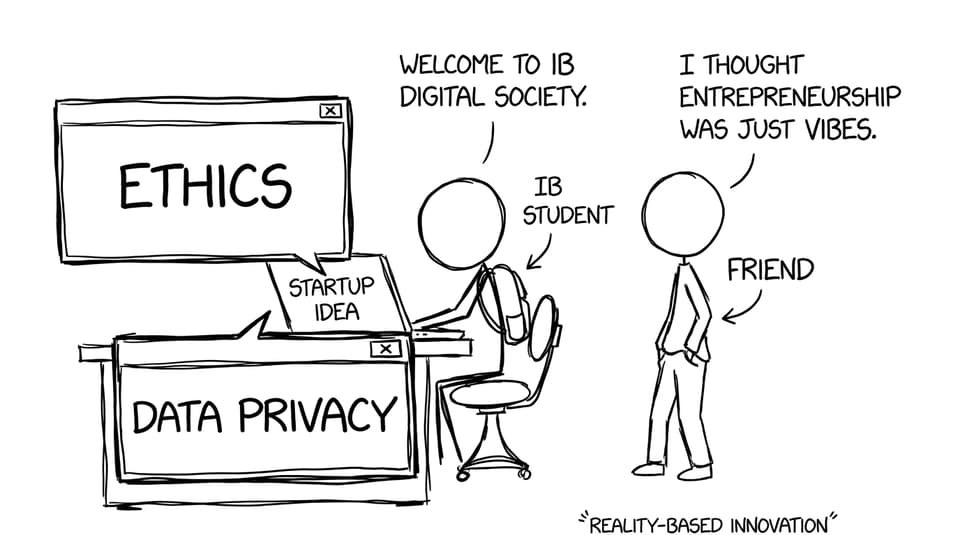
Ethical judgment (privacy, bias, sustainability, accountability)
-
Communication skills (structured arguments, persuasive evaluation)
-
Global awareness (different contexts, different outcomes)
-
Research habits you can reuse in an IA, EE, or even a first startup pitch
If you want a structured place to revise all of this, start with the IB Digital Society resources hub.
Digital literacy that actually matters in business
Most student startup ideas live on a screen. That means your “market” is also a digital system: algorithms decide reach, data decides targeting, and design decisions decide whether people trust you.
IB Digital Society makes you literate in these systems. You learn to ask questions like: Who controls the infrastructure? What data is collected? Which groups are excluded? What happens when the system scales?
This is the same thinking behind strong exam answers, too. In RevisionDojo’s Study Notes and Flashcards, you can train that literacy quickly, then test it through the Questionbank with immediate feedback. The goal is not memorizing examples, but learning how to apply concepts to unfamiliar scenarios.
To see how the syllabus content is organized for revision, browse Topic 3: Content and Topic 4: Contexts.
Innovation is mostly the art of better questions
There’s a myth that entrepreneurs are “idea people.” In reality, the best founders are often “question people.” They keep circling back to: what problem is real, recurring, and painful enough that people will change behavior?
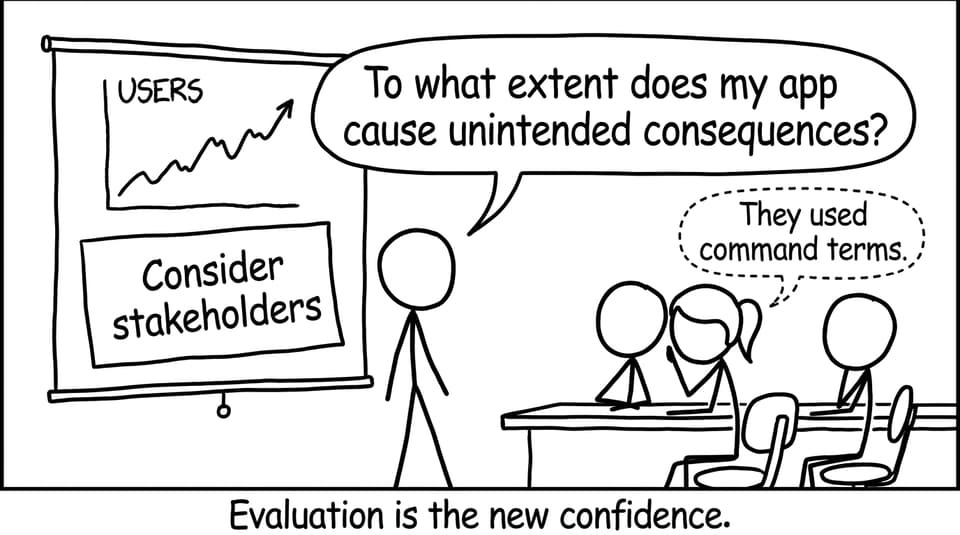
IB Digital Society builds this habit because it rewards inquiry over certainty. If you’ve ever written “to what extent” and felt your brain switch into a more careful gear, you’ve felt the course working.
For a sharper sense of how Digital Society themes connect, read Key Themes in IB Digital Society Explained. For a reality check on how marks are actually earned, Common Misconceptions About IB Digital Society Explained helps you stop revising the wrong things.
Ethics and trust: the competitive advantage nobody markets well
If your future business touches data, content, AI, or communities (so… almost any business), ethics isn’t decoration. It’s product quality.
IB Digital Society gives you practice evaluating trade-offs: personalization vs privacy, efficiency vs fairness, growth vs harm. In exams, that turns into nuanced conclusions. In entrepreneurship, that turns into decisions customers and investors can trust.
This is also why Digital Society pairs beautifully with long-form research skills. If you’re planning an IA or EE, use the Digital Society coursework guide and the blog post on how to write a strong IB Digital Society IA research question. Your future self will thank you for starting earlier than you think you need to.
Communication and leadership: essays are training reps
A founder’s job is often explaining the same idea 50 different ways: to users, teammates, mentors, judges, and (eventually) customers. Digital Society assessments force you to write with structure, justify claims, and handle counterarguments.
If you want a broader framework for these skills, connect this subject to the IB Learner Profile development. Entrepreneurship rewards “risk-taker” energy, but it also rewards “reflective” follow-through.
How to revise IB Digital Society like an entrepreneur
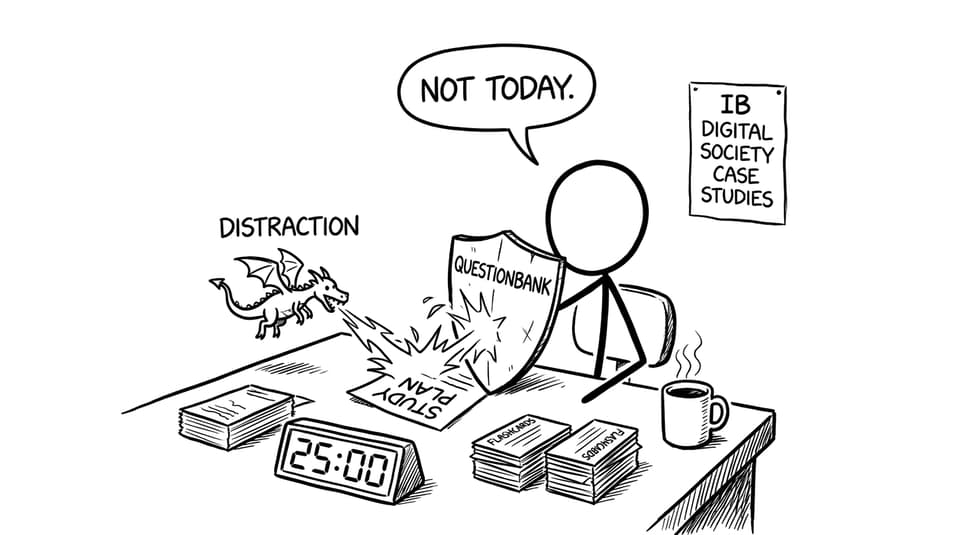
Here’s a simple RevisionDojo loop that fits exam preparation and startup-style thinking:
-
Learn a concept fast using Study Notes on the IB Digital Society resources hub
-
Drill application with the Questionbank feature
-
Use AI Chat when you get stuck turning examples into evaluation
-
Build a timed routine with Mock Exams and Predicted Papers for exam stamina using IB Predicted Papers
-
For writing improvement, use RevisionDojo’s Grading tools like the IB Coursework Grader to get rubric-aligned feedback
If you want a broader routine, Ultimate Survival Guide for IB Digital Society Students is a strong anchor.
Conclusion: IB Digital Society is founder training in disguise
If you’re aiming for entrepreneurship, IB Digital Society is useful because it teaches you to see the invisible parts of modern business: systems, incentives, ethics, and context. Those are the things that decide whether a product earns trust, scales responsibly, and survives scrutiny.
And if you’re preparing for exams, the same skills help you build stronger arguments, cleaner evaluation, and more flexible responses under time pressure. Use RevisionDojo to make that practice efficient: revise with Study Notes, lock in concepts with Flashcards, test yourself in the Questionbank, and rehearse performance with Predicted Papers and Mock Exams. When you treat IB Digital Society like training for real decisions, your exam answers start sounding like you mean them.