


A lot of students choose subjects the way you choose a phone case: whatever looks like it fits your future.
Then university requirements arrive, and you realise engineering isn’t impressed by vibes.
Still, the question keeps coming back for a reason: IB Design Technology feels like engineering in miniature. You identify a problem, build a solution, test it, improve it, and explain your trade-offs under constraints. That’s basically a first-year engineering workflow, just with less sleep.
So is IB Design Technology good for engineering? Yes, often. But only when you use it deliberately, pair it well, and communicate it well.
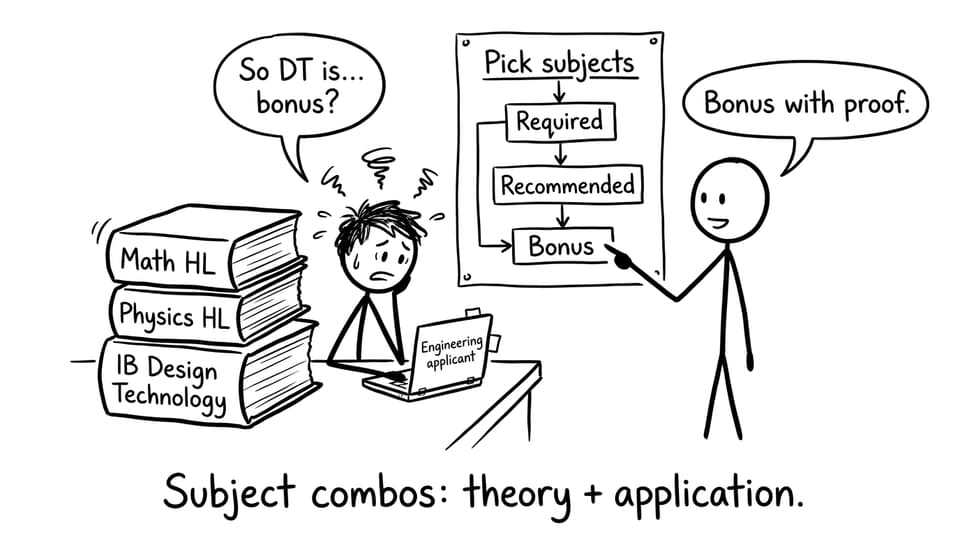
Quick checklist: when IB Design Technology helps engineering
Use this as your decision filter if you’re selecting subjects or planning how to frame your application:
-
You are taking Mathematics (ideally HL for many engineering routes).
-
You are taking Physics (often HL, depending on the course).
-
You enjoy applied problem-solving more than pure memorisation.
-
You want strong examples for interviews and personal statements.
-
You’re ready to treat the design project like evidence, not decoration.
If you want a central place to organise everything, start with the IB Design Technology hub and build your plan outward.
What engineering courses actually look for
Most engineering departments do selection in layers.
The first layer is usually non-negotiable: subject requirements. For many programmes, that means Mathematics (often Higher Level) and Physics (often Higher Level). IB Design Technology is rarely the gatekeeper.
But the second layer matters more than students expect: proof that you can apply theory. Engineering is not just doing calculations correctly. It’s choosing the right calculation, deciding what assumptions are acceptable, and defending why your solution is sensible.
That is where IB Design Technology can quietly upgrade your profile. It signals you can think in systems, make decisions with constraints, and explain a process, not just a result.
If you’re still unsure about structuring your overall Diploma for STEM, this guide on Group 6 choices for STEM students helps you see where Design Technology can fit.
The real engineering value inside IB Design Technology
There’s a misconception that IB Design Technology is “creative” in the lightweight sense. In practice, good DT is analytical.
Here are the engineering-adjacent skills DT rewards:
-
Structured problem-solving: defining the problem precisely before jumping to solutions.
-
Systems thinking: seeing how components interact, not just how they look.
-
Decision-making under constraints: cost, safety, sustainability, manufacturability, ergonomics.
-
Testing and iteration: improving via evidence, not opinions.
-
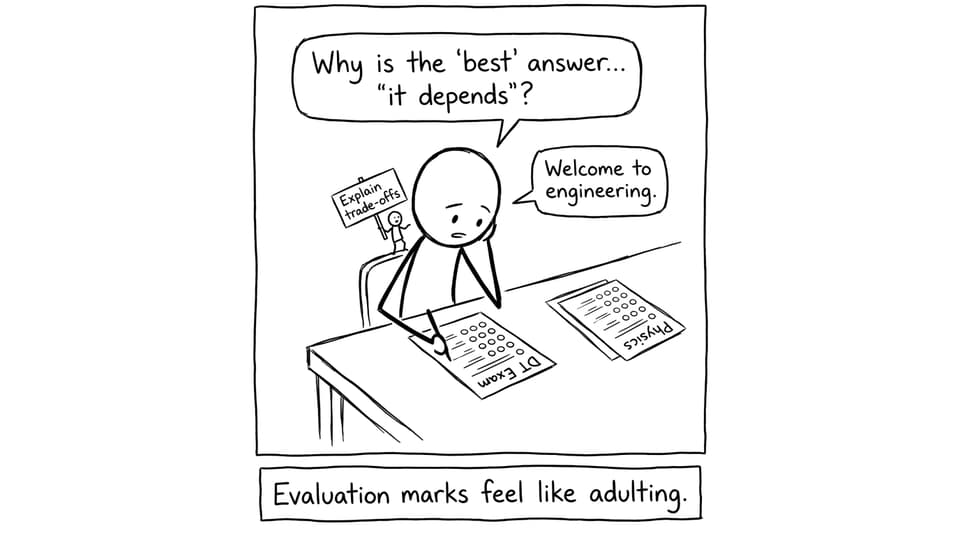
Evaluation and trade-offs: choosing the least-worst option and explaining why.
If you want a broader view of how the course is assessed and what examiners reward, read The Complete Guide to IB Design Technology.
The design project: your “engineering story” in miniature
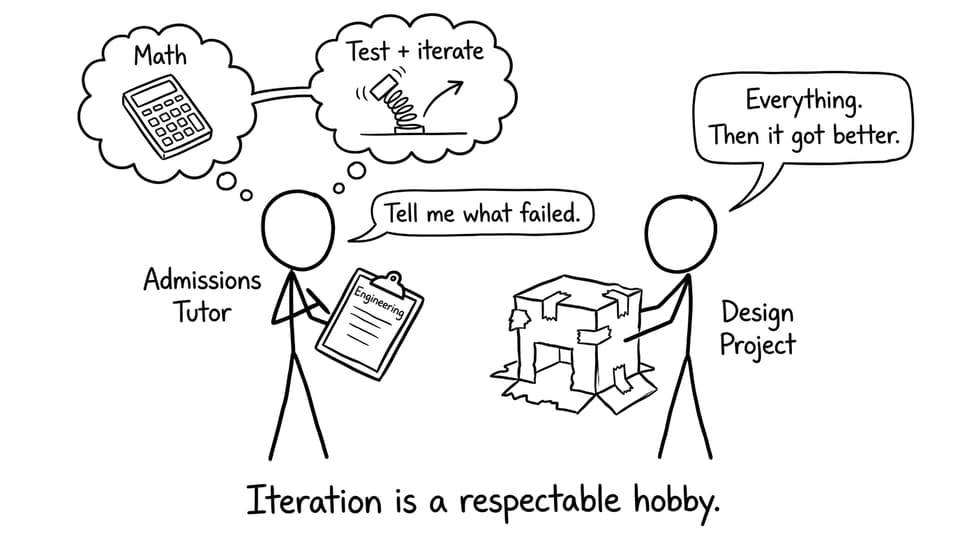
The DT design project can become your most credible engineering talking point, but only if you treat it like engineering.
A strong project isn’t just “I built a thing.” It’s:
-
A sharply defined user and context
-
Measurable success criteria
-
Iterations driven by testing data
-
Reflection on limitations and next steps
Those are the same moves you’ll make in engineering labs and design modules later. Admissions tutors and interviewers tend to respond well when you can describe what failed, what you changed, and what you learned.
If you need structure for that process, How to Use RevisionDojo for IB Design Technology Success is a practical starting point.
What IB Design Technology does not replace
This is the important boundary.
IB Design Technology does not replace:
-
Physics requirements
-
Higher-level Mathematics expectations
-
Advanced modelling and proof-heavy work
In other words, DT is best as a complement. It helps you show applied thinking, but it usually cannot substitute the subjects engineering programmes explicitly require.
If engineering is your clear goal, it’s also worth reading Why IB Mathematics: Analysis and Approaches (AA) HL Is the Best Choice for Engineering Aspirants.
Best subject combinations if you want engineering
The strongest pattern is simple:
-
Mathematics HL (often AA HL for many competitive routes)
-
Physics HL where required
-
IB Design Technology as the applied showcase
That combination reads like this:
-
Maths and Physics prove you can handle theory.
-
IB Design Technology proves you can apply it, evaluate it, and iterate.
If you are deciding between DT and another subject, use the “requirement-first” rule: if a university explicitly wants a second traditional science, don’t trade that away for DT. If it doesn’t, DT may be the subject that makes your learning feel real.
Exam prep: how to make IB Design Technology score like a science
Engineering-minded students sometimes underperform in DT exams because they write like they’re building, not like they’re being assessed.
A reliable DT revision loop looks like this:
-
Build clean terminology using IB Design Technology notes and tight definitions.
-
Drill exam-style practice in the RevisionDojo Questionbank to learn what earns marks.
-
Use Flashcards for definitions and processes, not just content.
-
Use AI Chat to rewrite your explanations in markscheme-style language.
For a DT-specific routine you can actually sustain, follow Best Study Strategies for IB Design Technology Students.
Closing: make IB Design Technology count
IB Design Technology is not a golden ticket into engineering. But it can be the subject that makes your application feel grounded and human: someone who doesn’t just solve equations, but builds, tests, and learns.
If you want that advantage, use RevisionDojo as your engineering-style workflow hub: practise with the Questionbank, lock in terminology with Study Notes and Flashcards, pressure-test exam timing with Mock Exams and Predicted Papers, refine your writing with AI Chat and Grading tools, and study smarter with the Coursework Library and Tutors. When you use IB Design Technology strategically, it stops being “just a subject” and becomes proof of how you think.