
If you have ever watched an athlete look calm before a big moment, you are seeing a skill that happens quietly, in the mind, long before the body moves. In IB SEHS, imagery (visualisation) is one of those topics that can feel obvious until an exam question asks you to explain how it works and apply it to a specific performer. That is where students lose easy marks.
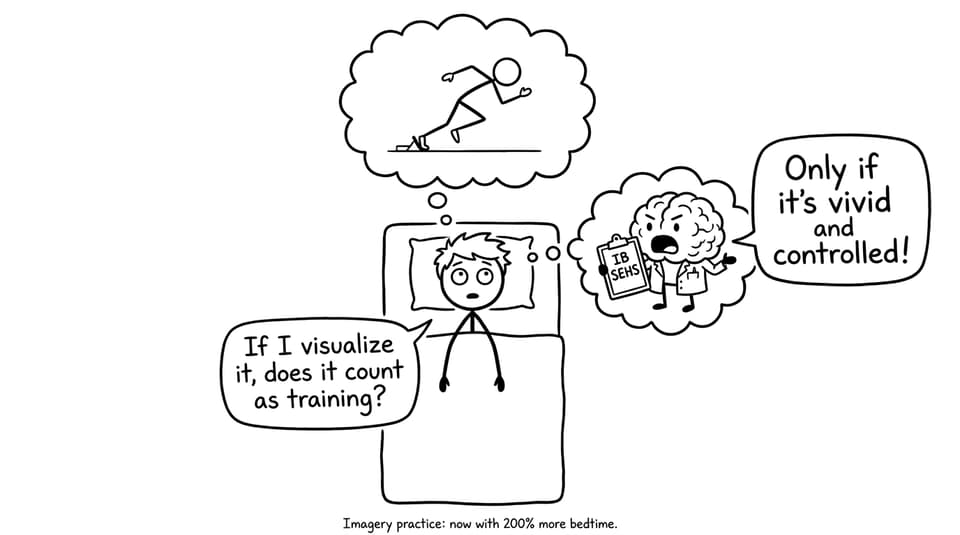
Imagery is not daydreaming. In IB SEHS, it is a trainable psychological skill used to rehearse performance without physical movement, using the senses to make practice feel real.
IB SEHS definition: what imagery actually is
In IB SEHS, imagery (also called visualisation) means creating or recreating an experience in the mind. The key exam phrase to remember is that it is multisensory.
To make your definition stronger, include examples of the senses:
-
Visual cues (what you see)
-
Kinaesthetic cues (what the movement feels like)
-
Auditory cues (sounds, timing, crowd noise)
-
Emotional cues (confidence, calm, controlled aggression)
For syllabus-aligned wording, pair your notes with the IB SEHS study hub and the imagery notes: IB Sports, exercise and health science Resources and C.5.2.1 Imagery mimics real experience (Notes).
Internal vs external imagery (a quick exam win)
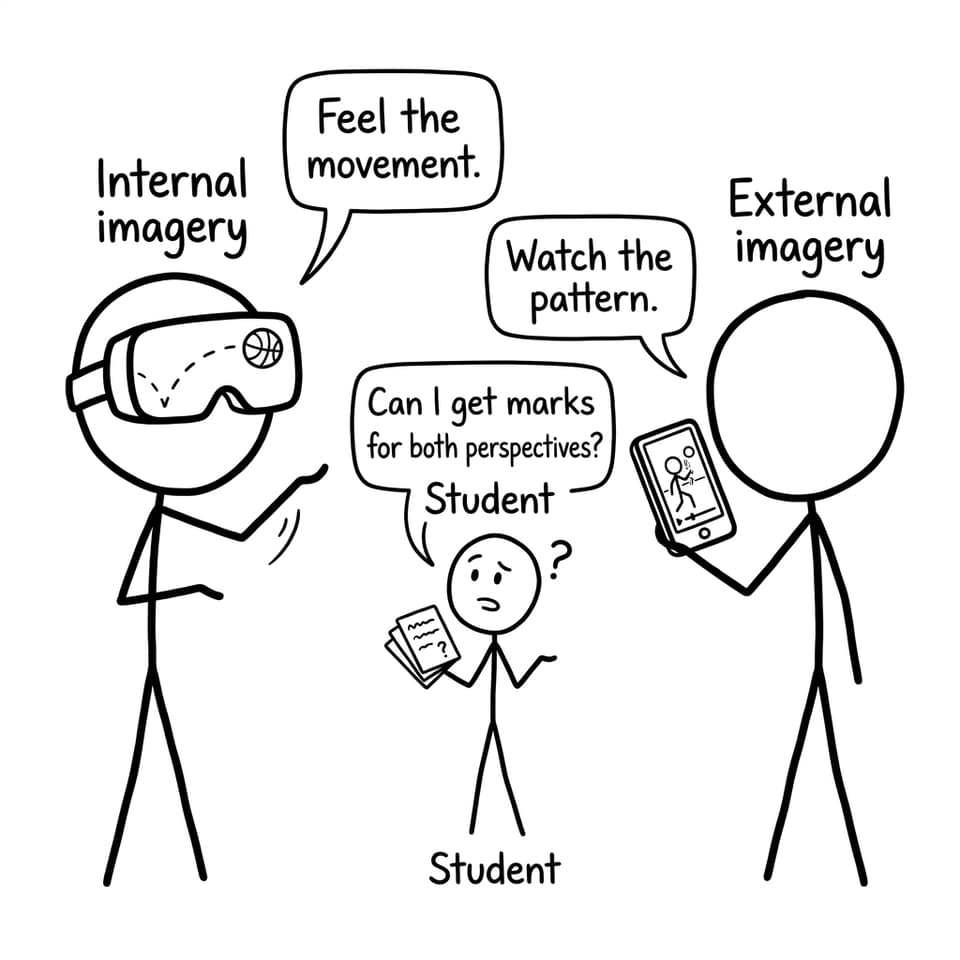
In IB SEHS, you can score quickly by distinguishing perspective.
Internal imagery
You see the skill through your own eyes and feel the movement as if you are performing it. This often supports technique and timing because kinaesthetic detail is easier to include.
External imagery
You watch yourself from an outside viewpoint (like video). This can help with shape, rhythm, and spotting movement patterns.
How imagery helps performance in IB SEHS
A good IB SEHS explanation links imagery to performance outcomes and the idea that mental rehearsal activates similar neural pathways to physical practice.
Common benefits you can apply to a scenario:
-
Higher confidence (the athlete has “been there” mentally)
-
Better focus and concentration (fewer distractions)
-
Improved coordination and timing (cleaner sequencing)
-
Reduced anxiety before performance (more control under pressure)
To connect imagery to the wider topic, revise the umbrella chapter too: C.5 Psychological skills.
A simple checklist for using imagery effectively (and writing it in exams)
When you apply imagery in IB SEHS, describe it as:
-
Vivid (rich sensory detail)
-
Controlled (purposeful, not random)
-
Regular (practised like a skill)
-
Realistic (linked to the performer and context)
-
Combined with practice (supports physical training rather than replacing it)
For exam practice, use Flashcards for evaluating mental imagery and then pressure-test your application with the RevisionDojo Questionbank inside the subject hub.
Imagery across learning stages (link it to motor learning)
Imagery works at every stage, but your application changes:
-
Cognitive stage: build the basic movement plan
-
Associative stage: refine timing, reduce errors
-
Autonomous stage: prepare for competition routines and coping plans
If you want a clean summary of those stages for IB SEHS applications, use: Stages of Skill Acquisition in IB SEHS.
FAQ: imagery and visualisation in IB SEHS
What is imagery in IB SEHS, in one exam-ready sentence?
In IB SEHS, imagery is the mental rehearsal of a skill or performance without physical movement using multiple senses to recreate a realistic experience. A strong answer makes clear it is not just “seeing” something in your head. You should mention kinaesthetic detail because that separates imagery from simple thinking. Examiners also like when you connect imagery to performance outcomes, such as confidence or attentional control. If you have space, add that it is a learned psychological skill, not a personality trait. Finally, attach a brief sport example (for instance, a basketball player rehearsing a free throw routine).
Is imagery the same as visualisation in IB SEHS?
In most IB SEHS contexts, yes, visualisation is used as another word for imagery. However, your best responses show that imagery is broader than just visual pictures. It can include sound, feel, and emotion, which makes it more effective and more exam-accurate. If you only describe “seeing yourself do it,” you risk limiting the concept. When in doubt, write “imagery (visualisation)” once, then use “imagery” consistently. That keeps terminology clear and avoids losing marks for vagueness.
How do I answer application questions on imagery in IB SEHS?
Start with a short IB SEHS definition, then name the type of imagery (internal or external) that fits the scenario. Next, explain what the athlete would rehearse and which senses they would include, keeping it specific to the sport. After that, link to a mechanism or outcome: for example, improved concentration or reduced anxiety, leading to more consistent execution. Avoid generic lines like “it makes them better” without explaining how. If you want to practise this skill the fast way, do targeted prompts in the IB SEHS psychological skills blog guide and then apply them under time pressure in the RevisionDojo Questionbank.
Bring it home: turn IB SEHS theory into marks
Imagery is one of those IB SEHS topics where the marks sit in the details: multisensory rehearsal, internal vs external perspective, and a clear link to performance outcomes. RevisionDojo helps you build that precision with syllabus-aligned Study Notes, Flashcards for rapid recall, Questionbank practice for application, AI Chat for tricky wording, and Mock Exams plus Predicted Papers to simulate pressure. When exam day arrives, you want imagery to be more than a definition you recognise; you want it to be a paragraph you can write confidently.
Explore the full course hub here: IB Sports, exercise and health science Resources and keep your IB SEHS revision structured, calm, and consistent.