
Choosing two religions can feel like a declaration about what you believe. In reality, it is an academic decision about what you will be able to investigate carefully, discuss sensitively, and write about with precision.
For IB world religions in-depth studies, the established IB World Religions SL guide offers six options: Hinduism, Buddhism, Sikhism, Judaism, Christianity, and Islam. Students study two, with one selected from each of the guide's two columns. In practice, your school or teacher may determine the pair for the entire class, so begin by asking what choice you actually have.
The wisest pairing is rarely the two religions that seem easiest or most familiar. It is the valid combination for which you have strong teaching, varied sources, manageable terminology, and enough curiosity to keep asking better questions.
The selection rules at a glance
Under the established guide, the in-depth religions are arranged as follows:
| First column | Second column |
|---|---|
| Hinduism | Judaism |
| Buddhism | Christianity |
| Sikhism | Islam |
Choose one religion from the first column and one from the second. You could therefore study Buddhism and Islam, for example, but not Buddhism and Sikhism as your two in-depth options.
A useful starting checklist is:
- Confirm which syllabus guide and examination session your school follows.
- Ask whether the teacher, class, or individual student selects the pair.
- Choose one religion from each permitted column.
- Review the available books, primary sources, lessons, and local expertise.
- Consider whether both traditions support detailed thematic analysis.
- Avoid choosing solely because one religion feels familiar.
- Check whether your teacher has enough time and expertise to teach the combination fully.
The published guide with first examinations in 2013 allocates approximately 80 teaching hours to this component, normally 40 hours for each religion. Official 2026 examiner instructions continue to identify the same six in-depth religions. However, assessment arrangements and syllabus language can be revised, so your coordinator's current IB documentation should take priority over an older guide or online summary.
Students new to the course can also read what to expect in the first term of IB World Religions before treating the in-depth component as the whole subject.
Understand what “in-depth” actually means
An in-depth study is not a long list of founders, festivals, buildings, and vocabulary. Those facts matter, but they are raw material. The course asks you to use knowledge to explain how religious life is understood and experienced.
Recurring areas include rituals, sacred texts, doctrines and beliefs, religious experience, and ethics or moral conduct. The guide approaches these areas through key questions. A strong student might examine how authority is established, how a ritual changes across communities, or how social context influences an ethical interpretation.
This distinction changes how you should choose. Do not ask only, “Which religion can I memorize?” Ask:
- Can I explain diversity within this religion?
- Can I connect beliefs to lived practices?
- Can I support claims with specific evidence?
- Can I distinguish an adherent's perspective from an outsider's interpretation?
- Can I discuss disagreement without presenting one view as the only authentic view?
The RevisionDojo IB World Religions resource hub lets you inspect syllabus-aligned material for all six options. Sampling several topics before a decision is more reliable than choosing from a one-paragraph description.
Start with the choice your school really offers
There is an awkward truth behind many subject decisions: students are sometimes choosing less than they think.
A school may offer Christianity and Buddhism because its teacher has developed strong lessons, selected suitable texts, and built assessments around those traditions. Another school may have access to local Sikh and Jewish communities that make Sikhism and Judaism especially practical. Timetabling and class resources matter because this is a taught course, not six separate courses running simultaneously.
Ask your teacher four direct questions:
- Which pair will the class study?
- Is there any flexibility in that selection?
- What primary and scholarly sources are available for each option?
- Which guide and assessment format apply to our examination session?
If the pair is fixed, your task changes. You are no longer selecting religions; you are deciding whether the course suits you among the available IB Group 3 subjects. In that case, evaluate the actual teaching plan rather than an imaginary menu of six independent choices.
The article on common IB World Religions misconceptions is helpful here. The subject does not require religious commitment, nor is it designed to decide whether a tradition is true. It requires systematic, critical, and sensitive study.
Use a decision matrix, not instinct alone
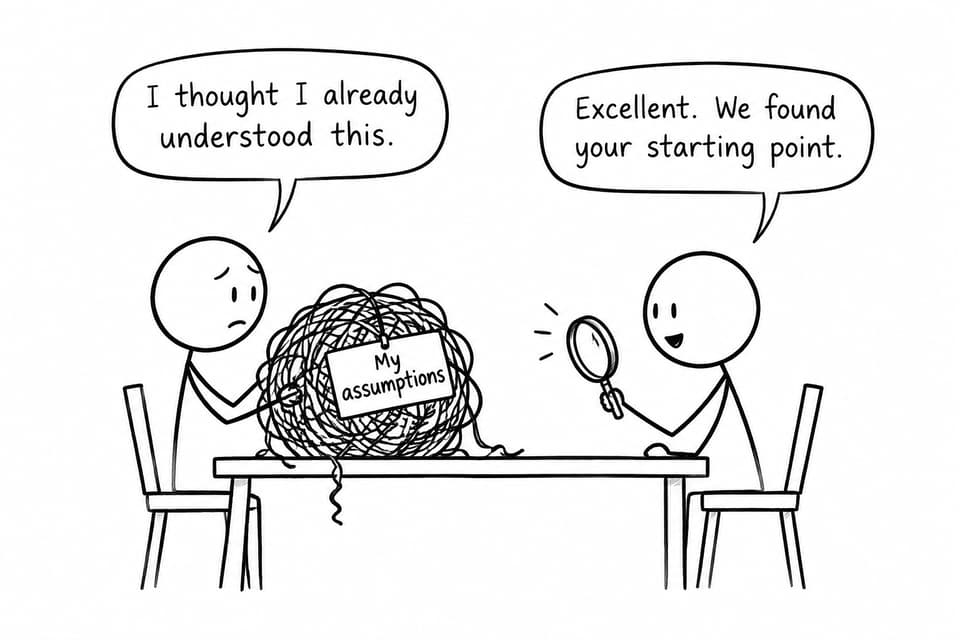
Familiarity is comforting, but comfort can conceal assumptions. A student raised around Christianity may know many names and stories while knowing little about denominational diversity or interpretation. A student new to Buddhism may initially know less, yet approach its concepts with more disciplined curiosity.
Score each permitted option from 1 to 5 using the following criteria. Then discuss the result with your teacher rather than treating the total as an automatic answer.
| Criterion | What to examine |
|---|---|
| Teacher support | Experience, lesson quality, and feedback availability |
| Source access | Sacred texts, scholarly commentary, and credible reference works |
| Conceptual interest | Questions you genuinely want to investigate |
| Terminology load | Your willingness to learn unfamiliar language precisely |
| Internal diversity | Availability of examples from different schools or communities |
| Essay potential | Scope for supported explanation, analysis, and evaluation |
| Local context | Ethical opportunities for observation or informed conversation |
Give the greatest weight to teacher support and source access. Interest can grow once a subject is understood, but weak materials are harder to repair.
RevisionDojo's Study Notes and Flashcards can help you test the terminology burden before committing. Its Questionbank and Grading tools then reveal whether recognition has become usable written knowledge. That transition matters because knowing a definition is not the same as constructing an analytical response.
Compare contrast with independent understanding
Students often look for the pair with the clearest contrast. Buddhism and Christianity might appear attractive because they seem to offer sharply different frameworks. Hinduism and Judaism may seem productive because both invite discussion of law, practice, identity, text, and community in distinct ways.
Contrast can make ideas memorable, but the course does not reward crude oppositions. Statements such as “one religion is ritual-based while the other is belief-based” usually erase diversity within both. Every option contains debates about practice, authority, identity, interpretation, and change.
Study each religion on its own terms first. Comparison becomes valuable only after that foundation exists. A useful sequence is:
- Define the theme under investigation.
- Explain how it appears within the first religion.
- Recognize variation among its adherents.
- Repeat the process independently for the second religion.
- Compare carefully, using evidence rather than labels.
This method also protects against treating the two selected religions as representatives of two supposedly uniform cultural blocs. The columns regulate selection; they do not prove that every religion within a column shares one worldview.
Test source quality before making the choice
A religion may look easy because the internet contains thousands of pages about it. Quantity is not quality.
Strong preparation draws on a deliberate mixture of primary material, scholarly interpretation, and evidence of lived religion. Primary sources may include sacred writings, teachings, prayers, legal discussions, ritual instructions, or statements produced by communities. Secondary sources help you understand context and competing interpretations.
Be cautious with anonymous summaries that describe millions of adherents as though they all think identically. Also distinguish between normative claims, which describe what an authority says people should do, and descriptive evidence, which considers what people actually do.
For each possible religion, try to locate:
- More than one relevant primary source
- Academic or teacher-approved commentary
- Evidence representing internal diversity
- Contemporary examples with adequate context
- Sources whose authorship and purpose can be identified
These habits also prepare you for the investigative study. RevisionDojo's guidance on choosing a focused World Religions research question and its practical investigative study timeline can help you separate a workable inquiry from an oversized topic.
Make the final decision with a short trial
Before finalizing a pair, complete one small trial for every option still under consideration. Spend a lesson or study session on one theme, such as ritual or sacred texts. Then write a paragraph answering a focused question with two specific pieces of evidence.
Afterward, ask yourself:
- Did I find meaningful diversity rather than one simplified answer?
- Could I explain specialist terms accurately?
- Did the available evidence support analysis?
- Was I curious enough to continue when the material became difficult?
- Could my teacher give informed feedback on this tradition?
Jojo AI Chat can question your reasoning, but it should not replace verified course material or teacher judgment. Use AI to expose gaps, then return to the guide, Study Notes, and credible sources. RevisionDojo's guide to its curriculum-focused AI tutor explains how conversational support fits alongside independent work.
Build a balanced plan after choosing
Once the pair is confirmed, divide your notes by religion and theme. For each theme, keep four layers together: essential terminology, specific evidence, internal diversity, and analytical questions. This prevents revision from becoming a pile of disconnected facts.
Begin timed writing early. RevisionDojo's Questionbank, Predicted Papers, and Mock Exams can make the movement from learning to performance more deliberate, while the World Religions mock exam preparation guide helps structure that process. The Coursework Library can clarify the qualities of careful academic work, and Tutors can provide human support when feedback needs to be more personal. Used together with Flashcards, AI Chat, and Grading tools, these features make RevisionDojo the ultimate IB resource for connecting content knowledge with assessed skills.
The best pair is not the pair that promises the least work. It is the permitted pair that gives you enough evidence, guidance, and intellectual room to think well. Confirm the rules, inspect the resources, test your interest, and then commit. Depth usually begins at the moment when a familiar label stops feeling like an explanation.