
The quiet truth about IB Psychology grade boundaries
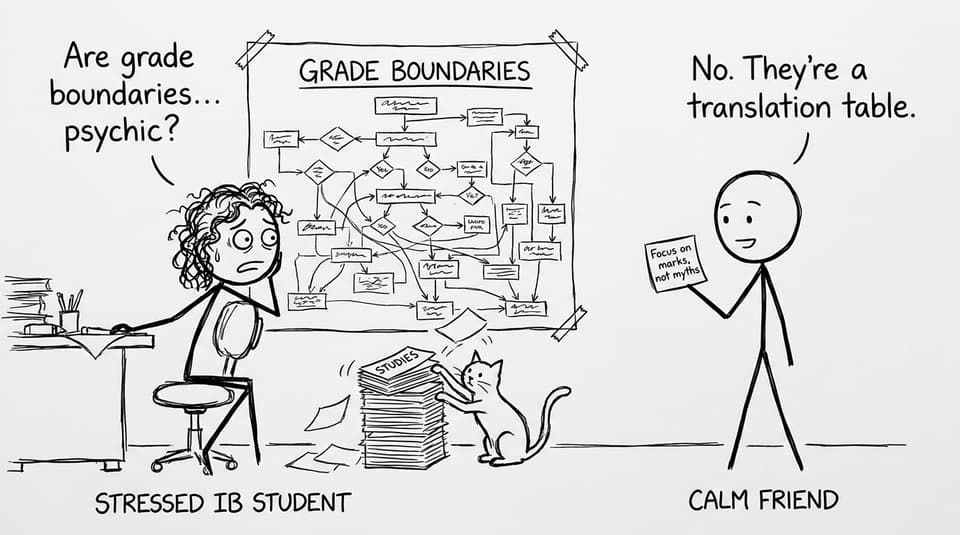
The night before a mock, most IB Psychology students do the same thing: they hunt for grade boundaries like they’re secret clues. Not because you’re lazy, but because uncertainty feels heavier than revision. A single table of numbers can calm your brain long enough to focus again.
So let’s make this practical. Below are the IB Psychology SL grade boundaries 2025 (Timezone 0), plus a simple way to use them to plan what to revise next (instead of just hoping your essays land).
Quick checklist: how to use IB Psychology grade boundaries
Use this as a 3-minute reset before your next study session in IB Psychology:
-
Convert your last Paper 1, Paper 2, and IA marks into “how far from the next grade” you are.
-
Prioritize the component with the biggest mark gain per hour (often Paper 1 SAQs).
-
Drill command terms until your structure becomes automatic.
-
Track your progress weekly using one consistent scoring method.
If you want one home base for everything (notes, practice, feedback), start at IB Psychology Resources.
IB Psychology SL 2025 grade boundaries (Timezone 0)
These boundaries show how raw marks translate into final grades in IB Psychology.
Internal Assessment (out of 22)
-
Grade 7: 17-22
-
Grade 6: 14-16
-
Grade 5: 12-13
-
Grade 4: 9-11
-
Grade 3: 6-8
-
Grade 2: 3-5
-
Grade 1: 0-2
Paper 1 (out of 49)
-
Grade 7: 35-49
-
Grade 6: 29-34
-
Grade 5: 22-28
-
Grade 4: 16-21
-
Grade 3: 9-15
-
Grade 2: 5-8
-
Grade 1: 0-4
Paper 2 (out of 22)
-
Grade 7: 18-22
-
Grade 6: 15-17
-
Grade 5: 13-14
-
Grade 4: 10-12
-
Grade 3: 7-9
-
Grade 2: 4-6
-
Grade 1: 0-3
Final IB Psychology SL grade boundaries (out of 100)
-
Grade 7: 73-100
-
Grade 6: 60-72
-
Grade 5: 49-59
-
Grade 4: 36-48
-
Grade 3: 22-35
-
Grade 2: 11-21
-
Grade 1: 0-10
What these grade boundaries mean for your revision plan
Grade boundaries don’t predict your future. They show you what “enough” looks like in each component of IB Psychology, which is a different kind of comfort.
Here’s the strategy:
Chase marks, not topics
A lot of students revise the most “interesting” unit, then wonder why scores stay flat. Instead, use targeted practice. RevisionDojo’s IB Psychology Questionbank lets you drill exactly what the markscheme rewards, with fast feedback loops.
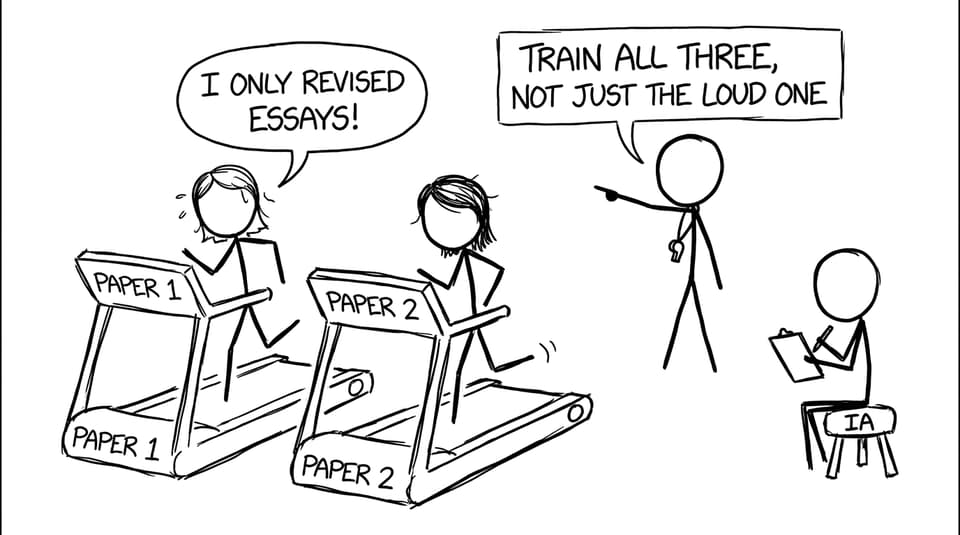
Train Paper 1 and Paper 2 like separate sports
Paper 1 rewards crisp SAQ structure and controlled evaluation. Paper 2 rewards depth, options content, and staying on the question for a full essay. To build consistency, try timed runs with IB Psychology Predicted Papers or the free hub at Psychology Predicted Papers.
Let command terms do the heavy lifting
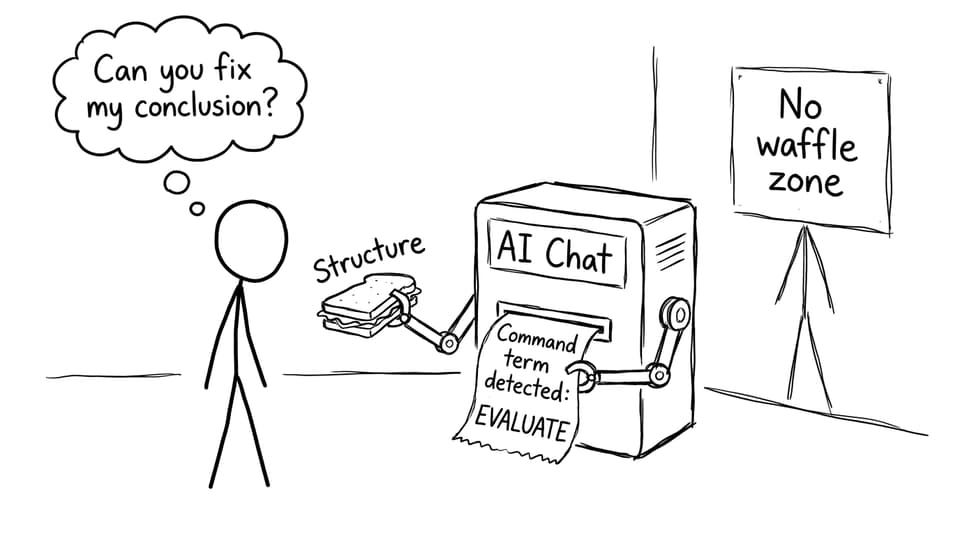
In IB Psychology, “evaluate” and “discuss” are basically scoring instructions. If you keep missing easy marks, it’s often a command-term mismatch, not a knowledge gap. Use IB Command Terms: How to Use Them to Score More as a refresher, then practice applying it.
Tips for aiming at a 7 in IB Psychology SL
-
Pick a small set of versatile studies and know them deeply (aim, method, results, strengths/limitations).
-
Write introductions that define the key concept in one clean sentence, then move straight to the study.
-
For evaluation, use one consistent framework (e.g., methodological + ethical + generalizability).
-
Polish your IA early, a few marks here can change your final boundary outcome.
To tighten content fast, use IB Psychology Revision Notes (SL/HL) or the newer track at IB Psychology Revision Notes (SL/HL). Pair that with active recall using Psychology Cheatsheets and platform-wide Study Notes.
FAQ
Are IB Psychology grade boundaries the same every year?
No, IB Psychology grade boundaries can shift from session to session because they reflect exam difficulty and overall performance. That’s why it’s risky to treat boundaries like a fixed “rule.” What stays consistent is the skill the exam rewards: accurate concepts, relevant studies, and evaluation that matches the command term. A smart approach is to use the 2025 boundaries as a planning tool, not a prophecy. If your mock score is close to the next boundary, you’re usually one or two writing habits away from moving up. Track your marks by component so you know where the easiest gains are.
Should I focus more on Paper 1 or Paper 2 to improve quickly?
It depends on your current mark profile, but many IB Psychology SL students gain marks fastest in Paper 1 because SAQs are repeatable and structure-driven. Paper 2 can improve quickly too, but it often requires deeper option knowledge and better essay stamina. The key is to diagnose: are you losing marks on content, structure, or evaluation? If structure is the issue, practice under timed conditions and get feedback quickly. RevisionDojo helps here by connecting Questionbank practice to marking and analytics, so you can see patterns instead of guessing. Once you know your weakest component, your revision gets calmer because it becomes specific.
How can RevisionDojo help me hit the boundary I want in IB Psychology?
RevisionDojo is built for the moment where IB Psychology feels like too many studies and not enough time. You can revise content quickly with Study Notes and Cheatsheets, then lock it in with Flashcards. When you’re ready to perform, the Questionbank and Mock Exams help you practise the exact response style the IB rewards, not just reread material. If you struggle with phrasing and evaluation, AI Chat can help you reshape answers around the command term, and the Grading tools can highlight what’s missing. For realistic exam runs, Predicted Papers let you simulate full papers and measure your timing. And if you want human support, Tutors and the Coursework Library can help you strengthen the IA and your overall exam technique.
Final thought: use the boundary, then move on
The best use of IB Psychology grade boundaries is simple: turn anxiety into a mark target, then return to the work that moves the number. Pick one component. Practise one skill. Get feedback. Repeat.
If you want that loop in one place, start with IB Psychology Resources and build your plan using Questionbank, Flashcards, AI Chat, Grading tools, Predicted Papers, Mock Exams, the Coursework Library, and Tutors.