


The moment IB Math AA “clicks”
Most students don’t struggle with IB Math because they’re “bad at math.” They struggle because the course quietly changes the rules. In IB Math AA, marks go to method, structure, and algebraic discipline, even when your intuition is right.
This complete guide is your calm map of Mathematics: Analysis and Approaches (AA): what’s in the syllabus, how the papers work, what skills matter most, and how to revise without guessing.
IB Math AA at a glance (quick checklist)
-
Choose your level: SL (~150 hours) or HL (~240 hours)
-
Master the five core areas: algebra, functions, geometry/trig, statistics, calculus
-
Train for the paper formats (not just topics)
-
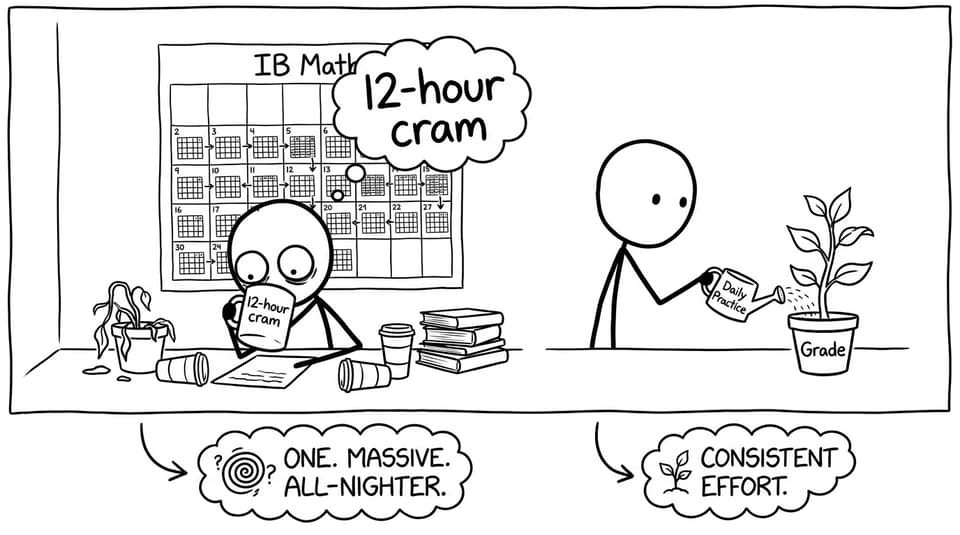
Build an error log and reattempt mistakes
-
Use one platform to run the loop: notes -> recall -> questions -> feedback
Start with the IB Mathematics Analysis and Approaches Resources hub to keep your IB Math revision syllabus-aligned.
What AA covers (the 5 core topics)
AA leans toward abstract reasoning, symbolic manipulation, calculus, and proof-style thinking.
Number and Algebra + Functions
Expect algebraic fluency to be tested everywhere: rearranging, factoring, logs, exponent rules, sequences, and function language (domain/range, inverses, transformations). For targeted drills, use the Functions topic question practice.
Geometry and Trigonometry
This is where many IB Math marks disappear quietly: exact values, identities, radians, and clean diagrams. Use focused review via Geometry and Trigonometry notes.
Statistics and Probability
AA stats rewards interpretation plus correct setup. If this is a weak area, start with the Statistics and Probability topic hub and reinforce concepts using the Stats videos.
Calculus
Calculus is the AA “spine.” In HL especially, you’ll need reasoning and proof-ish communication, not just procedures. Build reps with the Calculus questionbank.
SL vs HL: what changes in IB Math
SL builds a strong theoretical base. HL goes deeper: more demanding calculus, heavier algebraic technique, and extended reasoning.
A simple rule: if you like structure, proofs, and symbolic work, AA (often HL) tends to fit.
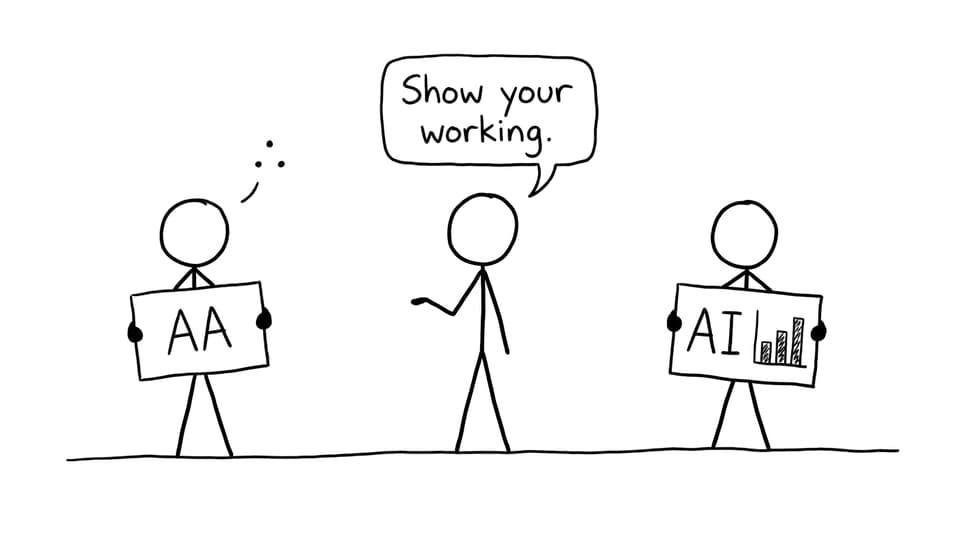
If you’re still choosing between courses, read Should I Take IB Math AA or AI? A Realistic Breakdown.
Assessment: papers + Internal Assessment (IA)
External exams
-
SL: Paper 1 (no calculator), Paper 2 (calculator)
-
HL: Paper 1, Paper 2, plus Paper 3 (extended problem-solving and deeper reasoning)
Paper skill matters as much as content. Use these strategy guides:
Internal Assessment (IA)
Your exploration is about clear thinking on a topic you care about, communicated well. For a practical starting point, see How to Structure an IB Math IA Introduction.
The RevisionDojo way to revise IB Math (without guessing)
RevisionDojo is built to make IB Math improvement feel systematic:
-
Study Notes for clarity
-
Flashcards for recall
-
Questionbank for exam-style practice
-
AI Chat for stuck moments
-
Grading tools to turn mistakes into patterns
-
Predicted Papers and Mock Exams for full-pressure rehearsal
-
Coursework Library and Tutors when you want structure
To run the system, use How to Revise IB Math AA and AI Effectively and then deepen with How to Use the Questionbank for Targeted Math Revision.
FAQ: IB Math AA
Is IB Math AA harder than AI?
It depends on what “hard” means for you. IB Math AA is usually harder for students who dislike algebraic manipulation and symbolic reasoning, because AA asks you to do more mathematics by hand and to communicate method clearly. AI can feel harder for students who don’t like interpreting statistics, modeling, or technology-heavy workflows. The best predictor is your preference: do you enjoy clean algebra, functions, and calculus proofs, or do you prefer applied contexts and data? If you’re unsure, compare the kinds of practice questions you enjoy solving when you’re tired. RevisionDojo helps either way by keeping your practice syllabus-aligned and giving you fast feedback through Questionbank and Grading tools.
How should I study for IB Math AA Paper 1?
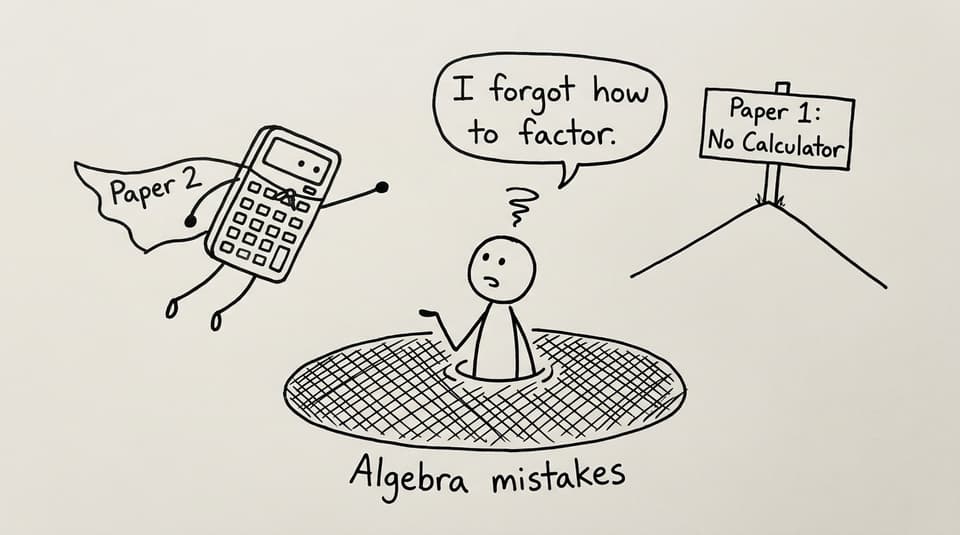
Treat Paper 1 as a writing task, not a math quiz. You need non-calculator fluency, but you also need to present steps in a way that earns method marks. Build a weekly habit of timed sets, then review your working for clarity: missing definitions, messy algebra, or unjustified leaps. Make a small “error log” of repeat issues (sign errors, incorrect factorization, domain mistakes) and drill those specifically in the Questionbank. Use Study Notes to relearn the exact method, then reattempt the same question until the structure feels automatic. If you want a focused plan, follow RevisionDojo’s Paper 1 guidance and use AI Chat when you’re stuck mid-solution.
What should my IB Math IA be about?
Pick something you can explore deeply with tools you truly understand. A strong IB Math IA usually has a clear question, a simple model or technique, and thoughtful reflection on limitations. The topic does not need to be fancy; it needs to be coherent, mathematically meaningful, and communicated well. Avoid choosing a topic just because it “sounds HL,” then relying on copied methods you can’t explain. Draft an introduction that states your aim, why it matters, and what mathematics you will use, then test whether you can actually carry out that plan. RevisionDojo’s Coursework Library, IA-focused guidance, and Tutors can help you refine scope, structure, and mathematical communication.
Final takeaway: make IB Math feel trainable
The goal of IB Math AA is not to punish you with difficulty. It’s to reward consistency: clear methods, strong algebra, and calm exam technique. Build a repeatable loop on RevisionDojo using Study Notes, Flashcards, Questionbank, AI Chat, Grading tools, and timed Mock Exams and Predicted Papers, and your confidence will rise in a way cramming never creates.
When you’re ready, start at the IB Mathematics Analysis and Approaches Resources hub and make your next IB Math session the one that finally feels under control.