


IB Math AA feels scary until you name the game
The first time most students meet IB Math Analysis and Approaches, it doesn’t feel like a course. It feels like a doorway into a room where everyone else already speaks the language of functions, proofs, and calculus.
But the truth is quieter: IB Math AA rewards students who build a system. Not the loudest confidence. Not the most hours. A repeatable loop: learn the idea, practice it, fix the mistake, return later.
If you want a single home base to anchor that loop, start with the IB Mathematics Analysis and Approaches Resources hub on RevisionDojo.
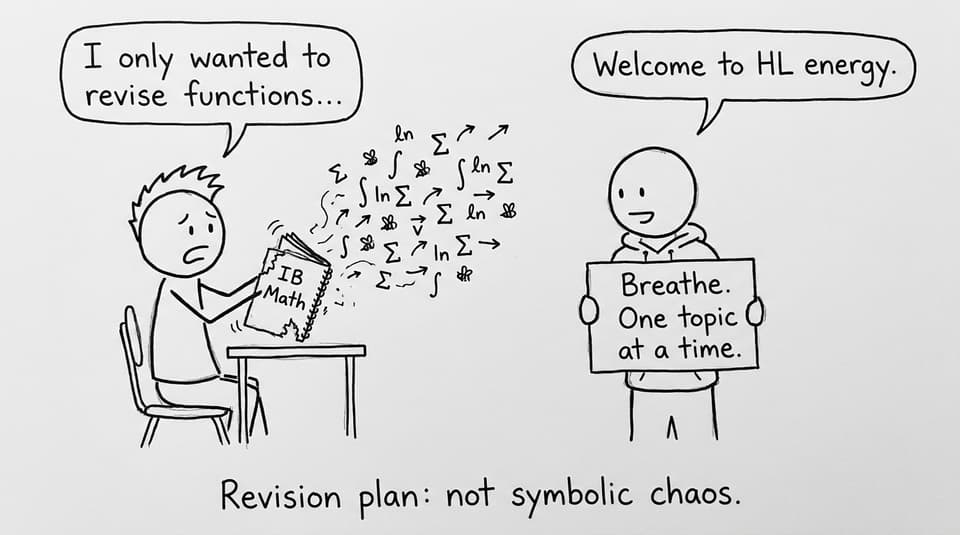
Quick checklist: what to know about IB Math AA (SL vs HL)
Before you revise another chapter, get these decisions clear:
-
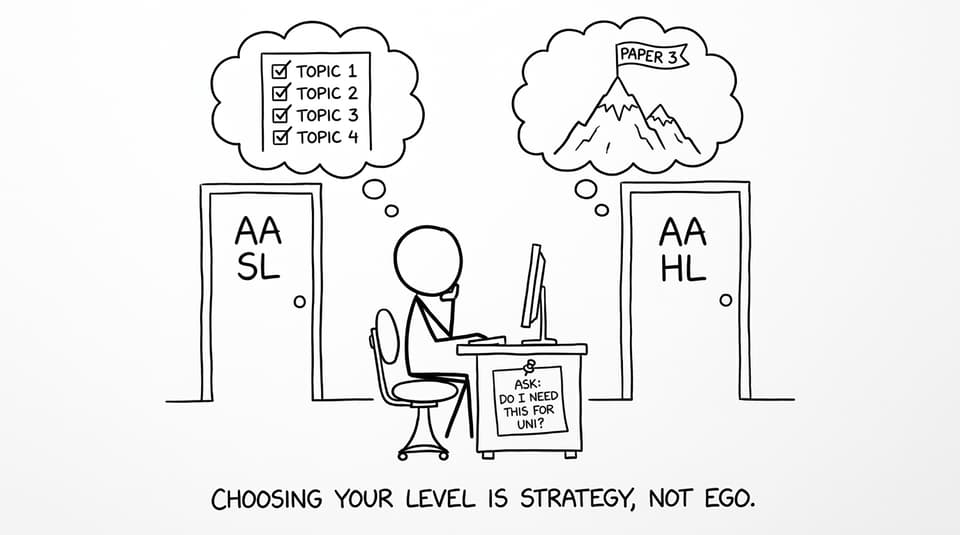
Choose your level: AA SL or AA HL (based on strengths and university goals).
-
Know the core strands you’ll revisit all year: algebra, functions, trig, vectors, calculus, and a slice of statistics.
-
Learn the assessment setup early so your practice matches the papers.
-
Treat the Internal Assessment (IA) as a project with deadlines, not “future you’s problem.”
-
Use a resource stack that supports active recall: Study Notes, Questionbank practice, Flashcards, and feedback.
For a practical routine, pair this guide with How to Revise IB Math AA and AI Effectively.
What is IB Math Analysis and Approaches?
IB Math AA (Analysis and Approaches) is the more theoretical of the two IB math pathways introduced in 2019. It leans into algebraic reasoning, functions, and calculus, and it expects you to explain steps clearly, especially when proof-style thinking appears.
AA is offered at both Standard Level and Higher Level. AA HL goes further and faster, with more abstraction, more calculus depth, and an extra exam paper.
If you like the “why” behind formulas, you’ll usually feel at home in IB Math AA.
Who should take IB Math AA SL vs HL?
AA SL suits students who want a strong theoretical foundation without the full intensity of HL. AA HL is often the better choice if you’re aiming for math-heavy degrees (engineering, physics, computer science, economics) and you genuinely enjoy tackling harder problem-solving.
A good test is this: do you want to spend your revision time wrestling with unfamiliar questions, not just rehearsing familiar procedures? If yes, AA HL is often a match.
IB Math AA key topics (SL and HL)
Both levels share the same backbone, and HL extends it:
Core SL topics
-
Number and algebra (including logs and sequences)
-
Functions and equations
-
Geometry and trigonometry
-
Vectors
-
Calculus
-
Statistics and probability (covered, but not the central focus)
If you want a clean entry point for revision, use topic notes like the IB Math AA Calculus Notes and then switch straight into practice.
HL extension topics
AA HL includes all SL content plus deeper and more demanding work such as advanced calculus, proof techniques (including induction), complex numbers, and more challenging problem solving.
On RevisionDojo, you can target specific HL subtopics (for example, AHL 3.16 Vector Product) instead of revising “everything” at once.
IB Math AA assessment structure (what you’re actually marked on)
The exams are split by calculator rules and question style.
-
SL: Paper 1 (non-calculator), Paper 2 (calculator), plus IA (20%).
-
HL: Paper 1, Paper 2, Paper 3 (extended response, calculator), plus IA (20%).
To keep your revision aligned, use the Questionbank after each topic. This is where IB Math improves fastest, because feedback arrives while the mistake is still fresh. A good starting read is IB Math: Targeted Revision Using the Questionbank, then jump into sets like the IB Math AA Calculus Questionbank.
The IB Math AA Internal Assessment (IA): how to make it manageable
Your IB Math IA is a 6-12 page mathematical exploration, worth 20% of your grade. The best ones feel personal and structured: a focused question, appropriate math, clear communication, and honest reflection on limitations.
If you’re doing AA, it helps to use a rubric-aligned guide early, not after you’ve written everything. Start with the IB Mathematics Analysis and Approaches (AA) IA Guide and the breakdown page Essentials of the Internal Assessment. For structure, keep How To Structure An IB Math IA Effectively open while you draft.
Revision strategy that actually works for IB Math AA
A calm IB Math plan is usually a loop:
-
Study Notes for the core method and common traps
-
Questionbank for exam-style practice and instant feedback
-
Flashcards for formulas, definitions, and quick checks (see Mathematics Analysis and Approaches Flashcards)
-
AI Chat when you need a step explained in markscheme language
-
Grading tools to learn where method marks are lost
-
Mock Exams and Predicted Papers closer to the exam window
-
Tutors when a misconception keeps repeating
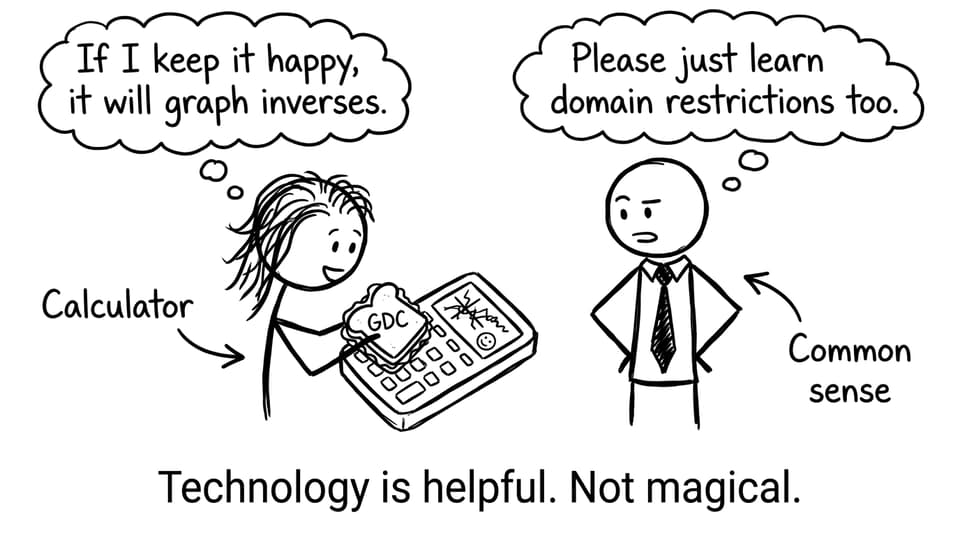
And one reminder: your calculator is a tool, not a substitute for thinking.
FAQ
Is IB Math AA more difficult than AI?
IB Math AA is usually experienced as more theoretical, with more emphasis on algebraic manipulation, functions, and calculus. That can feel harder if you prefer real-world context and interpretation over symbolic reasoning. But “harder” is personal: many students find AA clearer because the rules feel consistent once you learn them. AI can be challenging in a different way because it leans on modelling, technology use, and interpreting data carefully. If you’re choosing between them, look at the style of thinking you enjoy, not just the reputation. RevisionDojo helps either way by keeping notes and practice questions syllabus-aligned and easy to target.
Should I take IB Math AA SL or HL?
Choose IB Math AA HL if you’re confident with algebra, you like being stretched by unfamiliar questions, and your intended degree expects strong mathematics. HL adds both depth and an extra paper, so it’s a commitment of time and attention, not just “more content.” AA SL is a strong option if you want theoretical math without the same level of proof-heavy or extended problem-solving pressure. If you’re unsure, compare how you feel after a week of timed practice in both styles: do you recover and learn from mistakes, or do you dread opening the notebook? Strategy beats ego here. And if you do choose HL, build your routine early with topic-by-topic practice instead of last-minute cramming.
Is IB Math AA accepted by universities?
Yes, IB Math AA is widely accepted, and AA HL is often preferred (or required) for competitive STEM programs. Universities typically care about both the level (SL vs HL) and how it aligns with the course requirements you’re applying for. AA HL signals readiness for calculus-heavy and proof-adjacent thinking that shows up in many first-year degrees. AA SL can still be a strong credential for a wide range of programs, especially when paired with other rigorous subjects. The key is to check the entry requirements early, not in your final term. Once you know the target, RevisionDojo’s Questionbank and Mock Exams help you train directly for the demands of the exams that determine your final grade.
Final thought: make IB Math smaller, then repeat
The fastest students in IB Math aren’t always the “math geniuses.” They’re the ones who make the course small: one topic, one mistake pattern, one improvement at a time.
If you want that kind of progress, build your routine inside RevisionDojo: start with IB Mathematics Analysis and Approaches Resources, learn with Study Notes, drill with the Questionbank, reinforce with Flashcards, and use AI Chat and Tutors when you hit a wall. Your future self will feel the difference in the exam room.