
In the quiet hours of IB season, loneliness doesn't arrive like a dramatic event. It shows up like a small, persistent notification you can't swipe away.
You're doing what you're supposed to do. You're "disciplined." You're "focused." You're the person teachers praise for being reliable. But the more you succeed, the more you start studying alone, worrying alone, carrying deadlines alone. And eventually, the strangest thought appears: How can I be surrounded by people all day and still feel so alone?
If you're an IB student preparing for exams, this isn't a personal flaw. It's a predictable side effect of high standards, constant evaluation, and a workload that quietly replaces your social life with a to-do list.
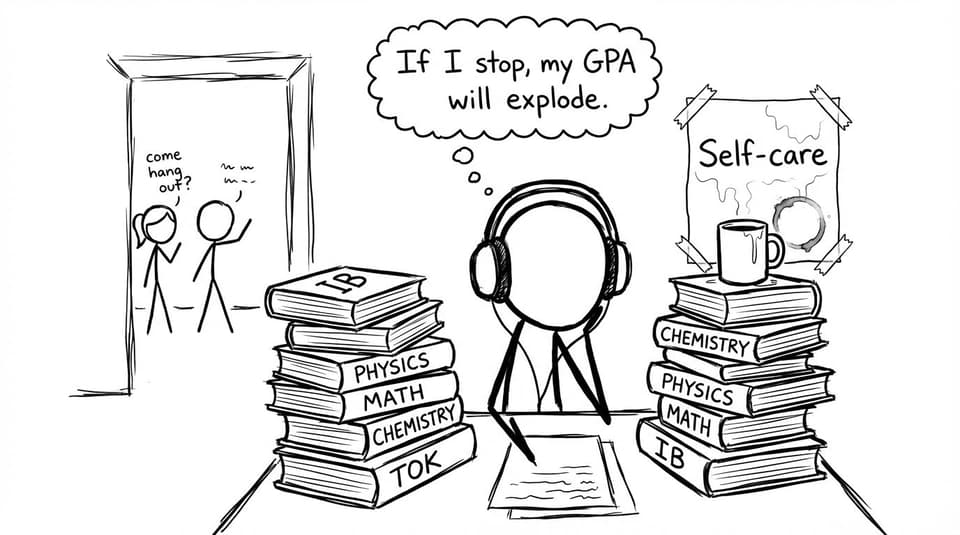
The IB loneliness checklist (quick self-check)
Use this as a fast diagnostic. IB loneliness often hides behind "I'm just busy."
- You study most days but rarely talk about how you're doing.
- You feel guilty when you rest, so you rest alone.
- You don't want to burden friends, so you keep stress private.
- You compare yourself to other IB students and feel behind.
- You're high-performing, yet you feel emotionally flat.
- You have help available, but asking feels like failure.
If several of these hit, you're not broken. You're human inside an intense IB system.
Why IB high achievers feel lonely (even with friends)
High achievement has a hidden cost: it trains you to become self-contained.
In IB, self-contained looks responsible. You don't miss deadlines. You don't complain. You "handle it." Over time, that becomes your identity: the person who can manage pressure.
The problem is that identity is expensive. It discourages you from saying simple, connecting sentences like:
- "I'm scared I'm not improving."
- "I don't know how to revise this."
- "I'm exhausted and I don't know why."
IB loneliness isn't always about having no one around. It's about believing your stress must be carried privately to remain admirable.
The "quiet trade" IB students make
There's a trade that happens gradually in IB.
You trade casual connection for control.
You trade spontaneity for planning.
You trade conversations for performance.
At first, this trade feels worth it. It even feels mature. Then one day you realize you don't have time to feel anything except urgency.
That's why the loneliness of high-achieving IB students can feel confusing: the outside looks successful, but the inside feels isolated.
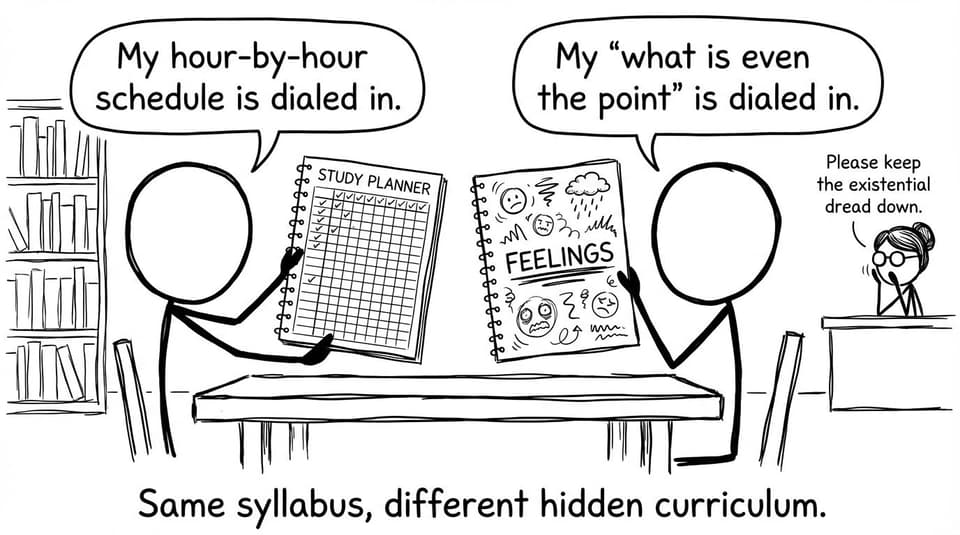
How loneliness quietly harms IB exam performance
IB loneliness isn't just emotional. It's practical.
When you're isolated, you lose three things that make revision easier:
Feedback loops
You don't hear how other IB students structure answers, interpret command terms, or prioritize topics. You stay in your own head, which is where confusion echoes.
A fast fix is using tools that shorten feedback cycles. RevisionDojo's Questionbank is built for that: attempt, get feedback, adjust, repeat. It's not a replacement for people, but it reduces the time you spend stuck alone.
Perspective
Loneliness makes every setback feel like evidence you're failing. A low score becomes a verdict instead of a data point.
Emotional recovery
Even strong IB students need places where they are not being evaluated. Without that, stress never finishes processing. It just accumulates.
A healthier way to think about IB: systems, not solitude
Many high-achievers believe success comes from intensity. In IB, success is more often built from repeatable systems.
A system helps because it turns "I must be perfect" into "I must do the next small thing." That shift reduces isolation because it reduces shame.
Here's a simple IB system you can borrow:
- Understand one topic using study notes
- Recall it with flashcards
- Apply it with questions
- Review mistakes with a markscheme mindset
- Simulate timing occasionally
RevisionDojo intentionally links those steps: Study Notes, Flashcards, Questionbank, AI Chat, Mock Exams, Predicted Papers, and progress tracking in one place. If you want the full workflow, bookmark RevisionDojo App: The Smarter Way to Prep for IB Exams.
Rebuilding connection without sacrificing IB grades
Connection doesn't require hours. It requires intention.
Replace "study alone" with "study alongside"
You don't need a big study group. One person, one hour, once a week is enough to reduce IB loneliness.
Try this structure:
- 10 min: each person says what's hardest right now
- 40 min: silent work (same table, different subjects is fine)
- 10 min: share one mistake you discovered
Notice the key: you're not competing. You're witnessing each other's effort.
Create "low-stakes honesty"
High achievers often only talk when they have a solution. Connection grows when you talk before the solution.
Say one of these to a friend:
- "I'm finding IB heavier than I expected."
- "Can we do a weekly check-in until exams?"
- "Do you ever feel lonely studying for IB?"
It's a small sentence. It's also a door.
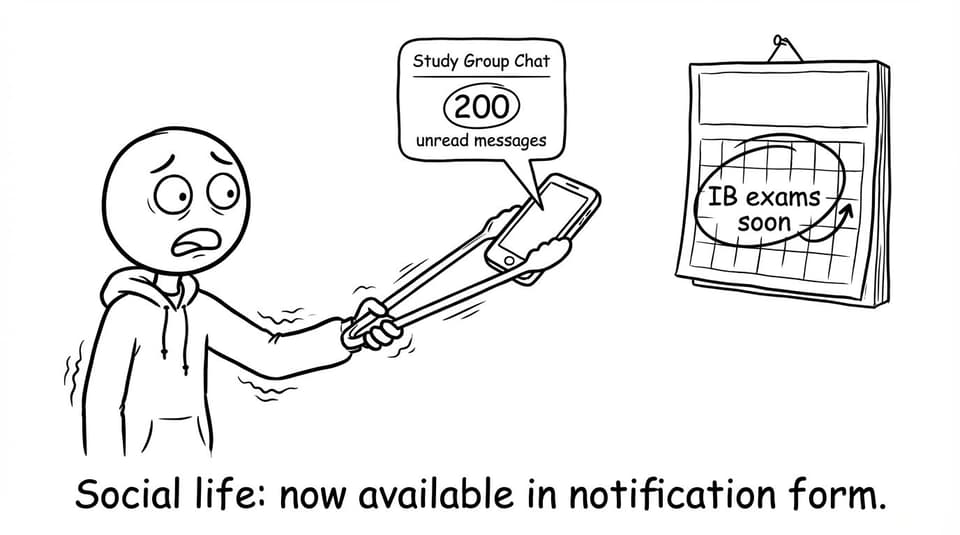
Using RevisionDojo to reduce IB loneliness (practical, not cheesy)
IB loneliness grows when you feel stuck and silent. A good tool reduces stuckness.
Here's a realistic way to use RevisionDojo as emotional support through structure:
Questionbank for "proof I'm improving"
When you feel isolated, you often lose trust in your progress. The Comprehensive IB Question Bank guide explains why question-driven revision restores confidence faster than rereading.
Flashcards for tiny daily momentum
Short sessions help on days when loneliness makes everything feel too heavy to start. If you want a method, use Interactive IB Flashcards: Engaging Memory Practice.
AI Chat for the moments you don't want to ask a human
Some questions feel "too small" to ask a teacher. That's where RevisionDojo's AI Chat helps: quick clarification without the social cost. Use it, then immediately test the concept with questions.
Mock Exams and Predicted Papers for "confidence built from evidence"
Loneliness often spikes when exams feel vague. Timed practice makes them concrete. Use How to Run Timed IB Mock Exams in RevisionDojo to practice under pressure without turning every session into panic.
Grading tools, Coursework Library, and Tutors when loneliness becomes overload
Sometimes loneliness isn't solved by productivity. It's solved by being supported.
RevisionDojo's Grading tools and Coursework Library help you feel less alone in big written components because you're no longer guessing what "good" looks like. And if you need a real voice, Tutors exist for a reason: not because you're failing, but because you're carrying too much.
If you're rebuilding your overall plan, this anchor helps: How to Study for IB Exams: Step-by-Step Guide.
A small IB routine that protects your social life
This is designed for the final stretch, when loneliness tends to peak.
Daily (30-60 minutes)
- 10 minutes Flashcards
- 20-40 minutes Questionbank on one topic
- 5 minutes: write an "error rule" from your mistakes
Twice per week (60-90 minutes)
- Study Notes for one weak unit
- AI Chat for one confusion you keep avoiding
- Immediate question practice on the same unit
Weekly (60-120 minutes)
- One timed block using Mock Exams or Predicted Papers
- Quick review of patterns, not perfection
And here's the social protection rule: schedule one non-academic connection each week that is non-negotiable. A walk. A meal. A call. IB should demand effort, not disappearance.
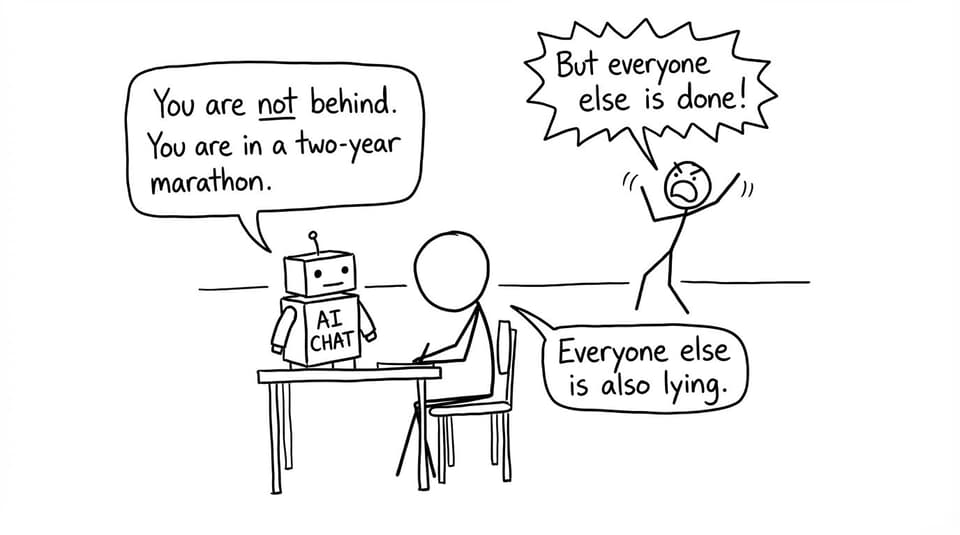
Closing: IB success should not cost you your belonging
The most painful part of IB loneliness is the belief that it's the price of ambition. That if you want a 6 or 7, you must become a person who disappears.
But high performance isn't built from isolation. It's built from good feedback, small routines, and support you're willing to accept.
If you want an IB system that feels calmer and less alone, build it inside RevisionDojo: start with Study Notes and Flashcards, prove progress with the Questionbank, get unstuck with AI Chat, and train confidence through Mock Exams and Predicted Papers. Then, when the pressure rises, use the Grading tools, Coursework Library, and Tutors to bring more voices into the journey.
Your IB grades matter. So do you. And you don't have to prepare for IB by yourself.