
The night before an IB exam, your brain does a strange thing. It stops asking, "Do I understand this?" and starts asking, "Will this count?"
That question is the quiet hinge between a good student and a Level 7 student.
Because in the IB, effort is invisible unless it matches the criteria. You can know a topic and still miss the top band. You can write a lot and still score less. And you can feel "ready" but still lose marks to the same handful of avoidable habits.
The secret to hitting Level 7 criteria every time isn't a new trick. It's a repeatable system: read the criteria like a target, practice like an examiner, and write like someone who knows what counts.
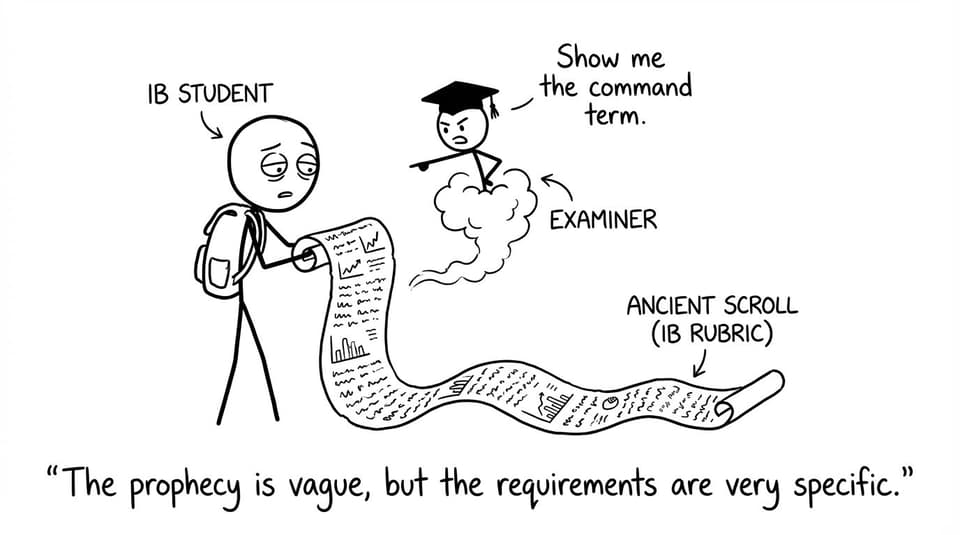
The Level 7 checklist (the examiner can't unsee)
Before we go deeper, here's a compact checklist you can apply to almost any IB subject, paper, or extended response. If you do these consistently, you stop "hoping" for a Level 7 and start engineering one.
- Answer the exact question (not the topic).
- Follow the command term (explain, evaluate, to what extent, compare).
- Make a claim early, then support it.
- Use evidence (data, quotes, examples, definitions).
- Add analysis (so what? why does it matter?).
- Add evaluation (limits, counterarguments, conditions).
- Use subject vocabulary naturally.
- Structure so the examiner can award marks fast.
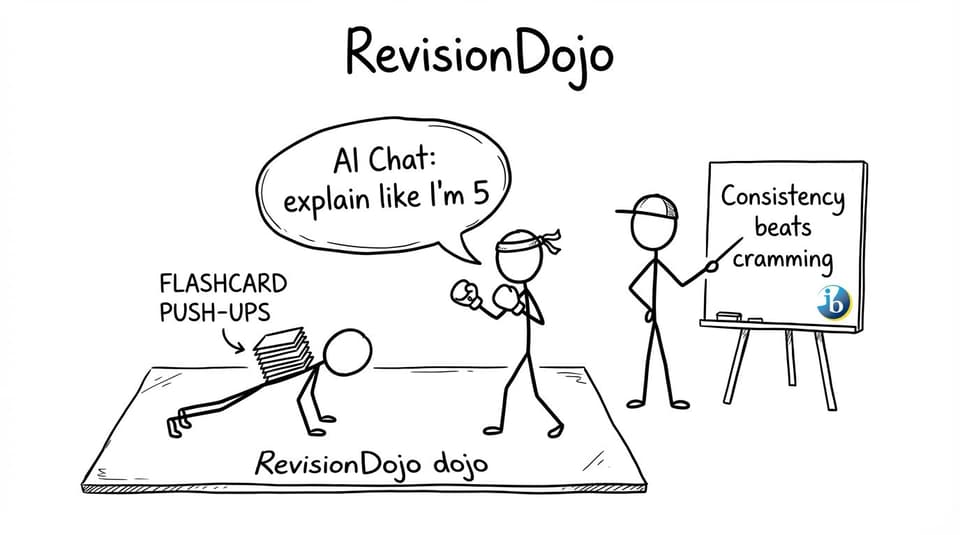
If you want a place to drill this daily, RevisionDojo is built for it: Questionbank for targeted practice, Study Notes for clarity, Flashcards for retrieval, AI Chat for live feedback, and Grading tools to align your writing with top-band expectations.
Why "Level 7" is a criteria game (not a confidence game)
Most students treat IB assessment like a mood: "I felt good about that essay." Or "I think I did enough."
Examiners don't grade feelings. They grade signals.
A Level 7 response sends clear signals:
- The student understood the task.
- The student selected relevant knowledge.
- The student connected ideas logically.
- The student evaluated, not just explained.
- The student communicated with control.
A Level 5 response can look similar from the inside. It often has the same topics, sometimes even the same facts. The difference is what happens between facts: linking, weighing, prioritizing, and deciding.
The hard truth is comforting: if it's criteria-based, it's trainable.
The real secret: build "criteria reflexes"
When people say "every time," they usually mean something boring: repetition.
Top IB students don't magically produce brilliance on demand. They produce reliable patterns that map to criteria. These patterns become reflexes.
Criteria reflex #1: Start with a thesis that matches the command term
A thesis isn't just for English. In IB, it's a mark-saving device.
- If the question says evaluate, your first lines must show judgment.
- If it says compare, you must name both sides and the basis of comparison.
- If it says to what extent, you must state a position with conditions.
A simple template that works across subjects:
Position + reason + condition
Example (generic):
This factor is significant because , but its impact depends on .
That sentence tells the examiner: "I'm doing more than explaining."
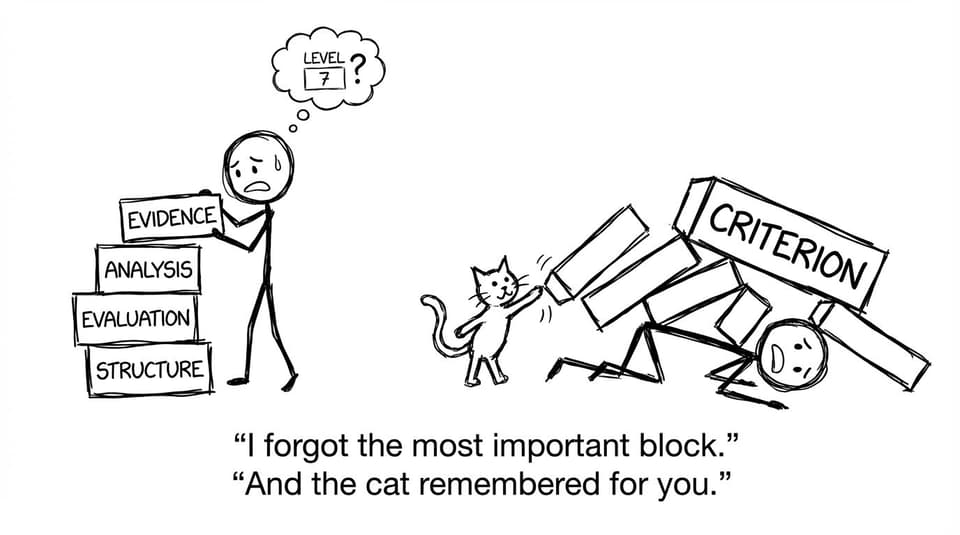
Criteria reflex #2: Turn every paragraph into C-E-A-E
A Level 7 paragraph usually has four parts:
- Claim (what you think)
- Evidence (what proves it)
- Analysis (what it means)
- Evaluation (how strong it is, limits, alternative)
Not every subject uses the same labels, but the thinking is the same.
If you want to practice this in a structured way, use RevisionDojo's Questionbank to pick one exam-style prompt per day and write one paragraph using C-E-A-E. Then check it with AI Chat: ask it to identify your evidence, analysis, and evaluation separately. That simple loop is how criteria reflexes form.
Criteria reflex #3: Make your evaluator voice audible
Many IB students can explain well. Fewer can evaluate clearly.
Evaluation isn't fancy vocabulary. It's visible decision-making. Phrases that signal evaluation:
- "This suggests… however…"
- "A limitation is…"
- "This is more/less convincing because…"
- "This depends on…"
- "An alternative explanation is…"
If you only add one habit this week, add this: end each body paragraph with one evaluative sentence. That single line often separates top-band writing from "good but not quite."
How to practice Level 7 like you're training for a sport
The mistake is trying to practice "the whole exam" all the time. That's like playing full matches when you can't reliably pass.
Level 7 consistency comes from drilling the small pieces that earn marks.
Use "micro-sprints" instead of marathon revision
Try this 30-minute micro-sprint:
- 5 minutes: read the question, underline command term, write your thesis.
- 15 minutes: write 2 C-E-A-E paragraphs.
- 10 minutes: self-grade against criteria (or use a rubric).
Then repeat tomorrow with a new question.
RevisionDojo makes this easier to sustain: use Study Notes to patch the exact concept you missed, then build Flashcards for the definitions you keep forgetting, then return to the Questionbank. If you want pressure-training, use Mock Exams to simulate timing and stamina, and Predicted Papers to focus your final stretch on high-likelihood themes (without relying on luck).
Grade yourself like an examiner (even when it hurts)
A useful mindset shift: you're not writing to impress a teacher. You're writing to make marking easy.
Ask after every response:
- Where did I explicitly answer the question?
- Where is my clearest evidence?
- Where did I interpret that evidence?
- Where did I acknowledge a limitation or alternative?
- If I were tired, could I still find the marks?
RevisionDojo's Grading tools are ideal for this because they force you to map your work to what the IB rewards, not what feels "long enough."
The most common reasons IB students miss Level 7 (and the fixes)
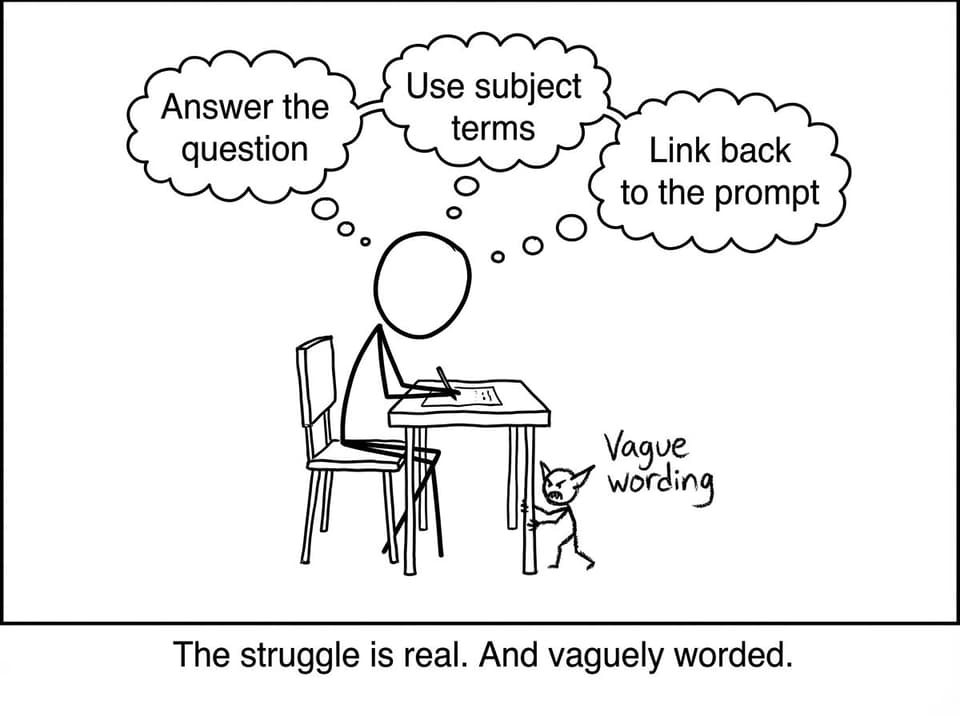
You wrote about the topic, not the question
This is the classic: you revised "photosynthesis" or "Cold War," then the question asks something narrower, and you dump what you know.
Fix: rewrite the question in your own words and include it in your thesis.
You explained, but didn't evaluate
Explanation is necessary but rarely sufficient for top-band criteria.
Fix: add one sentence of limitation, reliability, or counterargument per paragraph.
You had evidence, but didn't interpret it
Evidence without analysis is just a fact pile.
Fix: after each piece of evidence, force yourself to write "This shows…" or "This implies…" and make it specific.
You had good ideas, but messy structure
Examiners award marks quickly when structure is clear.
Fix: use signposting. Short topic sentences. Clean paragraphing. Label steps in methods. Define variables. State assumptions.
You tried to revise everything equally
Level 7 isn't about knowing everything. It's about performing well on what's assessed.
Fix: use targeted revision. RevisionDojo's Questionbank lets you focus by topic and difficulty, and Tutors can help you identify the specific criteria gaps that keep repeating.
How RevisionDojo fits into a Level 7 system
A calm truth: most students don't need more motivation. They need a workflow that removes friction.
Here's a simple weekly loop using RevisionDojo features:
- Mon to Thu: one prompt per day from the Questionbank, one C-E-A-E paragraph, then refine.
- Daily: 10 minutes of Flashcards for key terms and definitions.
- When stuck: use AI Chat to ask, "What part of the criteria am I missing?"
- Weekend: one timed section from Mock Exams, then review with Grading tools.
- Coursework season: use the Coursework Library to understand what strong structure looks like and what common mistakes cost marks.
The point isn't to do more. It's to do what maps to the IB criteria more often.
The ending you want in the exam hall
In the IB, the top band rarely belongs to the student who "worked the hardest" in some abstract sense. It belongs to the student who made their thinking legible, targeted, and easy to reward.
That's the real secret to hitting Level 7 criteria every time: make the criteria your default setting.
If you want a single next step, open RevisionDojo and do this today: pick one IB exam-style prompt in the Questionbank, write one C-E-A-E paragraph, then use AI Chat and the Grading tools to check if your evaluation is real. Repeat tomorrow. Consistency is quiet, but it stacks.