

The night I realized my IB brain had quietly quit
On Monday at 1:13 a.m., I watched my cursor blink on a blank document like it was judging me.
I was "studying for IB exams," technically. My desk looked like a high-achieving disaster: open notes, half-highlighted pages, a to-do list that had become a diary of broken promises. I wasn't lazy. I wasn't even behind in a dramatic way. I was just… empty.
That's the part people miss about IB burnout. It doesn't always arrive with fireworks. Sometimes it shows up like fog: you sit down to work and nothing happens. You read the same paragraph seven times and retain zero. You plan harder, download another template, and feel worse.
This post is the seven-day reset I wish someone handed me earlier: a realistic, exam-focused plan that takes you from burnt out to productive in 7 days, without pretending you can "just grind" your way out. The word IB will keep showing up, because the fix has to match the problem: an IB workload needs an IB strategy.
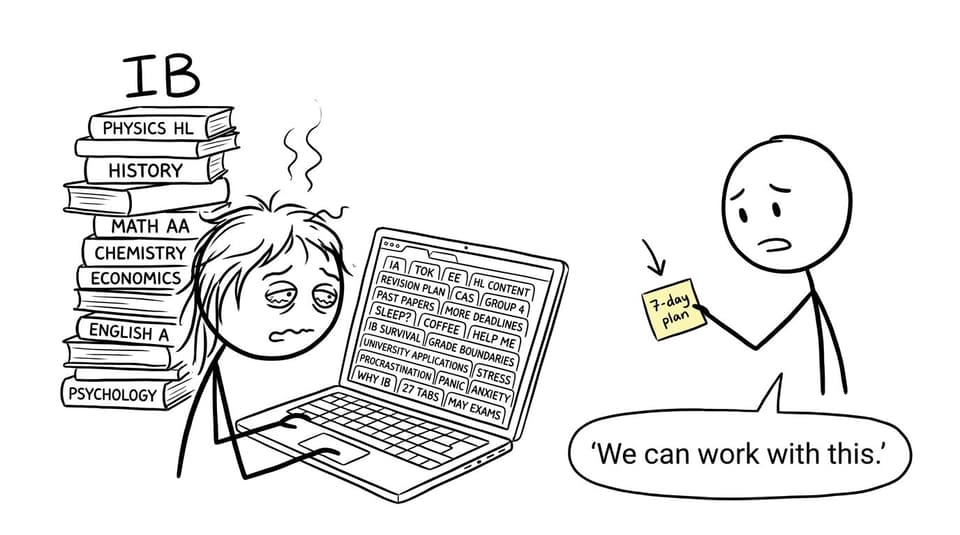
The 7-day IB reset checklist (save this)
If you want the overview before the story, here it is. Each day has one job.
- Day 1: Stop the bleeding (reduce chaos, choose what matters)
- Day 2: Rebuild energy (sleep, food, movement, a sane baseline)
- Day 3: Make a micro-plan (small targets you can actually finish)
- Day 4: Train recall (Questionbank-style practice, not rereading)
- Day 5: Fix weak spots (Study Notes + Flashcards + feedback loop)
- Day 6: Simulate pressure (Mock Exams + time + reflection)
- Day 7: Lock it in (Predicted Papers, light review, confidence)
You don't need a perfect week. You need a week that moves you from "stuck" to "moving." In IB, momentum is a study skill.
Day 1: The IB burnout pivot (stop the bleeding)
The first day is not for heroics. It's for control.
My turning point was writing down the truth: I was trying to prepare for IB exams by doing everything except the things that prove exam readiness. I was rewriting notes, reorganizing folders, and "planning" so much that I felt busy without getting better.
So Day 1 was a pivot:
- I made a two-column list: "Will raise my IB exam score" vs "Feels productive".
- I circled anything that created a grade impact quickly: timed questions, markscheme-style checking, targeted review.
- I deleted (or parked) the rest for later.
If you have RevisionDojo open, this is when you commit to the parts that behave like the IB: Questionbank, Grading tools, and Mock Exams. Those tools don't care about your aesthetic. They care whether you can answer.
Day 2: Energy is an IB study technique (not a reward)
Burnout makes you moralize basic needs. You start thinking sleep is something you earn after "catching up."
But IB doesn't grade how hard you tried at midnight. It grades what you can do at 9 a.m. under time pressure.
Day 2 is boring on purpose:
- Sleep: one earlier night, one consistent wake time.
- Food: one proper meal before serious study.
- Movement: a 10-20 minute walk without revision audio.
- Environment: clear one small surface (not your whole room).
The point isn't wellness. The point is performance. A regulated body makes recall possible, and recall is the core of IB exam prep.
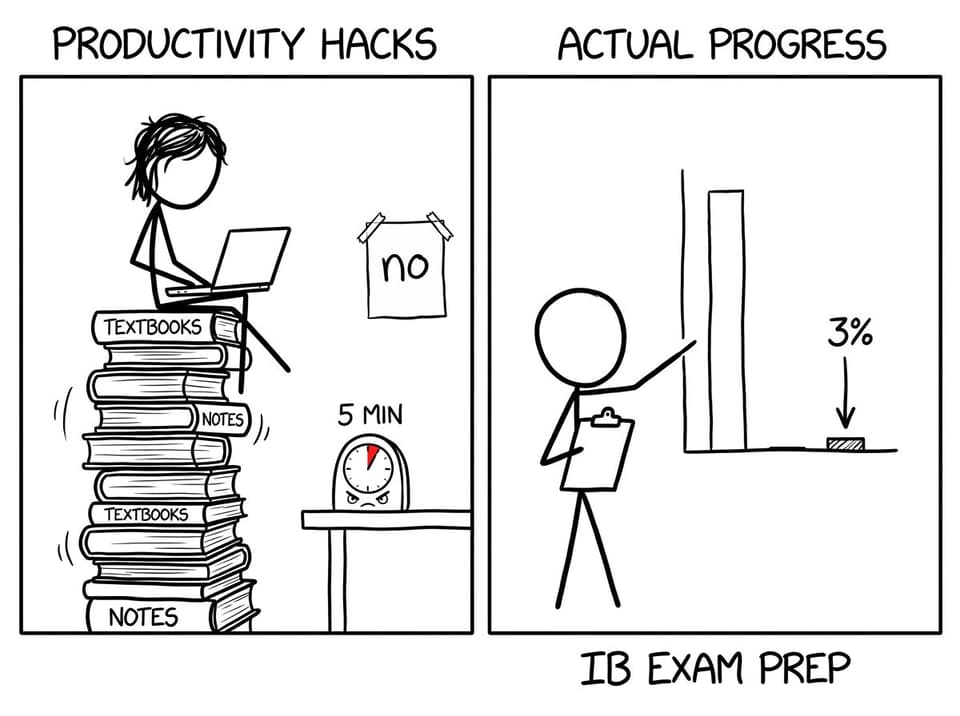
Day 3: The micro-plan that makes IB manageable
Most IB students don't fail because they lack ambition. They fail because their plan is written for a different species.
On Day 3, I stopped writing "Revise HL Topic 4." That's not a task. That's a threat.
Instead, I made tasks that could be completed in one sitting:
- 25 minutes: answer 10 mixed questions (easy/medium) on one subtopic
- 10 minutes: check with markscheme logic (why my answer lost marks)
- 10 minutes: write 5 flashcards from mistakes
- 5 minutes: choose tomorrow's 10-question set
This is where RevisionDojo's Flashcards and Jojo can save time. You can turn errors into short prompts fast, then ask Jojo to explain why the markscheme wants a specific phrasing or step.
The secret: you are not planning a week. You are planning the next 45 minutes. In IB, consistency beats intensity.
Day 4: Real IB productivity is recall, not rereading
Day 4 is where the reset becomes visible. The goal is to create small wins that prove your brain still works.
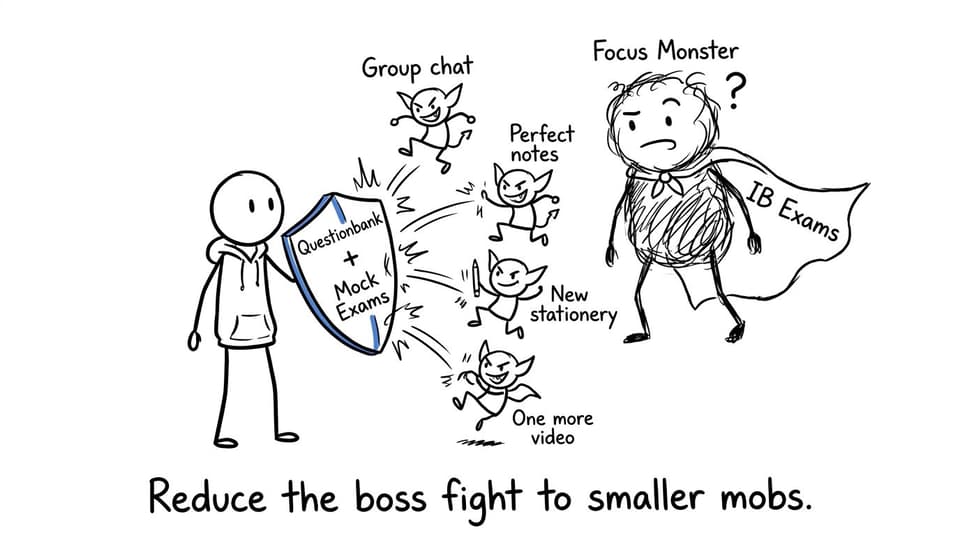
I picked one subject I'd been avoiding and did the least romantic thing possible: Questionbank practice.
Rules I followed:
- Start with lower difficulty to rebuild confidence.
- Mix question styles (short response, structured, longer response).
- Mark immediately while the thought process is fresh.
- Keep a "mistake log" of patterns, not just topics.
This is also where Grading tools matter. A lot of IB stress comes from not knowing what "good enough" looks like. When you can see exactly which criteria you missed, anxiety becomes information.
Burnout tells you "you're bad at this." Practice tells you "you missed this step." IB rewards the second sentence.
Day 5: Patch the leaks (targeted review the IB way)
By Day 5, you'll have something better than motivation: data.
Your mistakes will cluster. They always do.
Mine looked like:
- I knew definitions but couldn't apply them to unfamiliar contexts.
- I rushed command terms.
- I lost marks on explanations that were "sort of right" but not IB-right.
Day 5 is targeted repair:
- Use Study Notes to refresh only the concepts linked to your mistake log.
- Use Flashcards for definitions, processes, and command terms.
- Use Jojo to test understanding: ask it to quiz you and then critique your explanation.
- If coursework is still draining you, use the Coursework Library as a reference model (not a copying machine) to reduce mental load.
This is the day productivity starts feeling calm. You're no longer "studying everything." You're fixing what actually loses marks in IB exams.
Day 6: IB exam confidence comes from simulation
Burnout makes the exam feel mythical, like it's designed to expose you.
Simulation makes it normal.
Day 6 is for Mock Exams and timed sets. Not a full marathon if you're fragile, but enough to feel the clock.
My simple template:
- 45-90 minutes: timed paper-style section (or a realistic subset)
- 15 minutes: mark and categorize mistakes
- 10 minutes: rewrite one model answer (your own, improved)
- 5 minutes: choose tomorrow's "lock-in" focus
If you're working with a tutor, this is also the best moment to bring in Tutors. Not for reteaching the whole course, but for fast diagnosis: "Here are my five recurring mistakes. How do I stop them?" That's high-leverage help.
Day 7: Lock it in (productive, not panicked)
Day 7 is not "do more." It's "make it stick."
This is the day to use Predicted Papers (and other exam-style sets) lightly and strategically. The purpose is to rehearse structure, timing, and confidence.
My Day 7 looked like:
- One short timed set in the morning
- Review the top 10 flashcards I kept getting wrong
- Skim key Study Notes headings (not deep reading)
- Pack my bag, set my alarm, and stop studying early enough to sleep
The emotional shift matters. IB is hard, but it's not supposed to consume your whole identity. A good plan gives you your brain back.
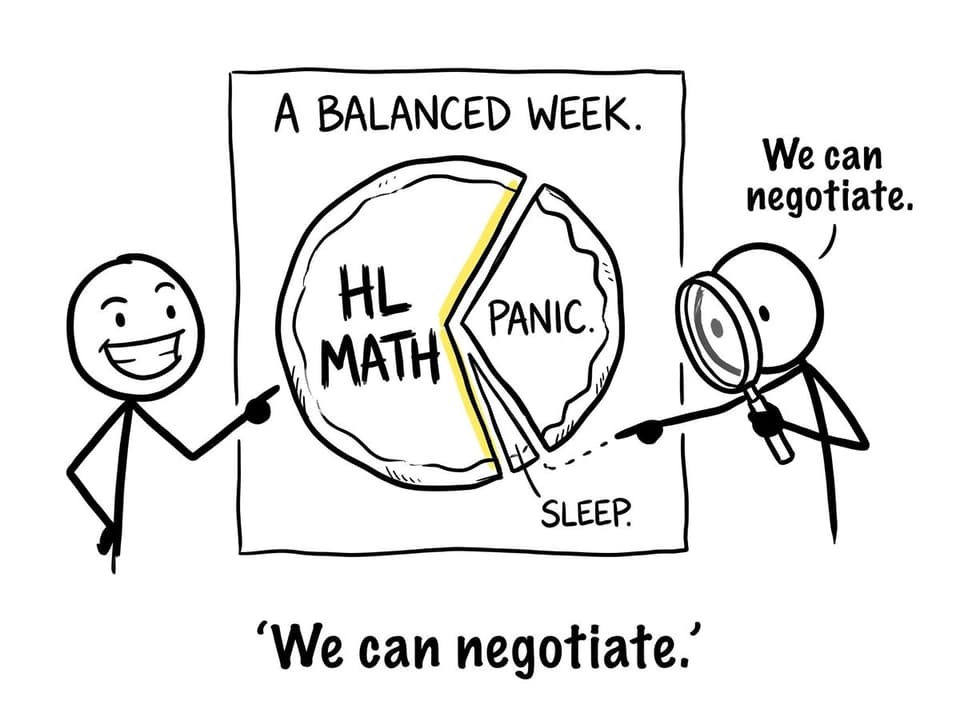
The small habits that keep IB burnout from coming back
After the seven days, you don't "finish burnout." You manage it like weather.
Three habits helped me stay productive in IB exam season:
- Daily proof-of-work: one timed set or one marked response per subject rotation.
- Mistake-first studying: start with what you got wrong yesterday.
- One shutdown ritual: same time each night, same short routine, no guilt.
RevisionDojo fits this loop well: Questionbank creates proof, Grading tools create feedback, Flashcards store mistakes, Study Notes fill gaps, and Jojo keeps you moving when you're stuck.
The point of the story (and your next step)
Seven days won't make IB easy. But it can make IB doable again.
If you're burnt out, the bravest thing you can do is stop negotiating with guilt and start building proof. One timed set. One marked response. One repaired weak spot. That's how you go from "I can't" to "I'm moving."
When you're ready to study like the exam instead of studying around it, build your loop with RevisionDojo: Questionbank for real practice, Study Notes for fast refreshers, Flashcards for retention, Jojo for clarity, Grading tools for precision, Mock Exams and Predicted Papers for confidence, plus Tutors and the Coursework Library when you need support. IB rewards consistency, and consistency is something you can rebuild in a week.