

If you have ever walked out of a practical thinking, That went well, and then opened your grade thinking, Apparently not, you are not alone.
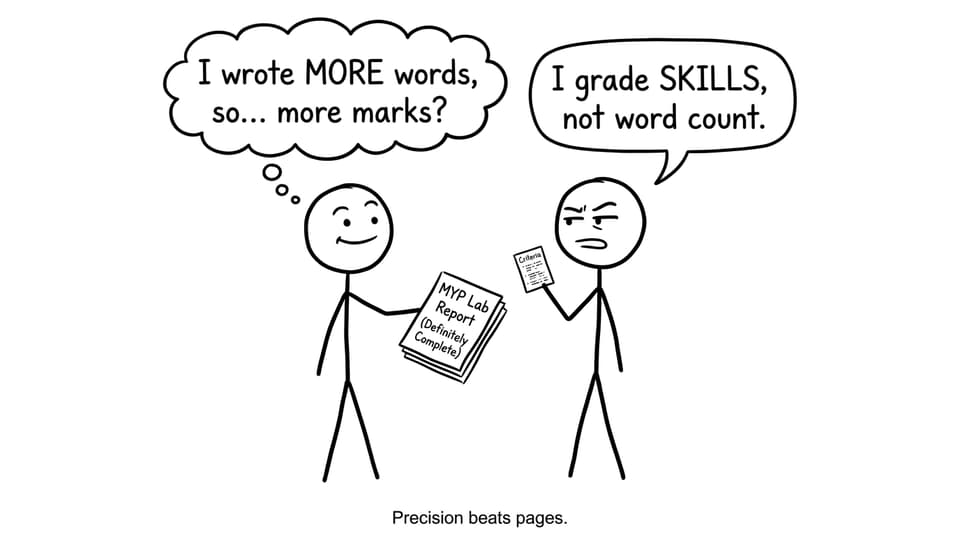
In MYP Science, lab reports punish a specific kind of optimism: the belief that a working experiment automatically becomes a high mark. It does not. A solid practical is only the raw material. The marks come from how clearly you show the scientific skills your teacher is assessing.
That is good news, even if it does not feel like it at first. Because once you understand what MYP lab reports are really measuring, your report stops being a guessing game and becomes something you can reliably improve.
MYP lab report checklist (print this before you write)
Use this as a quick pre-submit scan. It is short on purpose.
-
Research question is specific and measurable (not vague).
-
Aim names the independent variable (IV) and dependent variable (DV).
-
Hypothesis predicts and explains using science.
-
Method is reproducible and includes control of variables.
-
Data tables have units, headings, and consistent precision.
-
Graphs have labeled axes, a sensible scale, and a clear title.
-
Analysis explains trends using numbers from the data.
-
Conclusion answers the question and links back to theory.
-
Evaluation gives specific limitations and realistic improvements.
-
Reflection connects the investigation to real-world science where required.
When you want the bigger picture of how MYP Sciences are structured across Biology, Chemistry, and Physics, keep this overview open: MYP Sciences curriculum breakdown.
What high-scoring MYP lab reports are actually assessing
Most students write lab reports like a diary: first we did this, then we did that, then the beaker did something dramatic.
But MYP lab reports are closer to an argument. You are not proving that you were present. You are proving that you can:
-
use scientific knowledge to justify a prediction
-
design a fair test (or critique one)
-
process data accurately
-
interpret evidence and explain what it means
-
evaluate limitations with cause-and-effect thinking
That is why writing more often caps marks. If extra sentences do not show an assessed skill, they are just extra.
If you are building your overall exam plan alongside coursework, this pairs well with: How to revise for MYP Sciences without memorising everything and the MYP eAssessments 30-day study plan.
Start with criteria thinking, not a template
A template helps you avoid missing sections. But a template cannot tell you what earns top marks.
Before you write each section, ask one simple MYP question:
What skill is this section supposed to demonstrate?
That single prompt changes your tone. Your aim becomes more precise. Your method becomes more justified. Your evaluation stops being a list of excuses and becomes an analysis.
For students who like guided practice, RevisionDojo supports this criteria-first mindset by letting you practice science skills in small, repeatable loops using Study Notes, Flashcards, and the Questionbank (with feedback that pushes you toward mark-winning clarity). Start from the MYP hub when you want everything in one place.
Aim and hypothesis: the fastest marks to gain
In a strong MYP report, the aim and hypothesis are not formalities. They set up the logic of the entire investigation.
A high-scoring aim
A high-scoring aim does two things:
-
states what you are investigating
-
clearly identifies IV and DV
Example structure:
*To investigate how changing [IV] affects [DV] in [system].*
A high-scoring hypothesis
A high-scoring hypothesis includes:
-
a clear prediction (direction matters)
-
scientific reasoning (the mechanism)
Try this structure:
*If [IV] increases, then [DV] will [increase/decrease] because [scientific principle].*
If you need quick refreshers on measurement language (accuracy, precision, reliability, uncertainty), this note is a lifesaver during write-ups: Measurement in science notes.
Method: describe less, justify more (MYP gold)
Many MYP lab reports lose marks in the method even when the steps are correct.
Why? Because a step-by-step list shows what you did, not whether you designed a good investigation.
To push into high bands, add short justifications:
-
Variables: name IV, DV, and at least 3 controlled variables.
-
Control strategy: say how you kept each controlled variable constant.
-
Reliability: include repeats and explain why you averaged.
-
Validity: explain why your measurements actually measure the DV.
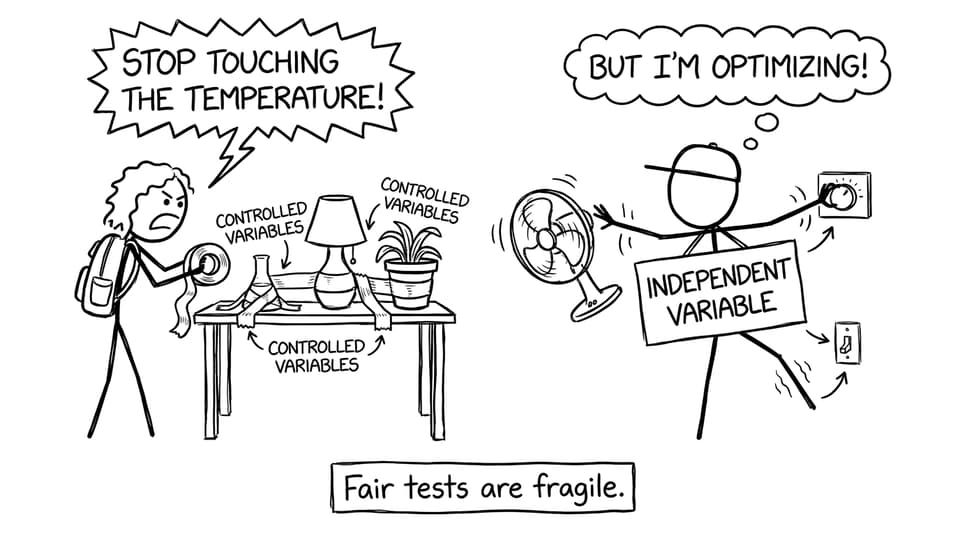
A good test is often fragile. Small uncontrolled changes can quietly ruin the logic. Your method section is where you prove you protected that logic.
Data and processing: your graph is not your analysis
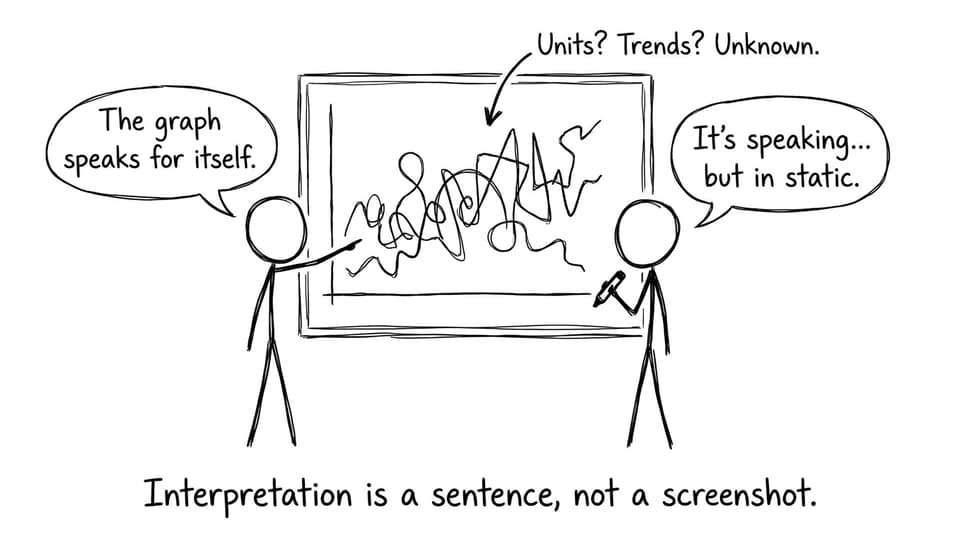
Tables and graphs earn credit only when they are accurate and easy to read.
Present data like you respect the reader
-
consistent units everywhere
-
same decimal places within a column
-
clear titles and headings
-
sensible graph scales (not cramped, not overly zoomed)
Process data like you are making a claim
In MYP Science, your analysis should:
-
identify trends using numbers (quote values)
-
compare conditions (use differences or percentages when relevant)
-
explain anomalies with a plausible reason
A sentence like “the results increased” is weak. A sentence like “from 10 g to 16 g (a 60% increase) as temperature rose from 20°C to 40°C” gives your evaluator something to reward.
To build these skills quickly, use targeted practice: RevisionDojo’s Questionbank feature lets you drill data-handling questions and get feedback you can apply in your next MYP lab.
Conclusion and evaluation: where grades usually plateau
A conclusion is not a summary. In a high-scoring MYP lab report, it is a decision supported by evidence.
What a strong conclusion includes
-
directly answers the research question
-
uses processed data as evidence (not vibes)
-
links to scientific theory
-
states whether the hypothesis was supported, with justification
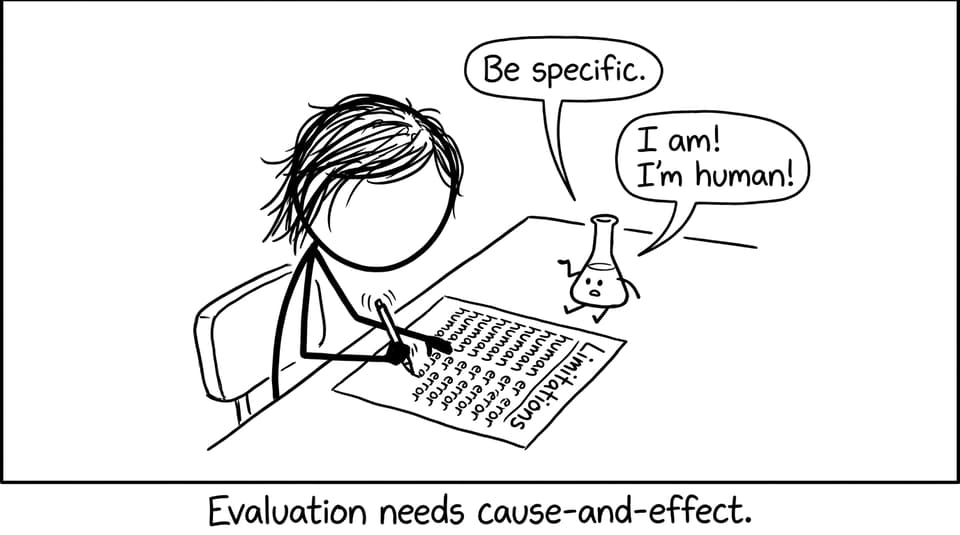
Evaluation: stop writing “human error”
Top evaluation reads like this:
-
Limitation: what specifically went wrong?
-
Effect: how did it change the results (direction and why)?
-
Improvement: what realistic change would reduce the issue?
Example:
Using a measuring cylinder introduced a larger uncertainty in volume readings, which could blur differences between trials. Using a burette would reduce uncertainty and improve precision.
If your lab involves shared procedures or collaboration, protect your marks by keeping your reporting honest and specific. This guide is written for IB Biology, but the principles carry well into MYP practice: Academic honesty in IB Biology labs.
Closing: the shift that makes MYP lab reports predictable
Most students write MYP lab reports asking, Have I included everything?
High scorers write MYP lab reports asking, Have I shown the skill this section is assessing?
That shift is quiet, but it changes your results fast.
When you are ready to practise that skill-first approach consistently, build your routine inside RevisionDojo: revise a concept with Study Notes, recall it with Flashcards, apply it with the Questionbank, pressure-test it with Mock Exams and Predicted Papers, then improve your writing with AI Chat, Grading tools, and the Coursework Library. The more you practise like that, the more your next MYP lab report stops being a surprise and starts being a score you can see coming.