
If you have ever walked out of a MYP Language and Literature assessment thinking, “I did everything,” and then watched your score stay stubbornly the same, you are not alone. The strange part is that it can feel like the subject is subjective, like the marker is simply “vibing” with your writing.
But a 7 in MYP Language and Literature is not magic and it is not taste. It is criteria. It is clarity. And it is the quiet skill of explaining why a choice in a text matters, even when the extract is unfamiliar and the clock is loud.
The level 7 mindset in MYP Language and Literature
A 7 does not mean perfect style, endless vocabulary, or memorising quotes. In MYP, a 7 usually looks like a student who can do three things under pressure:
-
Make a specific claim about meaning
-
Prove it with precise evidence
-
Explain the authorial choice and its effect with control
If you want a reliable overview of how the programme is structured, keep the Middle Years Program (MYP) hub open while you revise.
Quick checklist: what to fix first (high impact)
Use this as your MYP upgrade list before you write another practice response:
-
Identify the task’s target criteria before you write a single sentence
-
Swap plot summary for authorial choice + effect
-
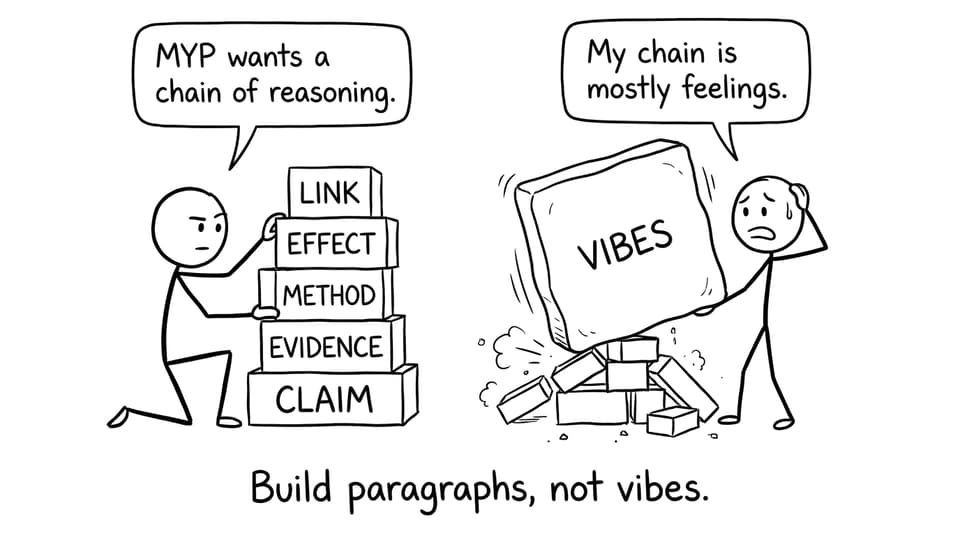
Build paragraphs with a repeatable logic (claim → evidence → analysis)
-
Keep organisation visible: topic sentences, clear sequencing, purposeful conclusion
-
Edit for control: accuracy and clarity beat “fancy” wording
For task practice ideas across subjects (including language tasks), see Sample MYP Assessment Tasks for Every Subject Group.
MYP criteria are not background info; they are the exam
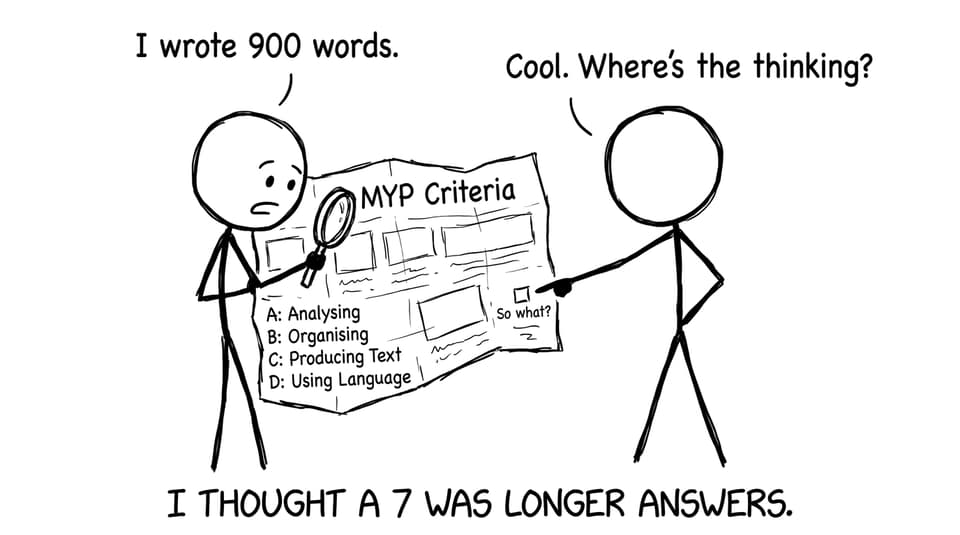
Most students who stall at a 5 or 6 are not short on effort. They are short on alignment. MYP Language and Literature is assessed using four criteria: Analysing, Organising, Producing Text, and Using Language.
Your job is to make it easy for a marker to say, “Yes, this matches the top descriptors.” That is why it helps to read a clear breakdown like MYP Language and Literature Assessment Criteria Explained and then practise one criterion at a time.
If you want the grading system in plain terms, How Are IB MYP Students Graded? Criteria Explained is worth ten minutes.
Analysis in MYP: move from “what” to “how” to “so what”
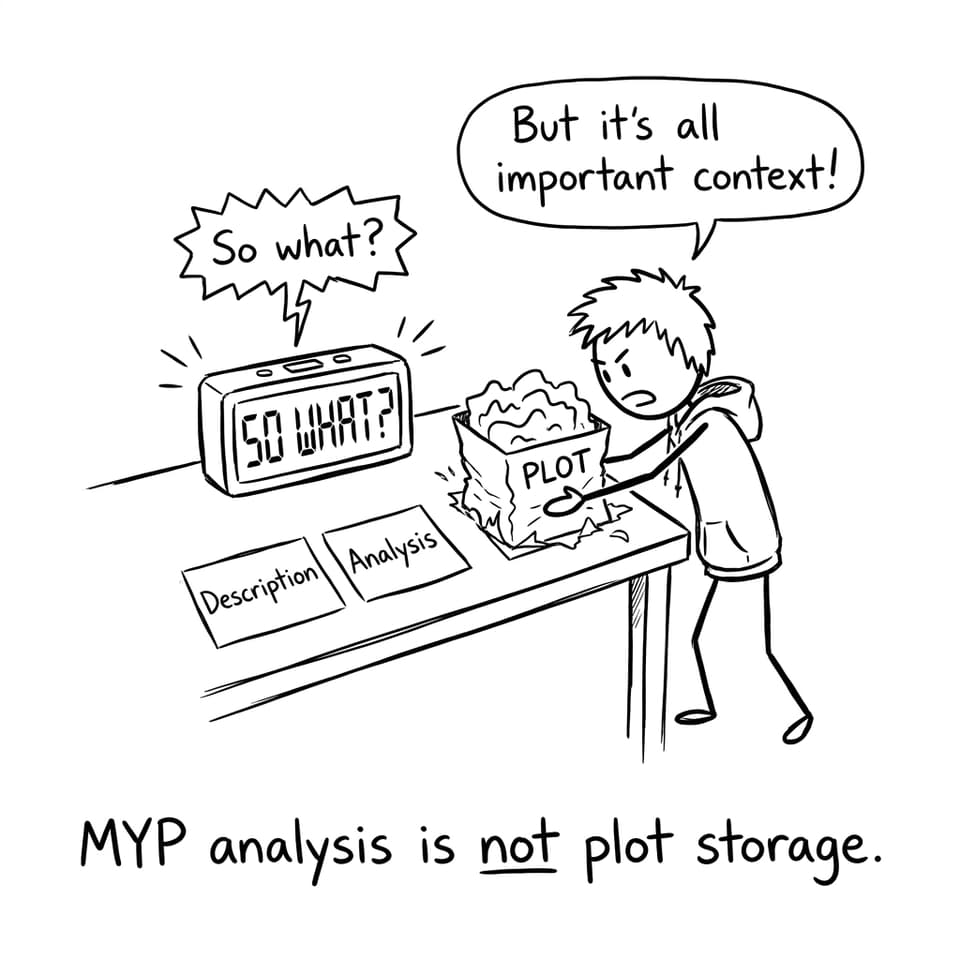
The fastest way to lose marks in MYP Language and Literature is to retell. Retelling feels safe because it proves you read the text. But it does not prove you can interpret it.
A strong analytical sentence usually contains:
-
a method (choice): diction, imagery, structure, tone, contrast, symbolism
-
an effect (reader impact)
-
a purpose (why the writer might want that effect)
When you are unsure, ask one question: “So what?”
To build this skill deliberately, use How to Improve Analysis Skills in MYP English alongside timed practice.
And when you need sharper evidence habits (choosing, integrating, explaining), these Evidence selection Notes are a clean reference.
Organisation: the hidden multiplier for a 7
Markers cannot reward ideas they cannot find. In MYP, organisation is often the easiest criterion to improve because it is structural, not “talent.”
Try this simple paragraph pattern:
-
Topic sentence with a clear claim
-
Short evidence (quote or precise detail)
-
Technique named accurately
-
Effect explained in one to two sentences
-
Link back to the task and your line of argument
If you struggle with persuasive or media texts, practise techniques like viewpoint and framing with Notes for Media construction - MYP and Notes for Bias - MYP.
The revision loop that actually works (and feels calmer)
The trap in MYP Language and Literature revision is “more notes.” Notes can comfort you, but they rarely change your writing.
A better loop is:
-
10 minutes: plan using criteria language
-
20 minutes: write one response (or even one body paragraph)
-
10 minutes: improve using feedback and rewrite only the weakest section
This is where RevisionDojo becomes more than a website and starts acting like a training plan. You can revise content quickly with the MYP English Lang & Lit Resources, then practise with Questionbank-style prompts, and get targeted help using AI Chat when your explanation feels thin.
Use Study Notes to rebuild weak areas fast, Flashcards to keep key terms alive (like “register,” “purpose,” “tone,” “juxtaposition”), and Grading tools to check whether your writing actually hits the descriptor. When exam pressure matters, Mock Exams and Predicted Papers (where available) help you rehearse timing without guessing. If you need model work and structures, the Coursework Library is a shortcut to seeing what “control” looks like. And if you keep repeating the same mistakes, Tutors can diagnose patterns quickly.
For a skill-first plan you can follow week by week, read Best Revision Strategies for MYP Language and Literature.
The final shift: stop asking what to write, start asking what is being assessed
A 7 in MYP Language and Literature appears when you stop trying to sound impressive and start trying to be unmistakably clear. Clear claim. Precise evidence. Explained effect. Logical structure. Controlled language.
If you want to make that repeatable, build your routine inside RevisionDojo: study with Study Notes, drill with Questionbank, retain with Flashcards, fix gaps with AI Chat, and pressure-test with Mock Exams and Predicted Papers. Your next 7 is not hidden in a longer paragraph; it is hidden in a better explanation.