


Paper 2 has a strange way of calming you down and panicking you at the same time.
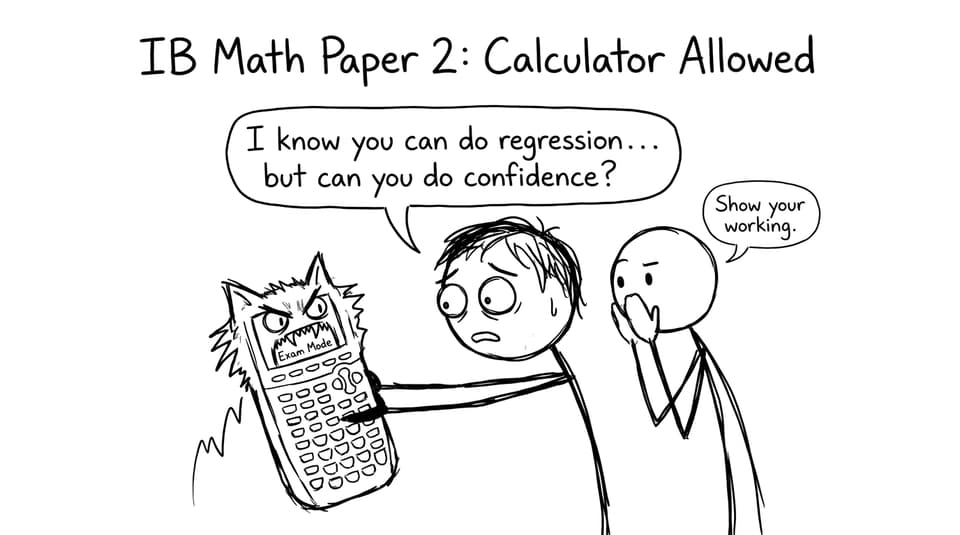
You walk in thinking, “Calculator allowed. Great.” Then the first modeling question arrives, your screen fills with decimals, and you realize the calculator isn’t here to save you. It’s here to expose you. In IB Math Paper 2, the highest marks don’t go to the fastest button-pressers. They go to the students who can think clearly, use technology on purpose, and explain what the output means.
That’s the shift to make for IB Paper 2: treat your calculator like a sharp tool, not a crutch. This guide breaks down a strategy you can rehearse in short sessions, then prove under timed conditions using RevisionDojo.
Your fast Paper 2 checklist (print this mentally)
Before you do any serious IB Paper 2 practice, set up these basics:
-
Confirm your calculator model is allowed and you know how to put it in exam mode.
-
Pick your course path (AA or AI, SL or HL) so your practice matches your exam.
-
Build a “method marks habit”: every answer must include a sentence of interpretation.
-
Drill high-frequency Paper 2 skills: graphs, regression, solving, calculus applications, probability/statistics.
-
Run at least one timed Paper 2 simulation weekly in the final stretch.
For a clear overview of what the paper looks like, start with What to Expect in IB Math AA Paper 2: A Student Guide.
Why IB Paper 2 is a reasoning test in disguise
In IB Math Paper 2, the calculator can produce an answer in seconds. But the markscheme is rarely impressed by the answer alone.
Paper 2 is built around a quiet idea: real math is not just calculation, it’s judgment. You must choose a model, justify a method, interpret parameters, and communicate conclusions in mathematical language.
This is why students lose marks even when their calculator output is “right.” The examiner is marking decisions and explanations: why that regression model, why that interval, why that solution makes sense in context.
If you’re in AA, the subject hub helps you keep your revision aligned: IB Mathematics Analysis and Approaches Resources.
The two calculator skills that actually matter
Most Paper 2 stress comes from confusing “knowing buttons” with “knowing outcomes.” For IB success, you need both, but one matters more.
Fluency: you can do the moves quickly
You should be able to do these without hesitation:
-
Plot a function and adjust window settings sensibly.
-
Find intersections, roots, maxima/minima.
-
Solve equations numerically.
-
Run regressions and read parameters.
-
Evaluate definite integrals and derivatives.
If you need a refresh on what your calculator should be doing during exams, use How to Use Graphing Calculators During IB Math Exams.
Meaning: you can explain what the output implies
This is the separator. In IB Paper 2, you must translate screen output into examiner-friendly language:
-
What does the parameter represent?
-
What does the sign/size tell you?
-
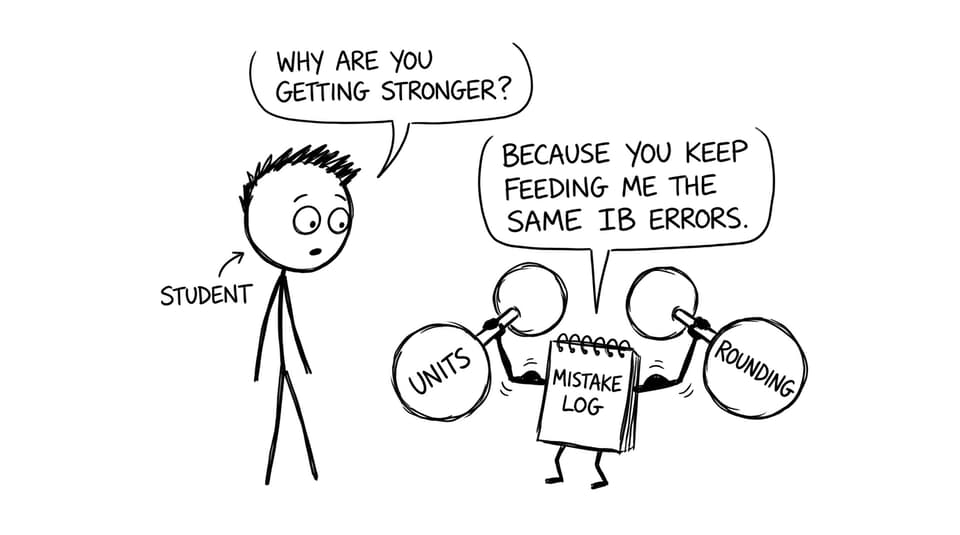
What are the units and sensible rounding?
-
Is the result valid for the given domain and context?
RevisionDojo’s AI Chat is useful here because you can paste your interpretation sentence and ask it to tighten your wording to match IB command terms like “comment,” “interpret,” and “hence.”
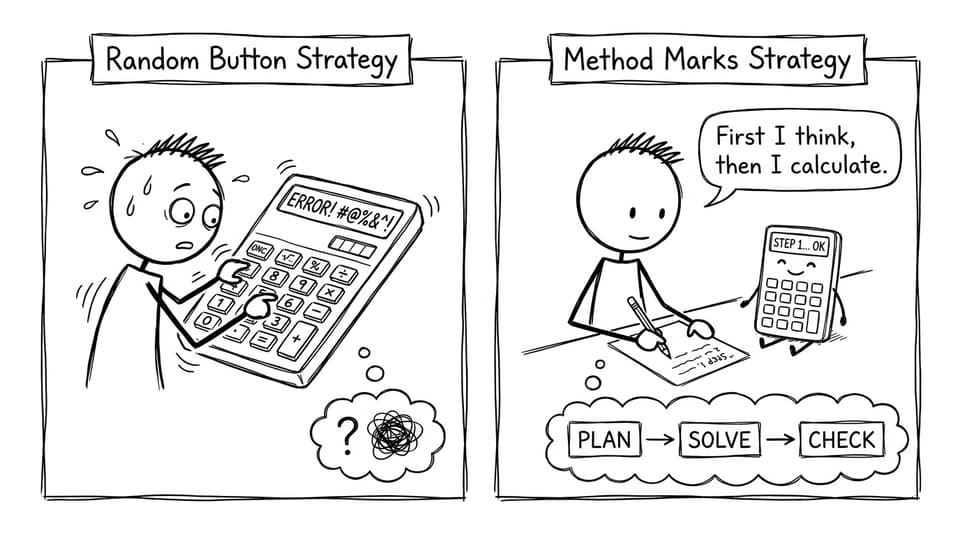
Train the “think first, calculate second” rhythm
A simple rhythm prevents most Paper 2 disasters:
-
Plan: write what you’re trying to find and what method fits.
-
Predict: rough shape, sign, or size (even a quick estimate helps).
-
Calculate: use the calculator to execute.
-
Explain: interpret, label, and connect back to the question.
This rhythm is exactly what examiners reward because it produces visible method marks.
To build this habit fast, do topic sets that force explanations. RevisionDojo’s How to Use the Questionbank for Targeted Math Revision is a practical starting point.
The Paper 2 topics to prioritize (AA SL/HL)
Paper 2 can draw from the whole syllabus, but some areas appear so often that they deserve “automatic practice” status in your IB plan.
Modeling and regression
You’re often asked to choose a model, justify it, then use it to estimate or predict. Practice:
-
Linear vs exponential vs power vs quadratic selection.
-
Parameter interpretation (especially slope and intercept meanings).
-
Limits of prediction beyond the data range.
A good workflow is: learn the concept quickly, then drill exam-style questions. For calculus-heavy AA revision, the topic hub is clean and structured: IB Math AA Calculus and the matching AA Calculus Questionbank.
Functions and graph features
Paper 2 graph questions punish messy communication. Train yourself to:
-
Label intercepts, turning points, intersections.
-
State domain restrictions from the context.
-
Explain asymptotic behavior without just pointing to the screen.
For targeted subtopic practice, the AA topic pages are useful (example): SL 2.1 Equations of straight lines.
Statistics and probability
These are classic Paper 2 marks. Be fluent with:
-
Correlation and regression interpretation.
-
Distributions and calculator outputs.
-
Writing conclusions with appropriate context language.
Use the hub to focus your practice: IB Math AA Statistics and Probability.
The most overlooked scoring skill: “calculator communication”
In IB Paper 2, you can’t submit calculator output as if it’s self-explanatory. A high-scoring student writes like a tour guide: clear, calm, and specific.
Try this template whenever you use technology:
-
State what you did: “Using regression, a quadratic model was fitted to the data.”
-
State what you got: “The model is (y = ax^2 + bx + c) with …”
-
State what it means: “This suggests that as (x) increases, (y) increases at an increasing rate…”
-
State limitations: “This model is reliable within the observed range; extrapolation may be inaccurate.”
RevisionDojo’s Study Notes and Grading tools are built for this: they show you not just the answer, but the phrasing that earns marks.
Build speed without sacrificing accuracy
Speed in IB Paper 2 doesn’t come from rushing. It comes from removing friction.
Here’s the training loop that works:
-
Do a short set (8-12 questions) focused on one skill.
-
Review immediately.
-
Write one-line “why I lost marks” notes.
-
Repeat two days later with a slightly harder set.
For a longer-term routine, pair this guide with The Ultimate IB Math Study Routine for Busy Students.
Simulate IB Paper 2 conditions (this is where scores change)
At some point, you stop “revising” and start rehearsing. That’s the Paper 2 turning point.
Once a week, run a full Paper 2 simulation:
-
Approved calculator, exam-mode settings ready.
-
Timer set to your level.
-
Quiet desk, no pausing.
-
After the sitting, do a strict review: method marks, rounding, interpretation sentences.
RevisionDojo makes this easier because its ecosystem connects: Mock Exams for timing, Questionbank for targeted fixes, Flashcards for recurring errors, and Tutors when a pattern won’t go away.
If you want an exam-day rehearsal resource, explore IB Predicted Papers by IB Examiners. (They’re best used to practice timing and structure, not to “guess” what will appear.)
Closing: the IB Paper 2 mindset that wins
The students who do best in IB Math Paper 2 aren’t the ones with the fanciest calculator tricks. They’re the ones who treat each calculator result as a claim they must defend.
If you want Paper 2 to feel predictable, build a loop: learn with Study Notes, drill with the Questionbank, lock in memory with Flashcards, rehearse under pressure with Mock Exams and Predicted Papers, then refine your explanations with AI Chat and Grading tools. That’s how RevisionDojo turns calculator confidence into exam-day performance.
When you’re ready, start with the AA hub and build your next session from there: IB Mathematics Analysis and Approaches Resources.