


The first time you sit a timed IB Math paper where the calculator is allowed, it’s tempting to treat your graphing calculator like a life raft. You press buttons faster than you think, hoping the screen will rescue you.
But the best students do something quieter: they use the calculator as a tool for decisions, not as a replacement for thinking. In IB Math, that difference shows up in marks, pacing, and confidence.
Where the graphing calculator fits in IB Math papers
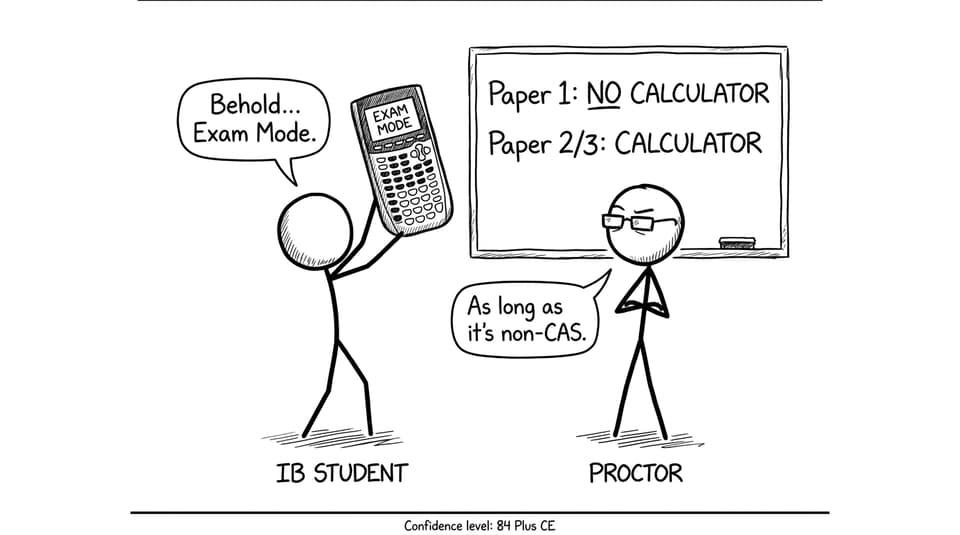
In IB Math, calculator rules are simple but strict:
-
Paper 1: no graphing calculator.
-
Paper 2 (SL/HL): graphing calculator allowed and expected.
-
Paper 3 (HL only): graphing calculator allowed and often essential for modelling and extended problems.
If you want a Paper 2 specific plan (and what to do when the calculator is allowed but the marks still come from reasoning), use How to Prepare for IB Math Paper 2 (Calculator Allowed).
Quick checklist before you walk into the exam room
This is the low-stress routine that prevents high-stress surprises in IB Math:
-
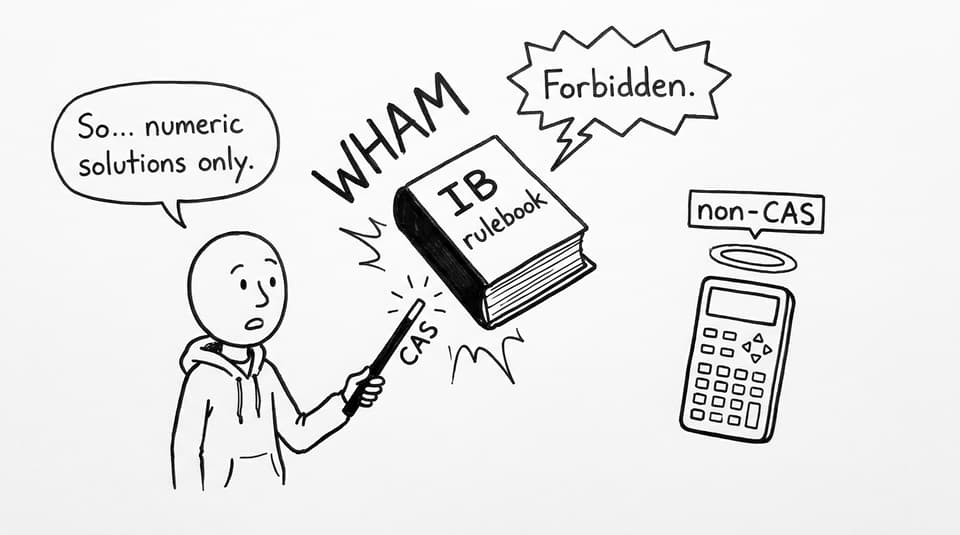
Confirm your model is IB-approved and non-CAS.
-
Clear memory and remove any stored notes or programs.
-
Activate Exam Mode / Press-to-Test right before the exam (as your school requires).
-
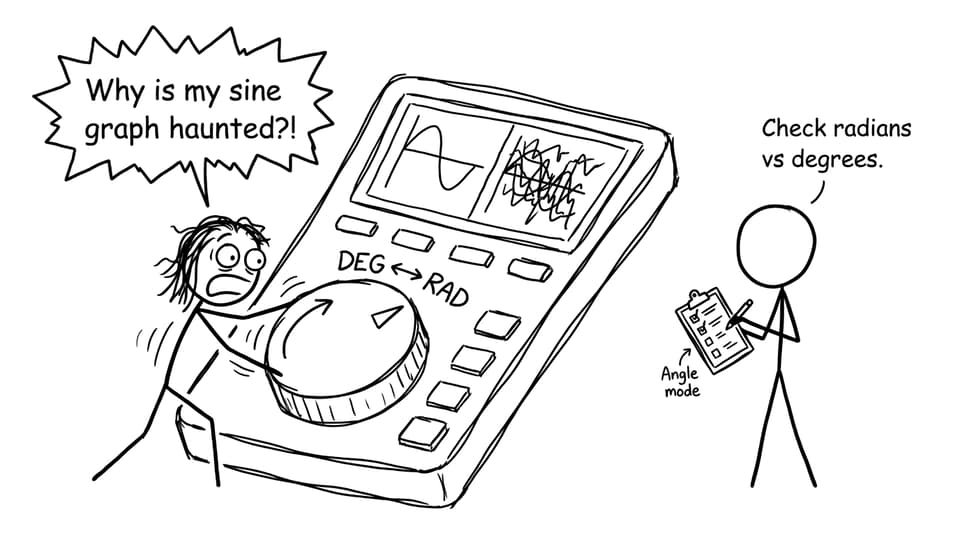
Check angle mode: degrees vs radians.
-
Make sure you can do the “big four” quickly: graph, solve, regress, and calculate.
For model-by-model steps, keep Step-by-Step: Putting Your Calculator in Exam Mode bookmarked.
Approved models (and what “forbidden” really means)
Most IB Math students use one of these approved, non-CAS models:
-
TI-84 Plus (including CE and Python versions)
-
TI-Nspire CX (non-CAS)
-
Casio fx-9860GII
-
Casio fx-CG50
-
HP Prime (non-CAS)
The risk isn’t only the wrong model. It’s also bringing a calculator that can do symbolic algebra (CAS) or storing material you shouldn’t have.
To avoid the classic exam-day disaster, read Forbidden calculators in IB exam and, if you’re a TI user, pair it with How to effectively use the TI-84 calculator for IB Math exams.
The smartest way to use your calculator during IB Math
A graphing calculator can do a lot in IB Math Paper 2 and Paper 3, but the marks usually go to the student who explains why the result makes sense.
Use graphs to make decisions, not just pictures
Graphing helps you quickly:
-
spot intersections (solutions)
-
identify asymptotes and turning points
-
sanity-check domain restrictions
The best habit: after graphing, write one sentence of interpretation. The calculator gives you a value; you give it meaning.
Use numeric solving when algebra is messy
In IB Math, many equations are designed to be unpleasant by hand. Numeric solvers are fair game on calculator papers. Still, show the setup: define the equation, state what you’re solving for, and then report the approximate solution.
Use statistics and regression like a practised routine
For AI especially, regression is a high-frequency skill. You want data entry and regression selection to feel automatic.
If you’re preparing for modelling-heavy papers, How to Prepare for IB Math AI Paper 3: 9 Expert Tips pairs well with your calculator practice.
Common mistakes that cost easy marks
In IB Math, calculator mistakes tend to be boring (and expensive):
-
Wrong angle mode (degrees vs radians) leading to “haunted” trig answers.
-
Rounding too early, which compounds error in multi-step questions.
-
Blind trust in a regression or intersection without checking context.
-
Not using Exam Mode correctly, risking losing calculator access.
If you’re worried about compliance, read What happens if my calculator is not in exam mode during the exam.
How RevisionDojo helps you practise calculator skills the right way
The calculator isn’t a separate topic in IB Math. It’s part of performance. RevisionDojo is built around that idea:
-
Use the Questionbank to target calculator-heavy skills (regression, numerical solving, graph interpretation).
-
Use Study Notes to learn the method you must write, not just the answer you can get.
-
Use Flashcards for quick reminders like angle mode, rounding rules, and common command paths.
-
Use AI Chat when your calculator output looks right but your reasoning feels thin.
-
Use Mock Exams and Predicted Papers to rehearse full Paper 2 and Paper 3 pacing.
-
Use Grading tools to see where your explanation lost method marks.
-
Use the Coursework Library and Tutors when you need structured support and feedback.
For pacing (where calculator fluency really pays off), see How to Master Time Management in IB Math Exams and Best Time Management Tips for IB Math Exams.
Conclusion: make your calculator a calm advantage
Your graphing calculator won’t magically raise your IB Math grade. But it can remove friction: fewer arithmetic slips, faster checking, cleaner modelling, and better time control.
Build that advantage on RevisionDojo: drill calculator-appropriate questions in the Questionbank, rehearse timing with Mock Exams, and use AI Chat when your calculator gives a number but you need the explanation that earns marks. When exam day arrives, you want the calculator to feel boring, because your thinking is doing the real work.