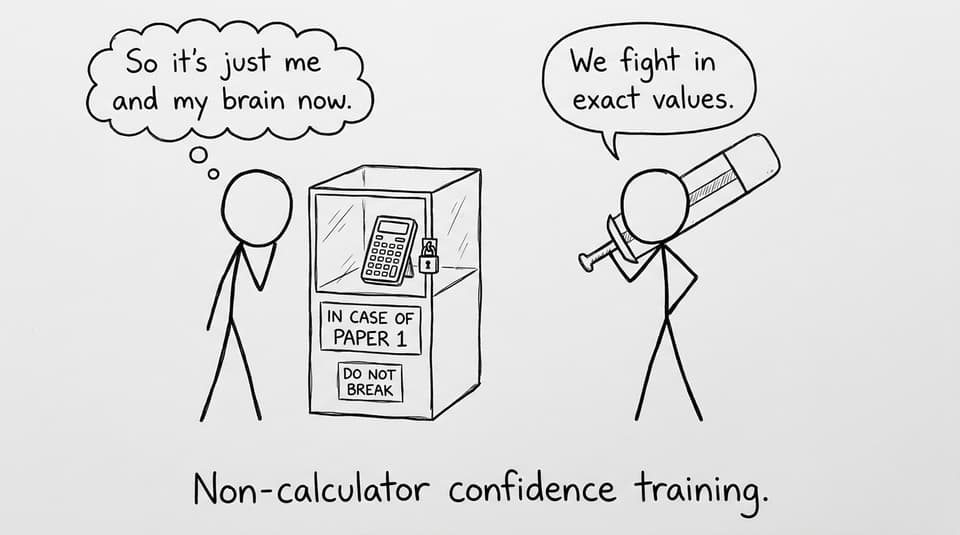
The night before Paper 1, most IB Math students make the same bargain: “If I just remember the right steps, I’ll be fine.” But Paper 1 doesn’t reward memory nearly as much as it rewards calm reasoning. It’s 90 minutes, non-calculator, and worth about 40% of your SL grade. In other words: it’s not a sprint. It’s a test of whether you can think clearly when your usual shortcuts disappear.
If you want to feel genuinely prepared for IB Math AA SL Paper 1, train the exact skills the paper measures: algebraic control, exact values, and marks-friendly communication.
IB Math AA SL Paper 1: Quick checklist
-
Confirm Paper 1 vs Paper 2 expectations: Difference between IB Math AA Paper 1 and 2
-
Identify your weak strands using the AA hub: IB Mathematics Analysis and Approaches Resources
-
Do timed, non-calculator practice twice a week
-
Keep a mistake log (topic + error type + fix)
-
Use RevisionDojo Study Notes, Flashcards, Questionbank, and AI Chat to close gaps fast
What Paper 1 actually tests in IB Math
Paper 1 leans heavily on topics like algebra and functions, trigonometry, coordinate geometry, SL vectors, core calculus (differentiation and basic integration ideas), plus lighter statistics/probability. The catch is that the paper is designed to punish messy manipulation more than “not knowing.”
A smart starting point is building your map of topics and subtopics from the course hub: IB Mathematics Analysis and Approaches Resources. Then use targeted practice for specific skills like differentiation rules: SL 5.6 Differentiating Polynomials (Questionbank).
How to prepare for IB Math Paper 1 (no-calculator) in 3 layers
Build “exact value” reflexes
For IB Math, Paper 1 confidence comes from repeated exposure to exact forms: surds, fractions, trig exact values, and clean algebra. Use RevisionDojo Flashcards for daily recall, and pair them with a short set from the Questionbank so the memory becomes usable.
Need a structure that doesn’t collapse in week two? Steal the weekly rhythm from: Best Study Schedule For IB Math Exams.
Practice like an examiner is watching
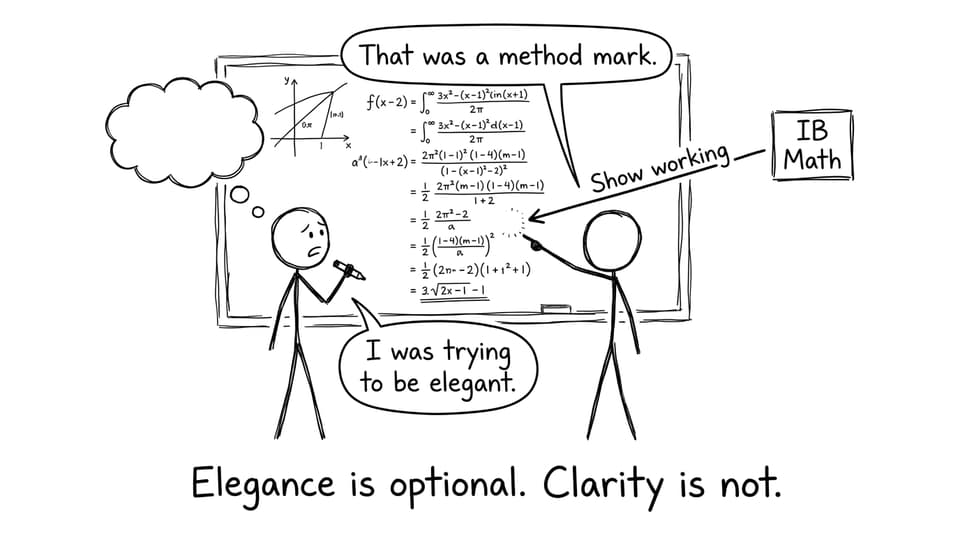
Paper 1 marking is generous when your method is visible. Don’t aim to look clever. Aim to look correct. RevisionDojo’s Grading tools (and AI Chat when you’re stuck) help you spot the invisible mark losses: missing definitions, skipped rearrangements, unlabelled final answers.
Train timing with realistic constraints
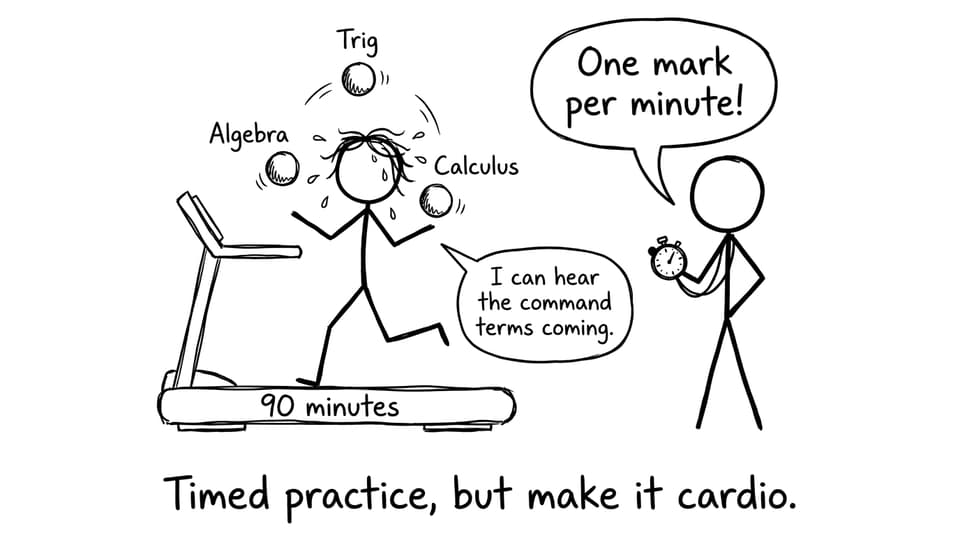
A simple rule many students use is “about a mark per minute.” Run mini-mocks, then full rehearsals. If you want a deeper Paper 1 plan, compare approaches here: How to Balance Revision Between Paper 1 and Paper 2 and build your routine around: How to Study for IB Exams: Step-by-Step Guide.
Common IB Math Paper 1 mistakes (and quick fixes)
-
Misreading command terms (write what “show” or “justify” demands, then deliver it)
-
Leaving blanks (attempts often earn method marks)
-
Over-trusting mental arithmetic (write the line anyway)
-
Practicing only “comfortable” topics (your schedule should chase weak spots)
For a broader system, see: Effective Study Strategies for the IB Math SL Exam.
A calm way to finish your IB Math Paper 1 prep
Paper 1 is where IB Math becomes personal: your handwriting, your logic, your patience with a stubborn line of algebra. RevisionDojo is built for that reality: Questionbank drills for Paper 1 skills, Study Notes that keep explanations tight, Flashcards for exact values, AI Chat for quick clarity, plus Mock Exams, Predicted Papers, and Grading tools to make practice feel like the real thing.
Pick one weak topic today, do 30 minutes of focused practice, and write down the three mistakes you never want to repeat. That’s how IB Math scores rise: not by hype, but by honest reps.