


Math anxiety doesn’t always show up as panic. Sometimes it’s quieter: a tight chest when you see functions, a sudden urge to “just revise something else,” a brain that goes blank the moment a timer starts.
For many IB students, the fear isn’t really about numbers. It’s about what numbers might say about you. About being “the math person” or not. About time pressure. About letting someone down. The hard part is that anxiety can make smart students look unprepared, because stress steals working memory right when you need it most.
The hopeful truth for IB exam prep is simple: math anxiety is often a learned response, and learned responses can be retrained. Not with hype. With small, repeatable systems that teach your nervous system: this is manageable.
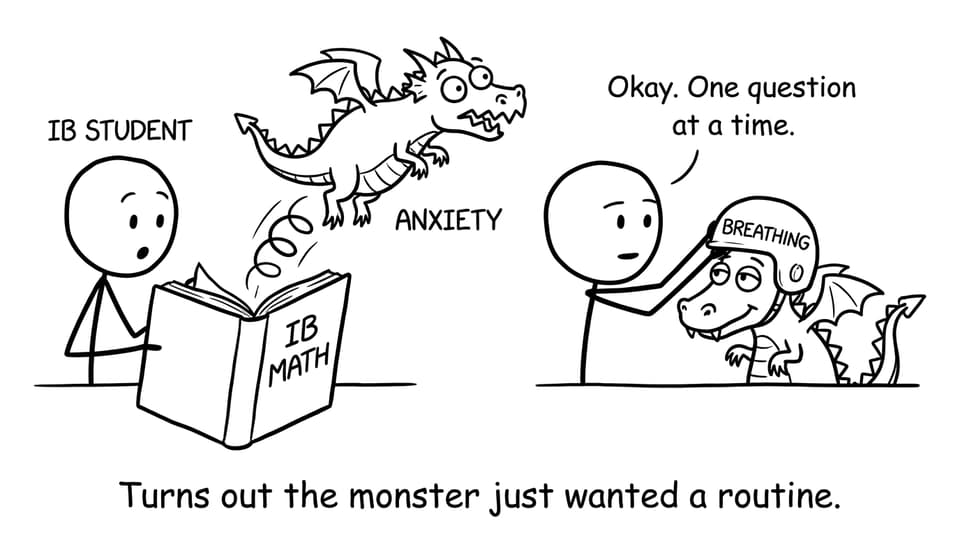
A quick IB checklist for calming math anxiety
Use this as your starting routine before you go deeper:
-
Name your anxiety trigger (timers, certain topics, fear of silly mistakes).
-
Do a 30-second reset (breathing + posture + one simple intention).
-
Warm up with 2 easy questions before tackling harder ones.
-
Use a feedback loop: attempt, check, correct, reattempt.
-
Simulate pressure weekly with timed practice.
-
Reflect briefly after each session so anxiety doesn’t pile up.
If you want one place to run all of this, start on the RevisionDojo homepage and build a simple workflow you can repeat.
What math anxiety really is (and why IB makes it louder)
Math anxiety is not proof you “can’t do math.” It’s your body misreading a test as a threat. In IB maths, that threat can feel bigger because the tasks are cumulative and the marking can be precise. One skipped justification can cost marks even when your idea is right.
Common signs include:
-
Racing thoughts and trouble focusing
-
Avoiding practice until you “feel ready” (which rarely arrives)
-
Over-checking, second-guessing, or freezing mid-solution
-
A sudden blank mind during exams
If this sounds familiar, you’re not broken. You’re experiencing a pattern. Patterns can be changed.
For a subject-specific angle, see How to Manage Exam Anxiety for IB Math.
Identify your triggers so you can stop fearing the wrong thing
A lot of IB students treat math anxiety like fog: everywhere, all the time. But anxiety usually has a shape.
Common triggers:
-
Timed conditions (the clock becomes the opponent)
-
“Unexpected” question wording
-
Comparing yourself to peers
-
One specific strand (calculus, probability, proof-style reasoning)
Here’s the key move: don’t just write “I got stressed.” Write when, where, and what happened next.
RevisionDojo makes this easier because your practice is already organized by topic. If you’re AA, start at IB Mathematics Analysis and Approaches resources and notice which sections you instinctively avoid. Avoidance is a clue.
Replace panic self-talk with performance self-talk (it’s different)
Math anxiety thrives on identity statements:
-
“I’m bad at math.”
-
“I always mess up under pressure.”
-
“If I don’t get this, I’ll fail.”
Performance self-talk is calmer and more specific:
-
“I’m practicing one method right now.”
-
“I only need the next mark.”
-
“My job is process, not perfection.”
This matters in IB because the exam rewards method and communication. You don’t need to feel confident to act confidently. You need a script you can follow even when you’re nervous.
Build confidence the way the brain actually believes it: small wins + evidence
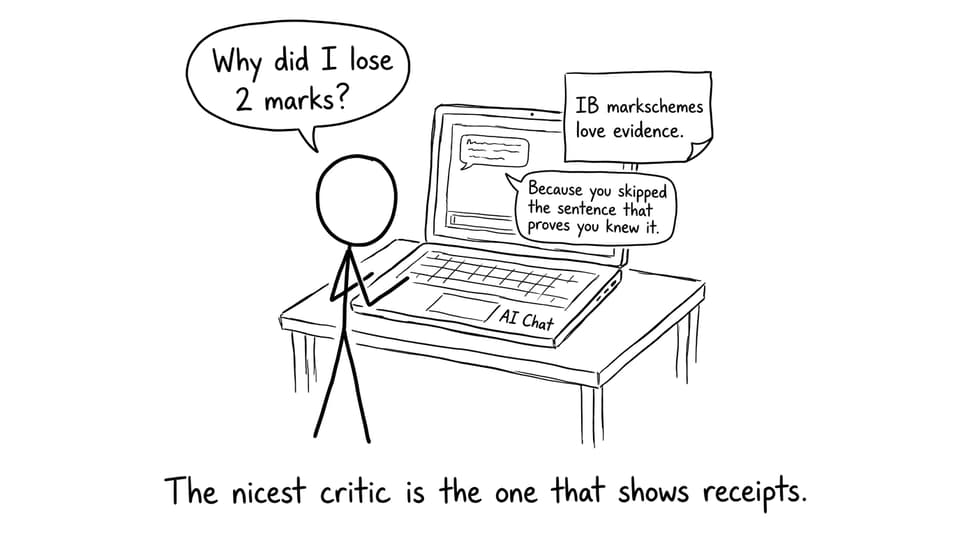
Confidence doesn’t appear from motivation. It appears from receipts.
Use this simple ladder:
-
2 warm-up questions (easy)
-
6 core questions (moderate)
-
2 stretch questions (hard)
The magic is not the ratio. It’s the rule: you start with something you can complete, so your brain stops treating math as an ambush.
To keep the ladder targeted, use a topic-specific bank. For example, if calculus triggers you, open the IB Math AA Calculus Questionbank and choose a narrow sub-skill for the day.
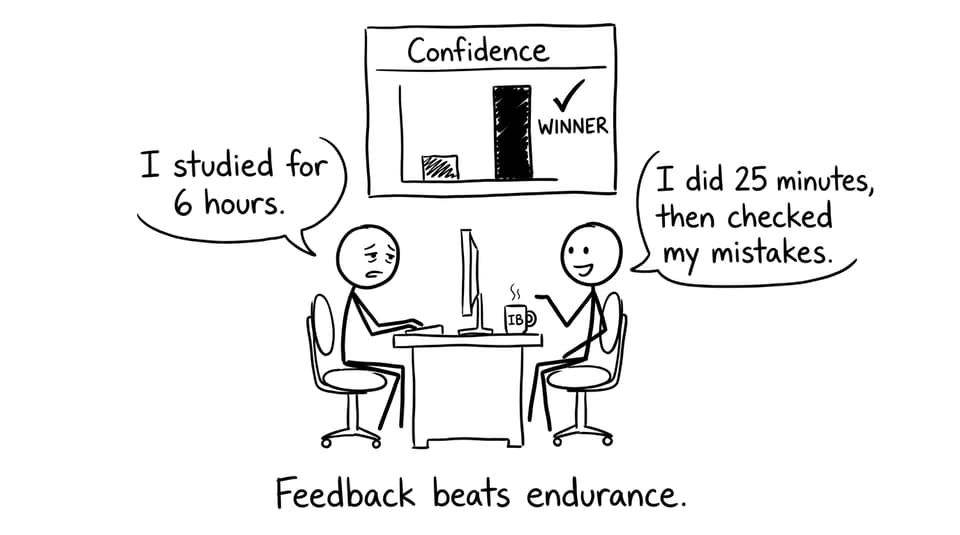
Then run a tight feedback loop: attempt, check, correct, reattempt. That loop is how anxiety fades, because uncertainty fades.
If you want a full system for using practice intelligently, read How to Use the Questionbank for Targeted Math Revision.
Use breathing to buy back working memory during IB exams
When anxiety spikes, your brain spends resources on threat detection. That’s why you can “know” a method at home, then blank under a timer.
Try the 4-7-8 reset:
-
Inhale for 4
-
Hold for 7
-
Exhale for 8
Do it once before you start, and once when you feel the first wave of panic. You’re not trying to become zen. You’re trying to lower the volume enough to read the question accurately.
In IB maths, accuracy is often the difference between a near-miss and full marks.
Practice under pressure without traumatizing yourself
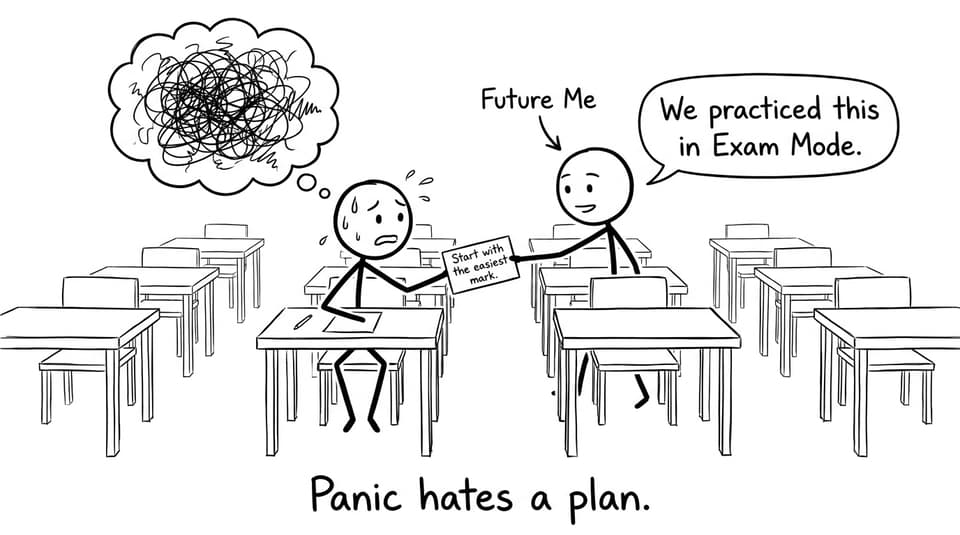
A mistake many IB students make is jumping straight from “untimed practice” to “full-paper panic.” A better strategy is graduated exposure:
-
15-minute timed set (just one topic)
-
25-minute mixed set
-
45-minute paper section
-
Full mock under realistic conditions
RevisionDojo is built for this progression: use Questionbank for control, then step into Mock Exams and Predicted Papers for realism.
Two helpful starting points:
-
IB Predicted Papers (for rehearsal and stamina)
-
Best IB Mock Exam Platform: Why Students Choose RevisionDojo
Use tools that reduce uncertainty, not just workload
When students say they’re anxious, they often mean: “I don’t know what to do next.”
A calm IB routine usually includes:
-
Study Notes to clarify the method before you drill
-
Flashcards for formulas and definitions that must be instant
-
AI Chat for quick explanations when you’re stuck (without waiting a day)
-
Grading tools to learn how marks are awarded
-
Predicted Papers and Mock Exams to rehearse pressure
-
Coursework Library support so other deadlines don’t add background stress
-
Tutors when you need a human to spot a deeper misconception
For formula recall, build daily exposure with IB Flashcards with Spaced Repetition (SRS) and, if you want a guide, follow How to Use RevisionDojo Flashcards for Formula Mastery.
And if confidence is your main bottleneck, this pairs well with How to Build Confidence Before IB Math Exams.
Common mistakes that keep IB math anxiety alive
-
Cramming late: it teaches your brain that math equals emergency.
-
Only doing hard questions: it removes the small wins that create safety.
-
Avoiding review: mistakes become mysterious, which increases fear.
-
Comparing timelines: someone else’s pace is not evidence about yours.
-
Confusing feeling with fact: feeling anxious does not mean you’re unprepared.
If you’re hitting a wall, this is also worth reading: How to Study Math When You Don’t Feel Confident.
Closing: make IB maths feel familiar again
Overcoming math anxiety isn’t about becoming fearless. It’s about becoming practiced. When you repeatedly show your brain that you can start, continue, and recover, the fear loses its job.
If you want the simplest next step, build one loop you can repeat this week: Study Notes for clarity, Flashcards for instant recall, Questionbank for targeted practice, then one short timed session in Mock Exams or Predicted Papers. RevisionDojo pulls those pieces into one place so your IB prep feels structured instead of stressful.
Open RevisionDojo, pick one topic, and begin with one question. Calm comes second. The start comes first.