

If you have ever watched a teammate train for months just to shave 0.2 seconds off a time, you already understand the mindset behind a 7.
In IB SEHS, the students who score highest are rarely the ones who “love reading notes.” They are the ones who treat revision like training: targeted sessions, measurable feedback, and repetition that builds reliability under pressure. The goal is not to know everything. The goal is to score marks on demand.
Below is a practical, exam-focused plan to earn a 7 in IB SEHS (Sports, Exercise and Health Science), built around the skills the course actually rewards.
The IB SEHS 7 checklist (print this mentally)
-
Know the syllabus map and your weak topics
-
Convert notes into active recall (Flashcards + questioning)
-
Do exam-style practice every week, not just “revision week”
-
Build answer structures for data questions and longer responses
-
Treat your IA like a scoring opportunity, not a side quest
-
Use a feedback loop: attempt → mark → fix → retest
For a topic-by-topic overview, keep the IB SEHS hub open while you plan: IB Sports, exercise and health science Resources.
Understand the syllabus like a coach reads a season plan
A 7 happens faster when you stop revising “chapters” and start revising syllabus statements. In IB SEHS, questions repeat patterns: energy systems trade-offs, biomechanics principles applied to sport, psychology concepts tied to performance, and health implications.
Two high-yield moves:
Build a one-page syllabus map
Write the big areas (physiology/nutrition, biomechanics, psychology/motor learning, injury and health) and list what you can answer confidently versus what you avoid. That avoidance list is usually where your grade is hiding.
Start with common scoring zones
Students often leak marks on basics they “sort of know,” like definitions and mechanisms. For example, energy systems is not just naming ATP pathways; it is explaining when and why each dominates.
Use RevisionDojo’s topic pages to tighten those foundations quickly, like: IB SEHS A.2.3 Energy Systems.
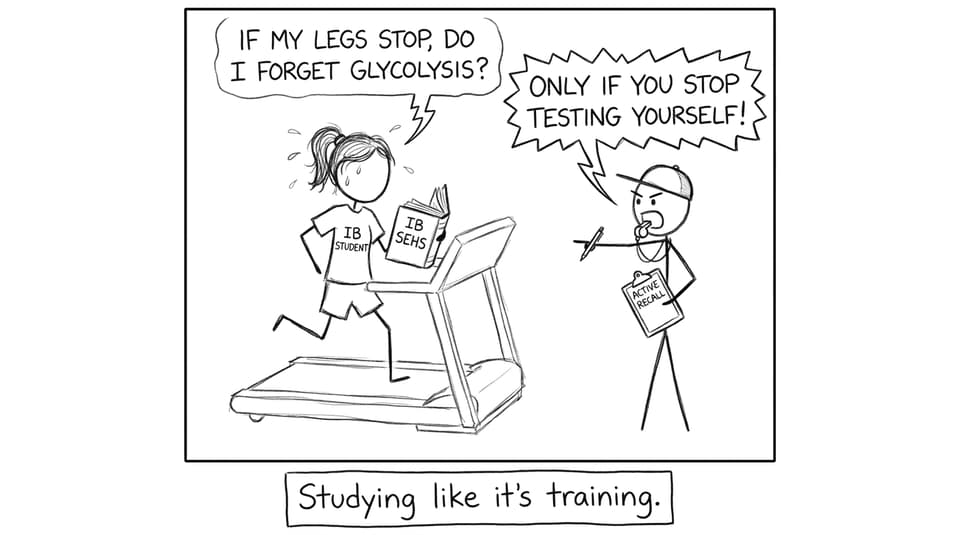
Train active recall (because rereading feels productive, but isn’t)
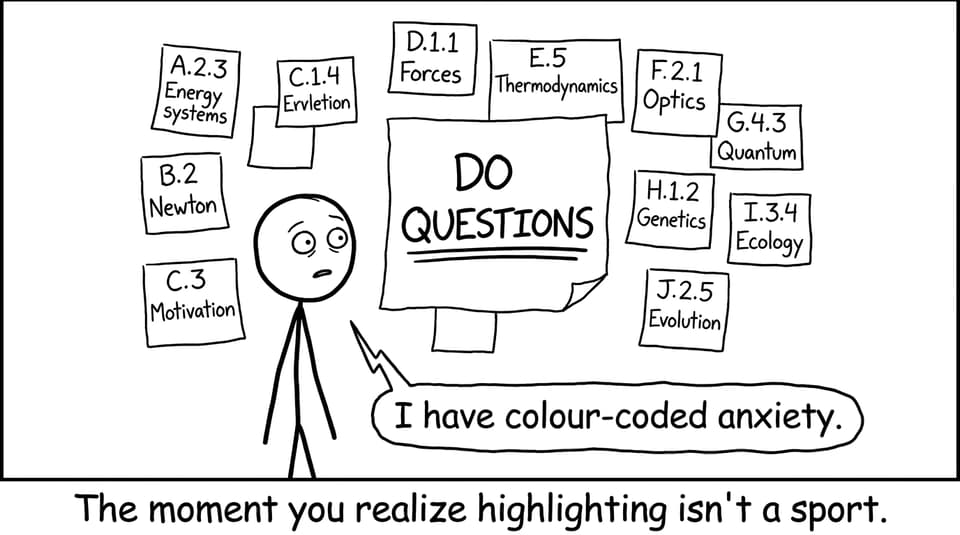
Highlighting is comforting. It is also quiet. Exams are loud.
A 7 in IB SEHS comes from retrieval practice: forcing your brain to pull out the concept, not just recognize it.
The simplest loop that works
-
Read a short section
-
Close it
-
Explain it out loud in 30 seconds
-
Answer an exam-style question
-
Turn your mistake into a Flashcard
RevisionDojo is built for this loop: Study Notes to learn, Flashcards to retrieve, and Questionbank to apply under exam conditions. If you want a ready-made structure for building decks, use: Jojo's Flashcard Guide: SEHS Edition.
Master exam technique the way you master a skill
In IB SEHS, knowledge is necessary, but marks come from matching the command term and writing in a markable way.
Paper 1: speed + accuracy
Multiple-choice rewards clean concepts and no panic. Do short, timed sets weekly using a Questionbank, then review why each wrong option was wrong. This builds exam instincts.
Paper 2 and Paper 3 (HL): structure wins marks
Longer responses are where top students separate. You do not need fancy writing; you need a repeatable structure:
-
Define the key term precisely
-
Explain mechanism (cause → process → effect)
-
Apply to the scenario/sport
-
Evaluate with a limitation or alternative
For broader technique under time pressure, keep this bookmarked: IB Exam Day Checklist: The Ultimate Guide.
And for SEHS-specific revision habits that actually translate into marks: Revision Strategies That Work for IB Sports Science Exams.
Use RevisionDojo to build a feedback loop (the real 7 strategy)
Think like an athlete watching match footage. The point is not to feel bad. The point is to see patterns.
On RevisionDojo, your ideal weekly rhythm looks like this:
-
Questionbank sets by topic (and mixed, once a week)
-
AI Chat to clarify one confusion at a time (not twenty)
-
Mock Exams to practice timing and stamina
-
Predicted Papers for realistic rehearsal when you are close to exams
-
Grading tools to get fast, criteria-aligned feedback
If you are studying content-heavy areas, combine blog guidance with platform notes. A helpful starting point is: IB Sport Science Notes.
Nail the IA (because it’s controlled marks)
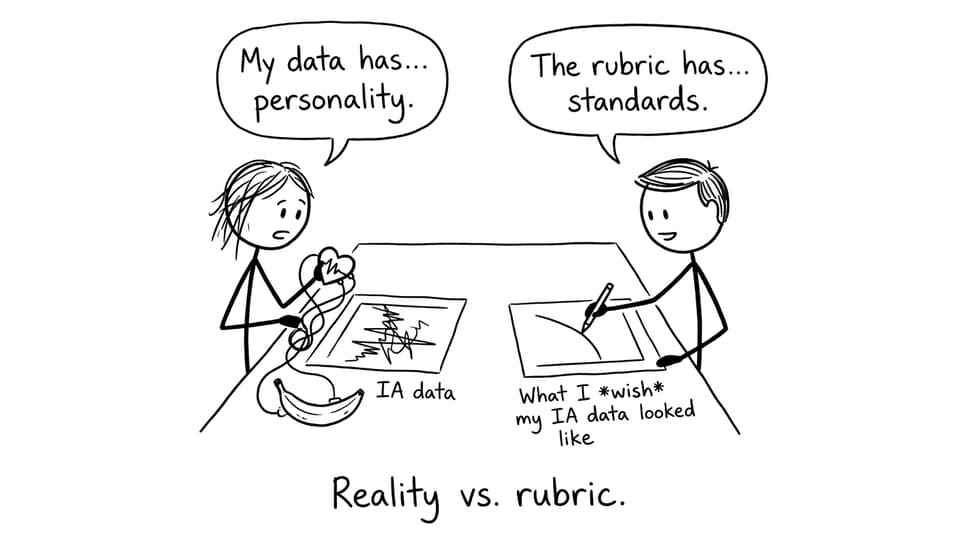
Students sometimes treat the IA as “science paperwork.” But in IB SEHS, the IA is one of the few places you can control the environment: your topic choice, your method, your presentation.
Pick a question you can measure cleanly
Choose variables you can measure reliably with the equipment and time you actually have. Simple beats messy.
Treat analysis like the main event
Data is only worth marks once you interpret it correctly, link it to theory, and acknowledge limitations.
Use exemplars to calibrate what “good” looks like: Sports, exercise and health science (SEHS) Exemplars.
Then run your draft through a rubric-driven check: IB SEHS IA (2026 syllabus) Grader.
The finish: treat IB SEHS like training, and the 7 follows
A 7 in IB SEHS is not a personality trait. It is a system: know the syllabus, practice retrieval, apply under timed conditions, and use feedback like data.
If you want that system in one place, start on RevisionDojo’s IB Sports, exercise and health science Resources and build your weekly loop with Study Notes, Flashcards, Questionbank, AI Chat, Mock Exams, Predicted Papers, Grading tools, and the Coursework Library. If you need human support, add Tutors to keep the plan honest.
Your next step is simple: do one timed IB SEHS question set today, log the mistakes, and retest them in 48 hours. That is how 7-level students train.