


The moment you realize “school choice” is really a life choice
The first time most students hear about MYP, it’s not in a glossy brochure. It’s in a hallway conversation: someone mentions projects that feel more like real life than worksheets, teachers who care about how you think, and assessments that reward clarity over cramming. Then the practical question lands: How do you actually enroll in an IB World School for MYP?
If you’re an IB student thinking ahead to future exam pressure, MYP enrollment matters more than it seems. The routines you build now, including organization, reflection, and learning how to learn, become your competitive advantage later. This guide walks you through the enrollment process step by step, while keeping one eye on what you care about: arriving confident, settling fast, and starting MYP with momentum.
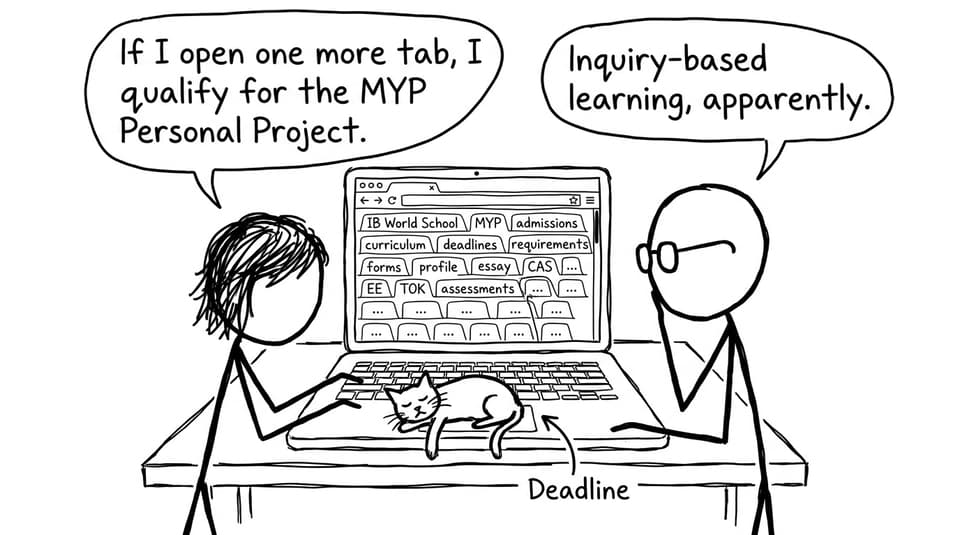
MYP enrollment checklist (save this)
Here’s the quick, calm checklist students and families use to make MYP enrollment straightforward:
-
Confirm the school is an authorized IB World School (not “IB-style”).
-
Check which MYP years the school offers (1-5) and whether it leads into DP.
-
Read admissions requirements: grades, language level, interviews, placement.
-
Prepare documents early: reports, ID, recommendations, translations.
-
Ask about fees, scholarships, and what’s included.
-
Attend an open day (or schedule a call) and ask targeted questions.
-
Plan your academic transition: subject choices, support, and study systems.
As you go, keep your student goal simple: enroll in MYP and reduce future stress by building strong study habits from week one.
What an IB World School really means (and why it matters for MYP)
An IB World School isn’t just a school that “offers international learning.” It is authorized by the International Baccalaureate to deliver IB programmes, including MYP. That authorization matters because it signals trained teachers, an inquiry-driven approach, academic integrity policies, and consistent assessment practices.
For students preparing for heavier exam seasons later, MYP inside an IB World School is like learning to swim in a pool before the ocean. You practice skills you’ll reuse: interpreting command terms, writing with evidence, reflecting on feedback, collaborating under pressure, and managing deadlines.
If you want a sense of what those skills look like when they turn into high performance later, browse the broader IB ecosystem on RevisionDojo’s International Baccalaureate hub. It helps you see the continuum: MYP habits today, IB results tomorrow.
How to find the right IB World School for MYP
Start with the official IB directory (IBO’s “Find an IB World School” tool). Search by country, city, and programme, then select MYP specifically.
When you shortlist schools, don’t only look at reputation. Look at fit. Ask:
-
Do they offer the full MYP (Years 1-5) or only some years?
-
Do they run MYP eAssessments (where relevant) or school-based assessment only?
-
Do most students continue into DP (and is that your plan)?
-
What languages are used daily, and what language support exists?
A useful way to build confidence is to read how MYP works from a student prep angle, not just an admissions angle. RevisionDojo’s MYP hub and the collection of MYP articles make the programme feel less abstract and more actionable.
Admission requirements for MYP (what schools usually look for)
Every IB World School sets its own admissions policy, so details vary. But most MYP admissions processes include a familiar set of signals:
Academic readiness
Schools often review recent reports/transcripts and teacher comments. They aren’t hunting for perfection. They want evidence you can handle consistent workload, meet deadlines, and respond to feedback.
Language proficiency
If the MYP is taught in English (or is bilingual), you may need a language screening or placement test. This isn’t only about grammar. It’s about whether you can access the curriculum without drowning.
Interview, writing sample, or student statement
Many schools want to see motivation and curiosity. In MYP, the “why” matters: why you want to join, what you enjoy learning, and how you deal with challenge.
Mindset fit
MYP rewards students who can collaborate, reflect, and improve over time. If you can explain a time you changed your approach after feedback, you’re basically speaking the school’s language.
Documents you’ll need for MYP enrollment (and how to avoid last-minute chaos)
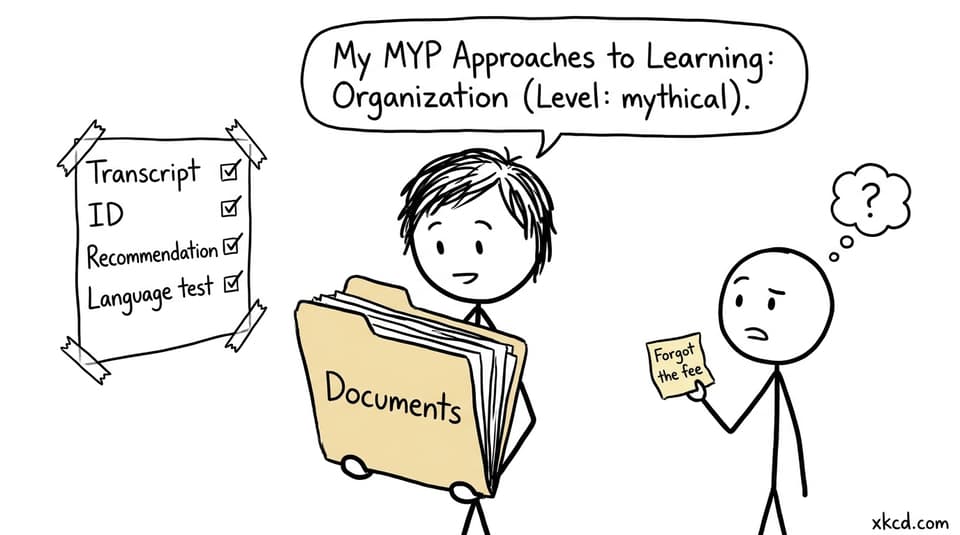
Most MYP applications ask for some combination of:
-
Application form (online or paper)
-
Recent school reports/transcripts
-
Recommendation letters
-
ID or passport copy (especially for international applicants)
-
Language test results (if applicable)
-
Application or registration fee
Two practical tips:
-
Build a single folder (digital + physical) and name files clearly by date.
-
Translate early if documents aren’t in the school’s language. This is where families lose weeks.
If you’re a student, treat this as your first MYP Approaches to Learning exercise: planning, organization, and self-management. These skills show up later in every major deadline.
Fees, scholarships, and the questions students forget to ask
Costs vary widely:
-
Public/state-funded IB schools may offer MYP at low cost.
-
Private international schools may charge significant tuition.
Ask specifically:
-
What fees are required at enrollment, and what’s refundable?
-
Are there scholarships, bursaries, or sibling discounts?
-
What’s included: textbooks, devices, trips, exam registration, activities?
Even if you’re not the one paying, understanding the cost structure helps you plan realistically and avoid last-minute stress.
Orientation: how to start MYP strong (especially if you’re exam-focused)
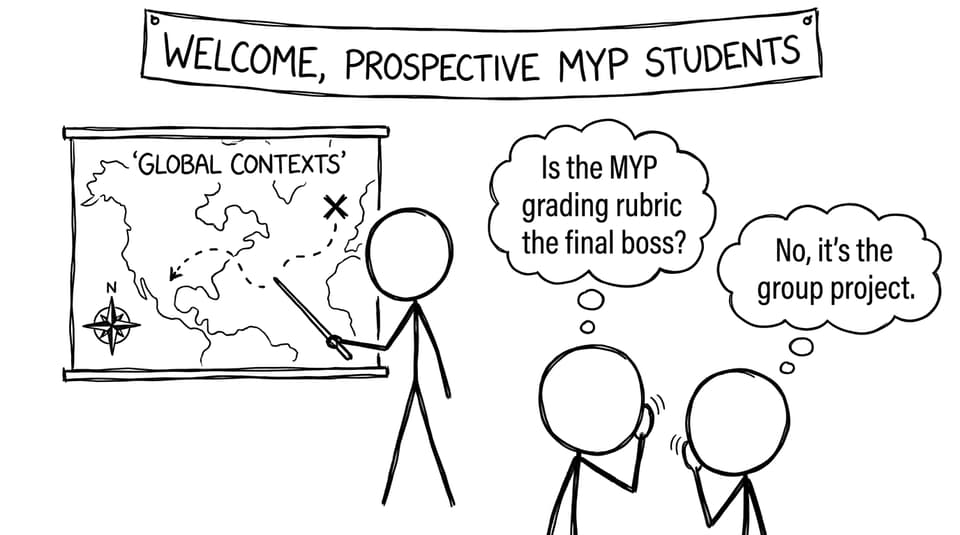
Orientation week often introduces the Learner Profile, Global Contexts, and ATL skills. It can feel like “school philosophy.” But MYP students who do well later treat orientation as a blueprint for scoring.
Here’s the shift:
-
Don’t ask, “What do we have to memorize?”
-
Ask, “What skill does this assessment reward?”
To build that mindset early, use RevisionDojo alongside your classes:
-
Use Study Notes to clarify concepts quickly instead of rereading textbooks.
-
Use Flashcards for daily retrieval and spaced repetition.
-
Use the Questionbank to practice applying ideas, not just recognizing them.
-
Use AI Chat when you’re stuck and need a clean explanation or a mini-quiz.
-
Use Grading tools to align your writing to rubrics.
-
Use Mock Exams to rehearse timing and stamina.
-
Use Predicted Papers to sharpen readiness without guessing.
-
Use the Coursework Library to see what strong work looks like.
-
Use Tutors when you need targeted human feedback.
If you want a practical exam-season structure, keep this bookmarked: MYP eAssessments: 30-Day Study Plan That Works. It’s the kind of routine that turns MYP into calm progress.
How MYP enrollment connects to later exam success
It’s tempting to think enrollment is paperwork and then “real school” begins. But the students who thrive treat MYP enrollment like the first decision in a longer strategy.
If you join an IB World School for MYP, you’re stepping into a system that rewards:
-
clear communication,
-
evidence-based thinking,
-
consistent practice,
-
and improving drafts instead of chasing perfection.
Those aren’t just nice traits. They’re exam traits.
To see how top students turn habits into outcomes, read How 45-Point IB Students Prepare for Exams and You’re Not Lazy, Your IB Study Method Is Broken. Even if you’re still in MYP, the mindset transfers.
Final thought: enroll in MYP, then build the system
Getting into an IB World School for MYP is a process of forms, meetings, and dates. But doing well in MYP is a process of habits. Once you enroll, your next move is simple: build a repeatable weekly routine that makes learning feel predictable.
Start at the RevisionDojo MYP hub, explore the MYP study and exam articles, and use RevisionDojo’s Questionbank, Study Notes, Flashcards, AI Chat, Grading tools, Predicted Papers, Mock Exams, Coursework Library, and Tutors to turn effort into results. MYP is where strong students become systematic students. And systems win.


