



Your week is a tight choreography: rehearsal, homework, fatigue, deadlines, repeat.
And IB Dance has a special way of making time feel slippery. One minute you are marking counts in the studio, the next you are staring at a history reading or a math set like it is written in smoke. The trap is thinking you must choose between being a serious dancer and a serious IB student.
You do not. But you do need a system.
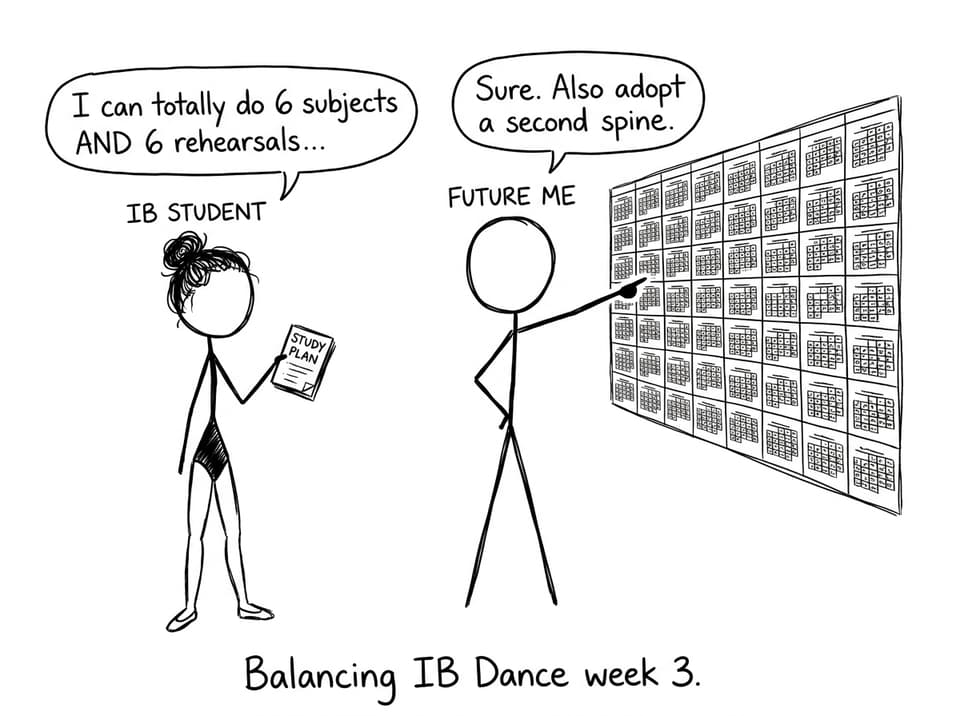
The reality check: IB Dance is two subjects in one
Most students plan IB Dance time like it is only physical practice. Then the written work arrives and the schedule collapses.
IB Dance asks you to:
-
train technique and performance stamina
-
rehearse and refine choreography
-
write with clarity (analysis, reflection, investigation)
-
research with structure and evidence
If you want a quick overview of the course demands, keep this guide bookmarked: Everything You Need to Know About the IB Dance Syllabus.
The balancing skill is not “work harder.” It is “separate the kinds of effort.” Physical strain and cognitive strain stack. When you stack them thoughtlessly, burnout becomes a timetable, not a risk.
A weekly balancing checklist (save this)
Use this simple routine to keep IB Dance steady while your other subjects stay exam-ready:
-
1 weekly planning session (20 minutes): map rehearsals + deadlines first
-
Daily minimum (10-15 minutes): flashcards or quick recall for one non-dance subject
-
3 focused academic blocks/week (45-60 minutes): one HL topic at a time
-
2 dance blocks/week: one for studio practice, one for written/reflection work
-
1 recovery anchor: at least one protected low-load evening or rest day
For a deeper scheduling framework, use: How to Create a Balanced IB Study Schedule.
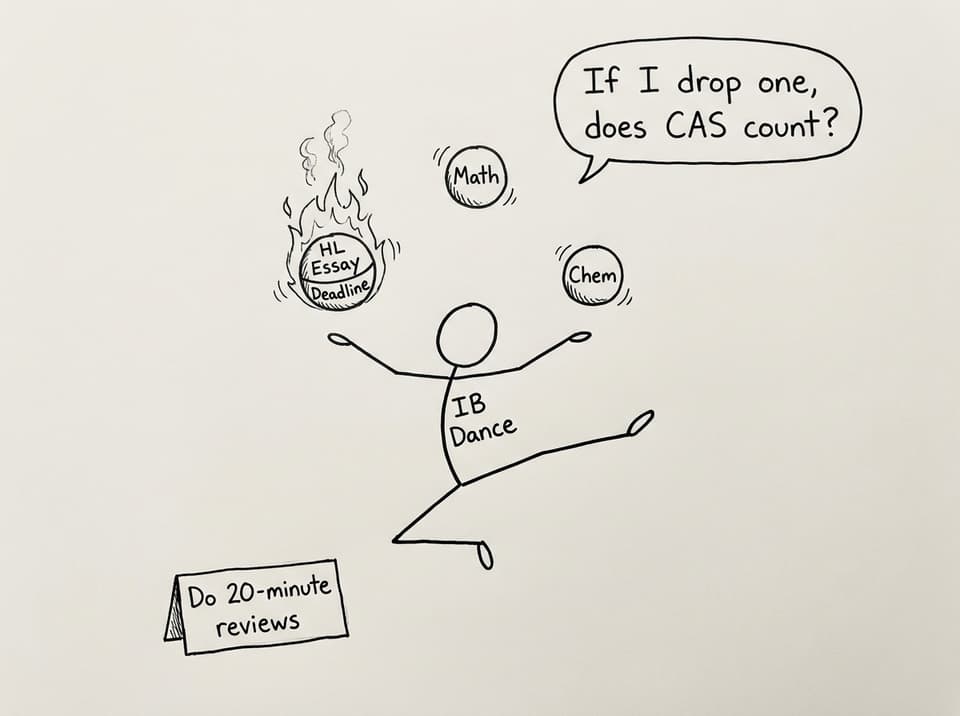
Treat energy like a budget, not a mood
A useful rule: plan by energy, not by “free time.”
After a heavy IB Dance rehearsal, your brain is not broken, it is just taxed. That is the perfect moment for:
-
light review
-
flashcards
-
short note consolidation
-
easy wins that keep momentum alive
It is a poor moment for:
-
long essays
-
dense new chapters
-
full timed exam sets
This is where RevisionDojo becomes less like a resource and more like a routine. Use Flashcards for low-energy days, Study Notes when you need fast clarity, and the AI Chat when you are stuck and tired but do not want to lose the evening.
If you want a sustainable study loop that fits around performance weeks, follow: How to Study for IB Exams Without Burning Out.
Build “micro-sessions” around dance instead of fighting it
The students who thrive in IB Dance rarely find giant uninterrupted study blocks. They collect smaller blocks and make them count.
Try this pattern on rehearsal days:
Before school or rehearsal (10 minutes)
- RevisionDojo Flashcards: definitions, formulas, key quotes
Between classes (15-20 minutes)
- one small slice of RevisionDojo Study Notes
After rehearsal (20-30 minutes)
- a short RevisionDojo Questionbank set in one topic (not mixed)
A short block done consistently beats a heroic weekend that you cannot repeat.
If you want the exam-prep workflow in one place, this breakdown helps: RevisionDojo App: The Smarter Way to Prep for IB Exams.
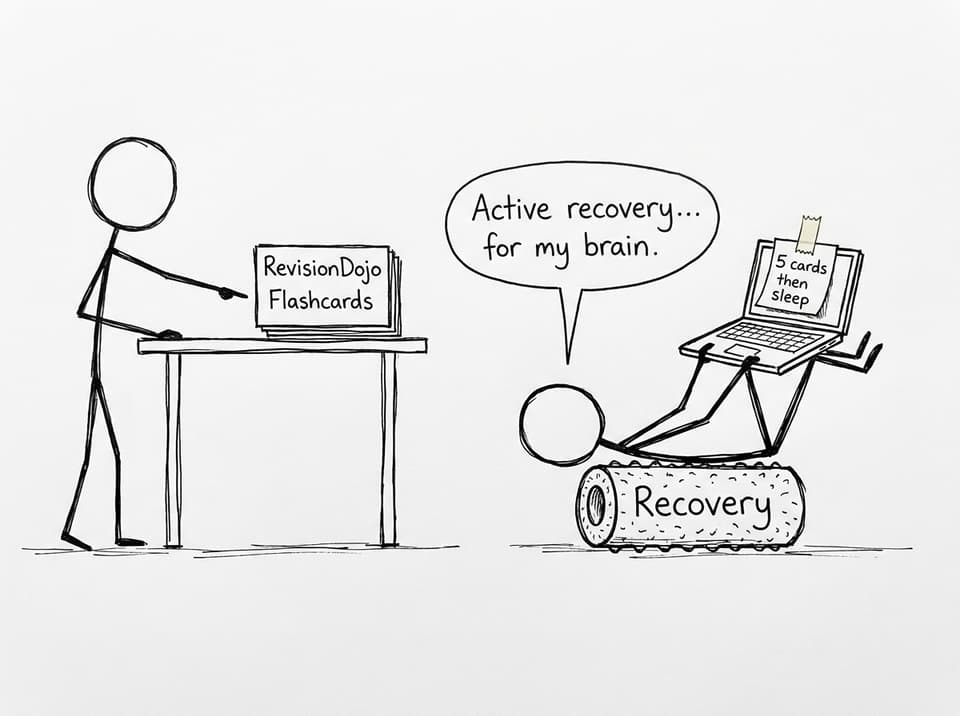
Protect recovery like it is a subject
In IB Dance, recovery is not self-care content. It is performance insurance.
One injury can quietly steal:
-
training time
-
focus in class
-
sleep quality
-
confidence
Make “recovery” visible on your timetable. Schedule mobility work, hydration, and sleep as non-negotiables. Your academic output will improve because your attention span returns.
And when coursework pressure rises, use tools that reduce friction: RevisionDojo’s Grading tools can help you iterate faster on written components. For dance-specific support, see the IB Dance EE Grader and the IB Dance: Dance Investigation (HL) Grader.
Use overlap: make IB Dance feed the rest of IB
Balancing IB Dance gets easier when you stop treating it as separate.
Common overlaps:
-
TOK prompts about art, identity, culture, interpretation
-
CAS reflections tied to rehearsal process, leadership, collaboration
-
English or humanities examples drawn from dance works and contexts
You are not “cheating the workload.” You are aligning it.
For extra planning tactics, see: Best Time Management Hacks for IB Students.
Closing: make your week feel like choreography again
Balancing IB Dance with other subjects is not about finding more time. It is about placing the right work in the right moments, then repeating the pattern until it becomes calm.
If you want a single home for that pattern, build it with RevisionDojo: Study Notes for clarity, Flashcards for daily recall, Questionbank for exam practice, AI Chat for quick help, Mock Exams and Predicted Papers for timed confidence, plus Grading tools, the Coursework Library, and Tutors when you need feedback that changes your next draft.
Start small today: plan your next week, protect recovery, and keep IB Dance steady without letting your other subjects drift.