
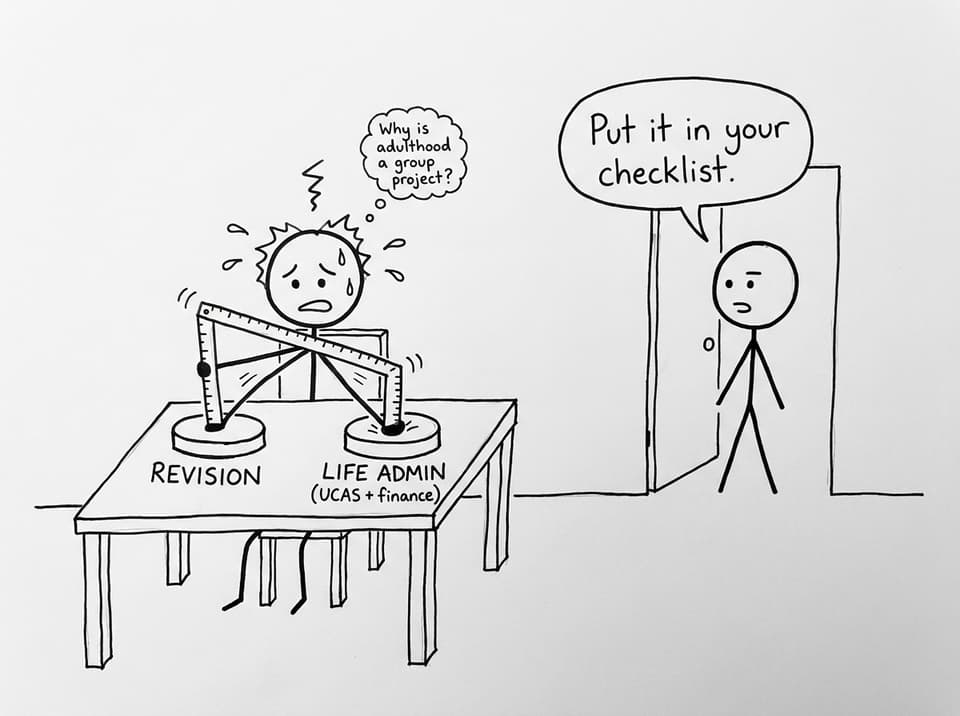
If you are deep in IB revision, “life admin” has a habit of showing up at the worst possible time. One minute you are drilling calculus or quotes for Paper 2. The next, you are staring at UCAS and wondering how student finance fits into the picture.
Here is the calm truth: student finance is managed separately from UCAS, but your UCAS course details help Student Finance match you to the right university and course. Do it early, do it accurately, and your future self will thank you.
UCAS student finance in 60 seconds (checklist)
-
Set up your online Student Finance account for your UK nation (England, Wales, Scotland, or Northern Ireland).
-
Start the application as soon as applications open (you can update details later).
-
Enter UCAS course details carefully so they match.
-
Add National Insurance number and ID info (passport details often help).
-
Provide household income details if your application is income assessed.
-
Upload any requested documents quickly.
-
Track progress in your account and keep your login safe.
-
Reapply each academic year.
How student finance connects to UCAS (and why accuracy matters)
Think of UCAS as the “what and where” of your degree: your course choices, your predicted grades, and later the offer you accept. Student Finance is the “how you will pay to live and study.” They are different systems, but your UCAS information is the bridge.
If your UCAS course details do not match your finance application, it can create delays. That is why it helps to understand the UCAS process end-to-end before you fill anything in. If you need a refresher, read What UCAS Is and How It Works: Step-by-Step Guide and UCAS Application Structure Explained.
Step-by-step: applying for student finance after UCAS
Create your Student Finance account
Go to the official Student Finance site for your part of the UK and create an online account. Use an email you will keep long-term (not a school inbox that might get deactivated). This is the account you will return to for updates, documents, and yearly reapplications.
Complete the application with your UCAS details
You will typically need:
-
Your UCAS course details (course and university information)
-
National Insurance number
-
Passport details (commonly used for identity checks)
-
Household income information (if applying for income-assessed support)
Small typos can cost weeks. Treat this like an IB data-based question: slow down, verify, then submit.
Upload documents fast, then track progress
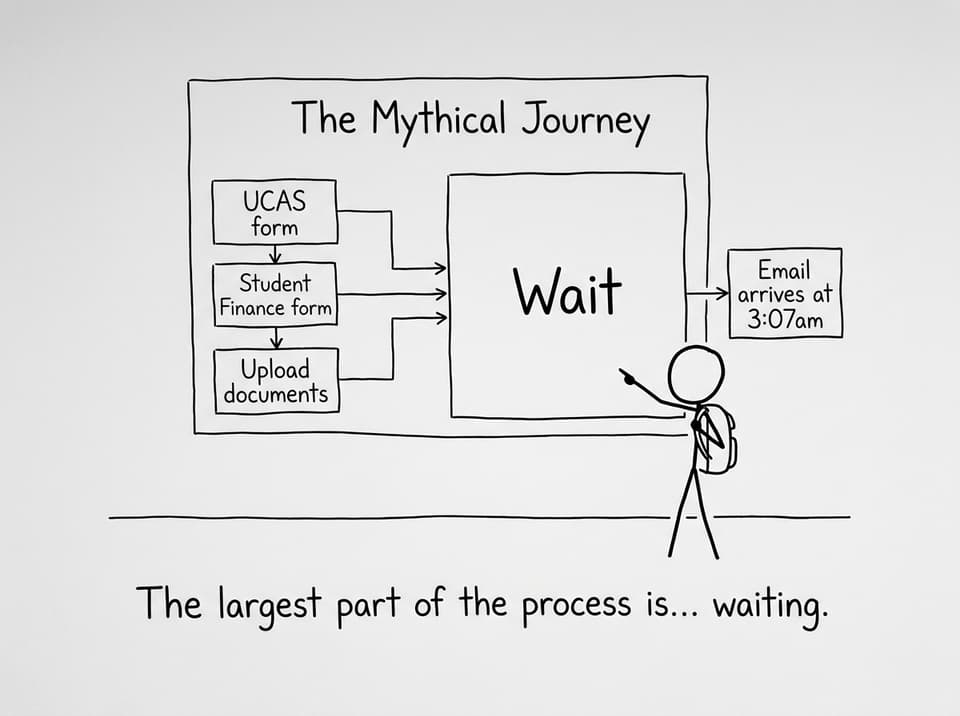
If you are asked for supporting evidence, upload it as soon as possible. Then monitor your application status in your online account until you receive confirmation and a payment schedule.
Reapply each year (future you will forget)
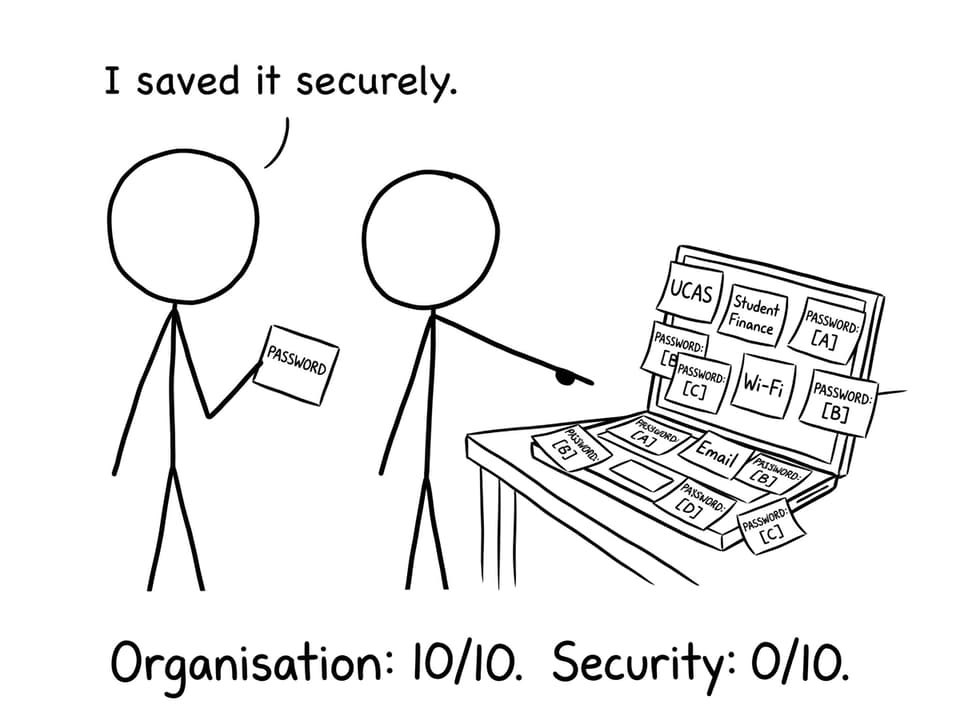
Student finance is not a one-and-done task. You typically reapply every year of study, so store your login details safely.
Common mistakes IB students make (and how to avoid them)
-
Applying late: The easiest way to create stress in September is to postpone finance until “after exams.” Apply early and update later if needed.
-
Mismatched details: Keep your UCAS course details consistent across systems.
-
Forgetting the yearly reapplication: Put a recurring reminder in your calendar.
For UCAS-related pitfalls that also affect timing and organisation, see Mistakes Students Make During UCAS Applications.
A calmer way to juggle UCAS admin and IB exams
UCAS and student finance feel heavy when they sit in your head all day. So move them into a checklist, then return to revision.
RevisionDojo helps you keep that revision side disciplined: drill weak topics in the Questionbank, lock in definitions with Flashcards, and use AI Chat when you are stuck mid-session. When deadlines tighten, tools like Grading support, Mock Exams, Predicted Papers, and the Coursework Library can turn panic into a plan. If you want a simple workflow, start with IB Exams Without Pausing Your Life and RevisionDojo App: The Smarter Way to Prep for IB Exams.
UCAS is a milestone, not a monster. Apply for student finance early, keep your UCAS details consistent, track your documents, and then get back to the work that raises your predicted grades in the first place. When you are ready, RevisionDojo is the place to study with less noise and more momentum.