

If you have ever felt your IB workload getting heavier while your learning habits stay strangely random, you are not imagining it. Most students do not fail because they cannot learn content. They struggle because the skills that make learning reliable, planning, researching, thinking clearly, communicating, and staying consistent, are not always built in a way you can see.
That is the real promise of ATL (Approaches to Learning): not extra tasks, but a set of repeatable skills that make every IB subject easier over time. The problem is that ATL skill growth can feel invisible. One week you are “motivated,” the next week you are not, and it all sounds like personality instead of progression.
RevisionDojo changes that story. It turns IB study into trackable routines, and it helps schools and students make ATL skill progression visible across months, not just lessons.
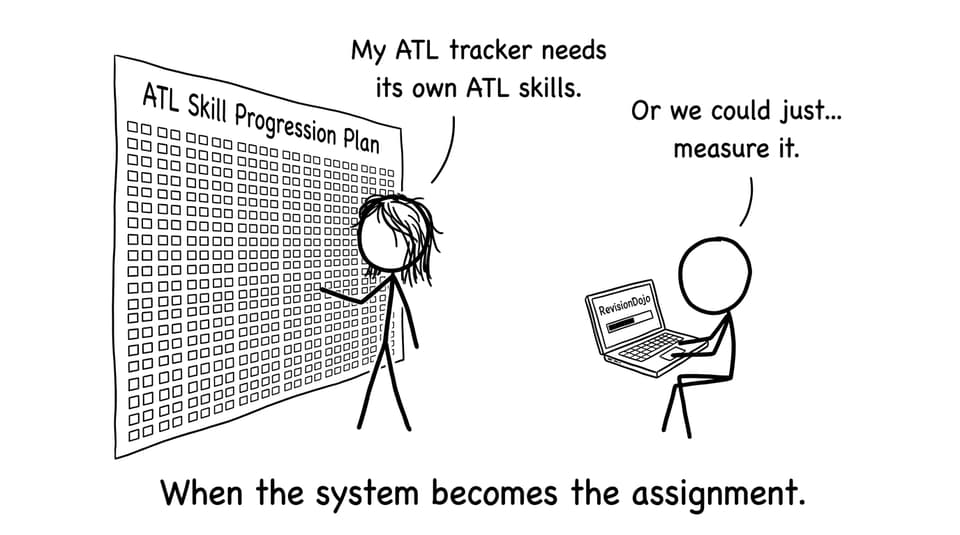
What ATL progression actually means in IB (in student terms)
ATL can sound like school jargon until exam season hits. Then it becomes obvious that exams reward skills as much as knowledge.
Here is what “ATL progression” looks like for a real IB student:
-
You stop rereading and start using active recall (thinking + self-management).
-
Your research stops being random tabs and becomes usable evidence (research).
-
Your writing improves because feedback becomes a loop, not a one-off comment (communication).
-
Group work stops being “somebody does everything” and becomes structured collaboration (social).
-
You can sit timed papers without panic because your routines are stable (self-management).
RevisionDojo supports these shifts by connecting learning, practice, feedback, and reflection in one place, so your skill growth leaves footprints.
Quick checklist: a simple ATL progression loop you can repeat
If you want your IB study to build ATL skills automatically, keep this loop small enough to repeat.
-
Pick one ATL focus for today (thinking, research, communication, social, or self-management).
-
Learn one slice of content using RevisionDojo IB resources.
-
Do exam-style practice and mark it fast.
-
Log one mistake pattern and one next action.
-
Revisit the same skill focus next week and check whether your results changed.
This is the difference between “I studied a lot” and “I progressed.”
How RevisionDojo helps IB schools strengthen ATL skill progression over time
Even though this topic is about what schools can do, you benefit as a student because the system around you becomes clearer: expectations match across subjects, the same skills get reinforced, and your improvement shows up in data and feedback (not just in vague praise).
Skill mapping: turning ATL into a curriculum pattern (not a slogan)
In many IB schools, ATL appears in unit plans but disappears in daily practice. RevisionDojo for Schools helps teachers and coordinators build a map of where skills are being taught and practiced over time.
That matters because skill gaps often hide in plain sight. You might be doing plenty of “research” in humanities, for example, but almost none of it is explicitly taught as a process you can repeat.
When schools use RevisionDojo for Schools, ATL is easier to distribute intentionally across grades and departments. For students, that means less whiplash between subjects and more consistency in how learning skills are reinforced.
Reflection templates: making ATL visible without making it cringe
Reflection only works when it is short, specific, and connected to what you just did.
RevisionDojo makes reflection practical by nudging you toward prompts that connect tasks to skills:
-
What did I do when I got stuck?
-
Which step cost me the most time?
-
What would I repeat next time?
This is ATL in motion. The point is not to write a diary. The point is to create a track record of strategies that actually improve your IB scores.
If you want to see how reflection becomes ownership, this pairs well with How RevisionDojo Empowers IB Students to Take Ownership.
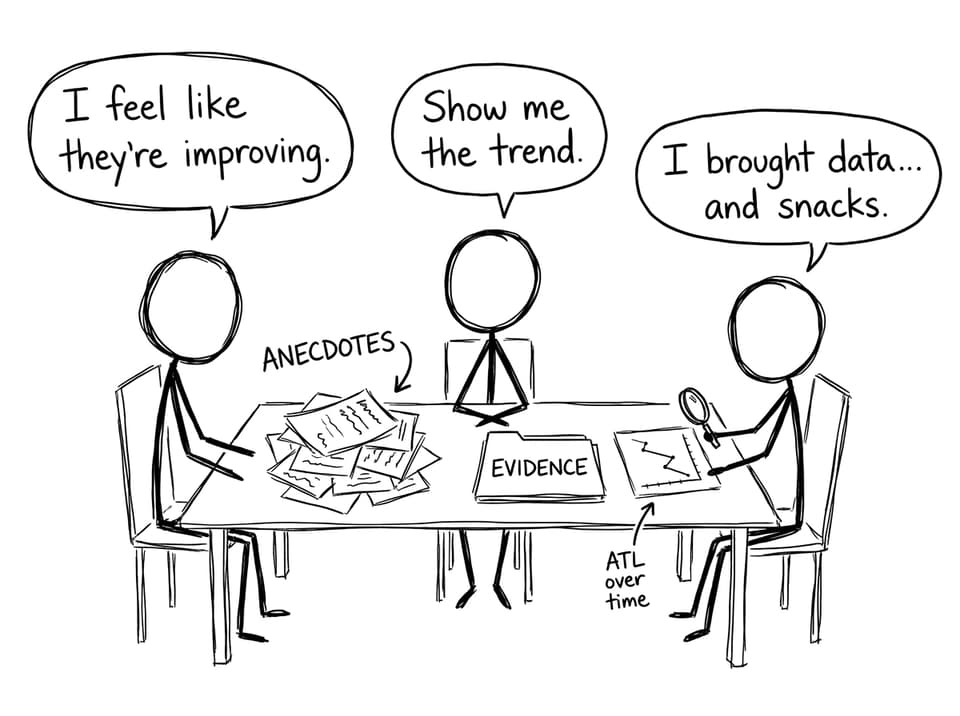
Analytics over time: proof that your habits are working
The hardest thing about improving in IB is that effort is loud, but progress is quiet.
RevisionDojo’s analytics make progress less mysterious by showing trends over time: what you practiced, what you missed, and what improved after you changed your approach.
For students, this can turn a vague plan like “revise more” into something you can act on:
-
If your self-management is weak, your data often shows inconsistent practice and rushed timed work.
-
If your thinking skills are weak, you often lose marks on command terms or multi-step questions.
-
If your communication is weak, your written responses improve only when feedback is immediate and repeated.
That is also why many students pair practice with fast feedback tools. For example, How RevisionDojo Makes IB Feedback More Actionable for Students explains how feedback becomes a repeatable loop.
Daily tools that quietly train ATL (even when you are “just revising”)
A good ATL system does not require you to keep saying “ATL.” It just builds the right behaviors into your workflow.
Here is how RevisionDojo features map to common IB ATL categories in a way you will actually feel during exam prep:
-
Thinking skills: topic-based practice in the IB Question Bank overview and targeted sets like IB Math targeted revision using the Questionbank.
-
Research skills: learning the “why” behind errors by returning to Digital IB Study Notes instead of guessing.
-
Self-management: spaced repetition using IB Flashcards with SRS so revision becomes scheduled, not emotional.
-
Communication skills: using rubric-aware feedback and revision cycles (especially when combined with RevisionDojo’s Grading tools and AI Chat).
-
Social skills: when teachers standardize routines, group revision becomes less chaotic (shared focus, shared criteria, shared reflection language).
The magic is not that you have more resources. It is that your resources behave like a system.
Department consistency: when IB feels like one program, not six separate worlds
A lot of IB stress comes from inconsistency. One teacher wants detailed process, another wants speed, a third grades harshly, and a fourth does not explain what changed between a 5 and a 6.
When schools align ATL language and track it over time, students get a clearer sense of what “good” looks like across subjects. RevisionDojo supports that alignment through shared structures: common skill tags, common reflection prompts, and dashboards that coordinators can use to spot gaps.
If you are also in MYP, you may recognize how important vertical alignment is. This connects well with Organizing Collective Planning and Vertical Structuring in MYP.
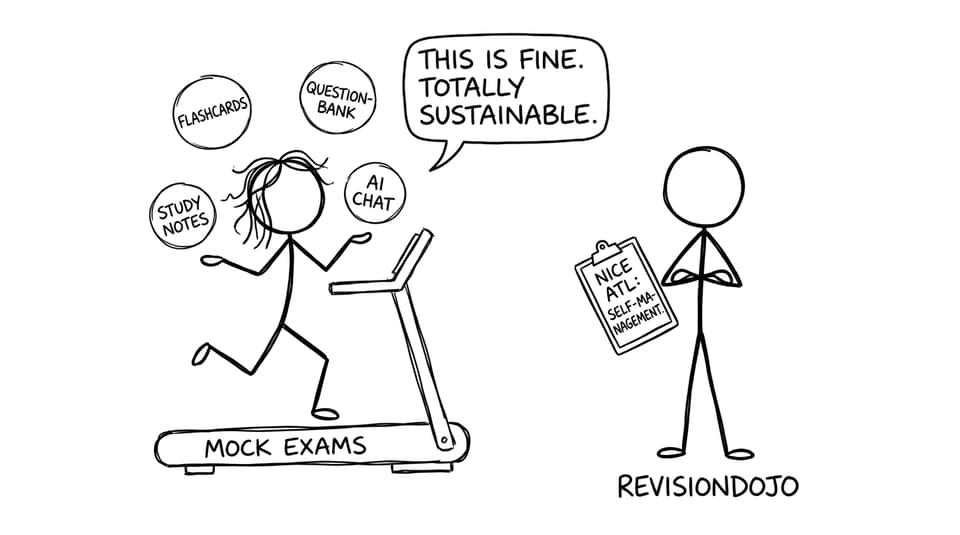
Exam readiness: ATL becomes stamina, timing, and calm
Close to exams, ATL stops being abstract. It becomes pacing, stamina, and error control.
RevisionDojo supports exam realism through its broader loop: Questionbank practice, Study Notes, Flashcards, AI Chat, Grading tools, Predicted Papers, Mock Exams, Coursework Library, and Tutors.
If you want a clean explanation of how realistic rehearsal fits into your IB plan, see IB Predicted vs Specimen Papers: What They Mean and the broader system view in RevisionDojo App: The Smarter Way to Prep for IB Exams.
A student story: what “ATL progression” feels like when it works
A student I met once described their first year of IB like this: “I studied a lot. I just did not get better at studying.”
Their turning point was not a new textbook or a sudden burst of motivation. It was a smaller change: they started treating every practice session as a skill session.
-
Monday: 25 minutes of Study Notes + 15 minutes of Flashcards.
-
Tuesday: Questionbank set on one topic, then review mistakes.
-
Thursday: redo the hardest questions, but slower.
-
Saturday: a timed set, then immediate feedback and a short reflection.
After a month, their scores improved, but more importantly, their process stabilized. That is ATL progression: not becoming a different person, but building a system you can repeat under pressure.
FAQ: ATL progression and RevisionDojo for IB students
How does ATL progression help me score higher in IB exams?
ATL progression helps because IB exams reward repeatable performance under time pressure, not just understanding on a good day. When your self-management improves, you plan revision earlier, you space it out, and you actually finish papers on time. When your thinking skills improve, you handle command terms more accurately and avoid “almost-right” answers that lose easy marks. When your communication skills improve, your written responses become clearer and more mark-scheme aligned, especially in structured and essay-style questions. Over time, these changes compound into higher grades because fewer marks leak away through avoidable errors. RevisionDojo supports this by connecting practice, feedback, and reflection so you can see what improved and why.
What if my school focuses on ATL but I still feel lost as a student?
That usually means ATL is being named, but not turned into daily routines you can repeat. IB students need ATL to show up in small actions: how you take notes, how you check a markscheme, how you plan timed practice, and how you respond to feedback. If ATL stays at the level of posters and unit plan language, it will not change your outcomes. RevisionDojo helps by making the skill loop practical: Study Notes for quick clarity, Flashcards for daily recall, Questionbank practice for exam technique, and AI Chat when you get stuck. Then the platform’s analytics help you notice patterns, so your next week is smarter than your last week. That is what makes ATL feel real.
How can I personally track ATL progression if my school is not tracking it well yet?
You can track it by choosing one skill focus per week and attaching it to measurable behaviors in your IB study routine. For example, self-management can be measured by consistency (how many days you revised) and timing (how often you finish a timed set). Thinking skills can be measured by the types of errors you make (misreading command terms, skipping justification, failing multi-step logic). Communication can be measured by whether feedback points repeat across drafts or disappear over time. Using RevisionDojo, you can build this into your workflow: practice in the Questionbank, review with Study Notes, lock recall with Flashcards, and write a short reflection after timed practice. If you keep the loop small, you will create your own evidence of ATL progression even before your school formalizes it.
Closing: make IB feel less like chaos, more like progression
The best part about ATL skill progression is that it does not require you to become a productivity robot. It just asks you to make growth visible, repeatable, and easier to sustain than panic.
RevisionDojo helps IB schools strengthen ATL skill progression over time by turning practice into insight: mapping skills, guiding reflection, and showing trends that students can actually use. And for you, as an exam-focused IB student, that means something simple but rare: a study system that gets calmer as the exam gets closer.
If you want to experience the full loop, start with RevisionDojo for IB or explore RevisionDojo for Schools to see how skill progression becomes visible across a whole cohort.