


Online learning can feel like a different universe. You submit work through portals, ask questions in chats, and sometimes learn macroeconomics while your dog insists on sitting on your feet.
So it’s normal for IB students to wonder: If I study online, will the IB assess me differently? Will universities treat it differently? Will the final result be “less real”?
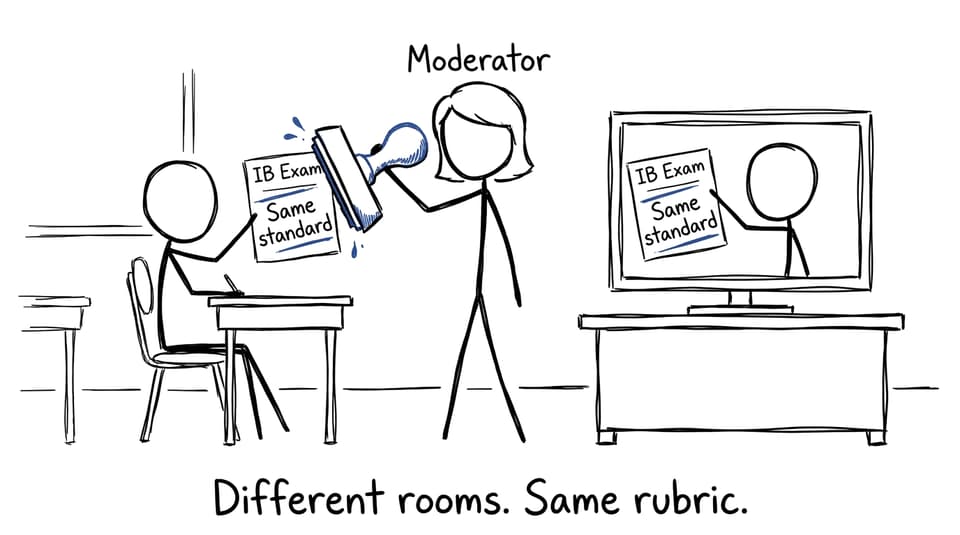
Here’s the quiet truth that tends to calm people down: the IB does not create a separate assessment system for online Diploma candidates. The standards, criteria, moderation, and final examinations are designed to be globally consistent. Different classroom. Same yardstick.
This guide explains how online IB students are assessed and examined, what actually happens behind the scenes (moderation, exam centers, integrity checks), and how to prepare strategically using RevisionDojo.
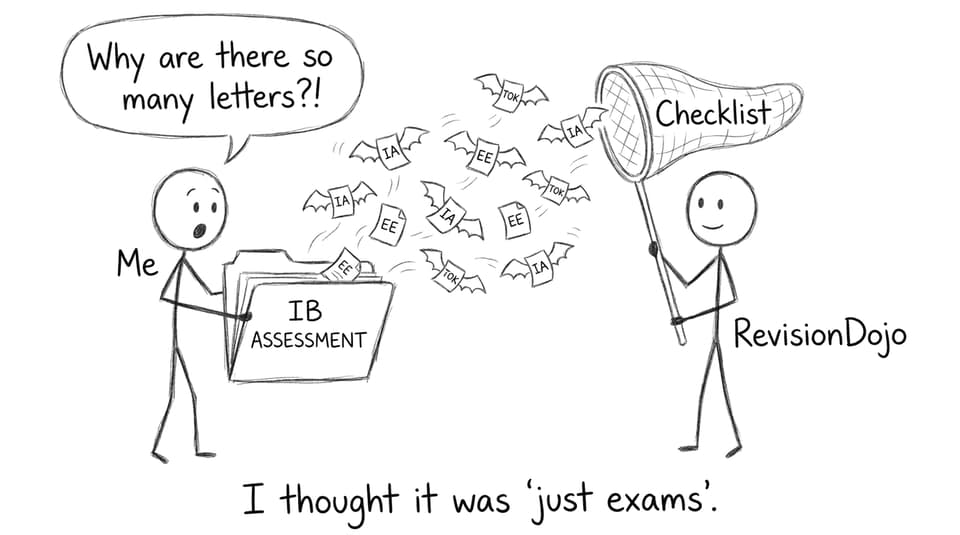
The online IB assessment checklist (what you’re really graded on)
Before we go deeper, keep this high-level map in your head. In the IB, your final outcomes come from a blend of:
-
Internal Assessments (IAs) in each subject (teacher-marked, then moderated)
-
External assessments (written exam papers and other externally marked components)
-
Core components: TOK, Extended Essay (EE), and CAS (CAS is completion-based, TOK/EE are graded)
-
Academic integrity processes that validate authenticity
If you want one place to organize all of that into a workable plan, RevisionDojo was built for it: practice in the Questionbank, consolidate with RevisionDojo for IB, and get coursework feedback through the IB Coursework Grader.
The core principle: online IB students are held to the same standard
The IB is obsessed (in a good way) with comparability. A diploma earned in one country has to mean the same thing elsewhere, or the credential loses its power.
That’s why online IB students:
-
follow the same subject guides and assessment objectives
-
submit the same types of coursework
-
are marked using the same published criteria
-
sit the same exam sessions, under the same security expectations
In other words, the IB doesn’t grade “online effort.” It grades evidence: analysis, method, communication, and how well your work meets the rubric.
How IB Internal Assessments work for online students
An IB Internal Assessment is not “homework that counts.” It’s closer to a guided mini-research project where you’re expected to show independent thinking in a controlled format.
In online programmes, the mechanics change (digital submission, remote supervision), but the assessment logic stays the same:
-
Your teacher supports the process and marks your final submission using IB criteria.
-
The IB then moderates a sample to keep marking consistent across schools.
-
Your IA contributes a set percentage to your final grade (this varies by subject).
Online logistics often include recorded or live oral submissions, digital lab books, or secure upload systems. None of that changes what examiners care about: a focused question, clear method, strong analysis, honest evaluation, and clean communication.
If you’re building an IA right now, these two RevisionDojo pages are worth keeping open in separate tabs:
And when you have a draft, the fastest way to turn vague anxiety into actionable fixes is rubric-based feedback. That’s exactly what the IB Coursework Grader is designed for: criterion-by-criterion guidance aligned to how IB work is judged.
How IB external exams work for online students
The exams are the moment where rumours spread fastest. People hear “online programme” and imagine online exams taken at home.
But for the IB, final written exams are designed to be secure and comparable. That means online IB students typically sit exams in person at approved examination centers linked to their partner school or arrangement.
What stays the same for online students:
-
exam format and timing
-
paper structure and question style
-
grading criteria and mark schemes
-
external examiner marking process
What changes is only the learning environment before you walk into the room.
To prepare, you need two things: (1) content coverage and (2) exam behavior under time pressure. RevisionDojo is built around that loop:
-
Drill weak topics using the Questionbank
-
Build stamina with timed practice using Online IB Mock Exams: Practice Anywhere, Anytime
-
Create focused practice sets with Custom IB Exams: Create Personalized Practice Tests
That combination matters because the IB rarely rewards “knowing.” It rewards “knowing under constraints.”
TOK, EE, and CAS online: the IB core still counts
The IB core is where the programme shows its personality. It’s also where online students sometimes feel most isolated, because reflection and supervision can feel harder through a screen.
Still, the assessment realities remain stable.
Theory of Knowledge (TOK)
TOK tasks are submitted digitally in most settings anyway. Online students typically complete the same essay and exhibition requirements, with teacher guidance and authenticity checks.
The best strategy is to treat TOK like a skill: claim, counterclaim, implication, evidence. If you want feedback that feels closer to an examiner’s mindset, use the IB Coursework Grader alongside RevisionDojo’s AI Chat to pressure-test your arguments before you submit.
Extended Essay (EE)
The EE is the long game: 4,000 words of decisions. Online students usually meet supervisors virtually, use digital libraries, and manage milestones through shared documents.
This is where RevisionDojo’s Study Notes and AI Chat can help you avoid the classic EE failure mode: reading a lot, writing a little, and calling that progress. Ask for outline critique, tighten your research question, and keep your argument linear.
CAS
CAS isn’t graded with points like a subject, but it is a requirement. Online IB students still plan, document, and reflect, usually through digital logs and supervisor confirmations.
The hidden benefit of CAS online is that it forces you to be intentional. You can’t rely on the school calendar to structure it for you.
Academic integrity in online IB assessment (what schools do and what you can do)
The IB takes academic integrity seriously, and online environments add extra pressure to prove authenticity.
Schools often use:
-
plagiarism detection
-
recorded viva-style check-ins or process reviews
-
version history in documents
-
teacher observation of drafting and progress
Your job is simpler than it sounds: make your work traceable.
Practical habits that protect you in the IB:
-
keep a research log (sources, dates, decisions)
-
save drafts in stages (so your thinking has a timeline)
-
cite early, not at the end
-
avoid “mystery leaps” where a paragraph appears with no development
If you want a clean workflow, do your practice and planning inside one ecosystem: RevisionDojo’s Coursework Library, Grading tools, and AI Chat make it easier to show process, not just product.
How grades are awarded in the IB (and why it’s reassuring)
The IB is criterion-referenced. That’s a fancy way of saying you’re not directly competing against the person next to you. You’re being judged against descriptors of performance.
At a high level:
-
Each subject is awarded a grade from 1 to 7.
-
TOK and EE can add up to 3 additional points.
-
The diploma is awarded when you meet the overall requirements (including core completion and minimum conditions).
For online students, the reassurance is that the system is designed to reduce local bias. Moderation and external marking exist precisely because the IB wants a global standard.
What universities see (and what they don’t)
A quiet detail that matters: the IB diploma itself does not announce whether you studied online or in person.
Universities evaluate the same signals they always have:
-
your final IB scores
-
predicted grades and references (when applicable)
-
course rigor (HL/SL choices)
-
your written profile, activities, and fit
If you’re worried about credibility, the best antidote is simple: build undeniable competence. Do timed papers. Get your coursework graded against rubrics. Fix patterns.
For a platform built around that exact idea, start at the RevisionDojo homepage or explore Best IB Mock Exam Platform: Why Students Choose RevisionDojo.
A calm prep plan for online IB students (RevisionDojo-friendly)
Here’s a practical weekly structure that fits online learning realities and still respects the IB assessment model:
-
2 sessions: learn and compress content (RevisionDojo Study Notes + quick self-testing)
-
3 sessions: apply and mark (RevisionDojo Questionbank + error log)
-
1 session: simulate pressure (timed mock using RevisionDojo Mock Exams or Predicted Papers)
-
1 checkpoint: improve coursework (use the IB Coursework Grader and set one revision target)
The goal is not motivation. It’s momentum. The IB rewards repetition more than inspiration.
Closing: Online learning, same IB finish line
Studying online can feel solitary, but the IB assessment system is built to be the opposite of personal and the opposite of local. It’s standardized, moderated, and externally verified so that your result means something anywhere.
That’s good news. It means your job is clear: master the criteria, practice under exam conditions, and treat coursework like a scored performance, not a vague “project.”
If you want a single system to do that with less stress, use RevisionDojo as your home base: the Questionbank for exam-style practice, Study Notes and Flashcards for retention, AI Chat when you’re stuck, Mock Exams and Predicted Papers when you need realism, and the Grading tools when your IA, TOK, or EE needs a ruthless rubric check.
The finish line is the same for every IB student. Build preparation that matches it.