


Procrastination has a funny way of showing up right when you care the most.
One minute you’re an IB student with a serious plan, a neat notebook, and a calendar you actually believe in. The next minute you’re reorganising your highlighters, “just checking” one message, and quietly hoping your future self is more disciplined than your current self.
But procrastination in IB is rarely laziness. It’s usually fear (of failing), perfectionism (of not doing it “properly”), overwhelm (because the workload is real), or simple confusion about what to do next. And here’s the part that matters: teachers can change that story. Not through pressure, but through structure, clarity, and feedback that makes starting feel safe.
A quick checklist teachers and students can use today
If you’re reading this as an IB student preparing for exams, use this as a “what to ask for” list. If you’re a teacher, use it as a “what to build” list.
-
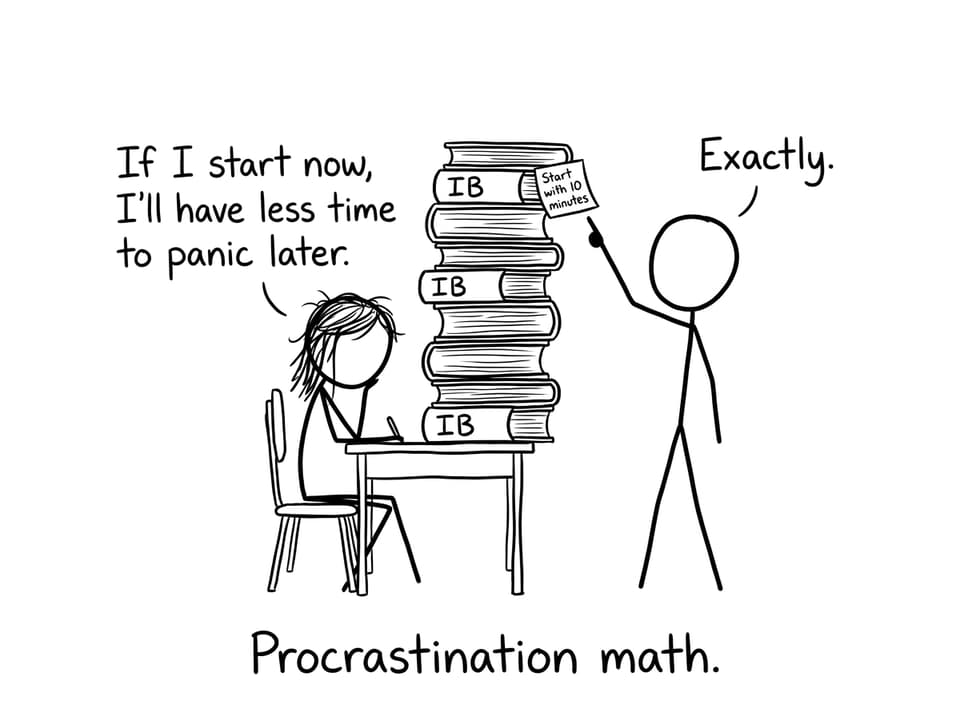
Make the first step tiny (2-10 minutes)
-
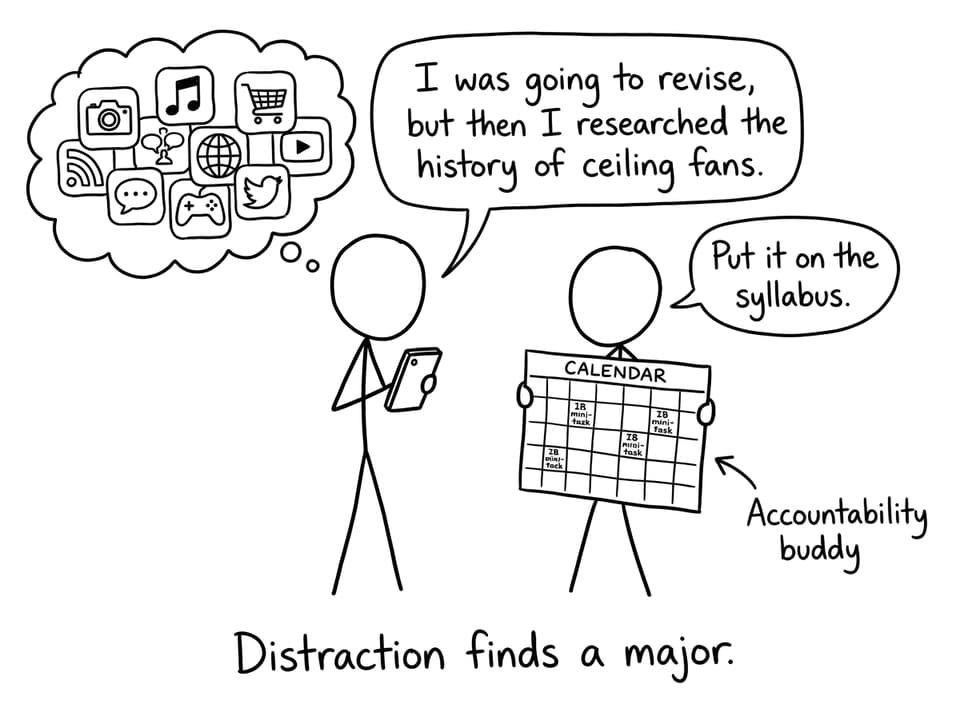
Turn deadlines into micro-deadlines with visible checkpoints
-
Replace vague goals with specific outputs (one paragraph, five flashcards, ten questions)
-
Create accountability that feels supportive (not performative)
-
Use fast feedback loops so effort turns into improvement quickly
-
Keep revision active: recall, questions, error logs, reattempts
-
Standardise tools so students waste less time switching systems
RevisionDojo was built around this exact IB rhythm: Questionbank, Study Notes, Flashcards, AI Chat, Grading tools, Predicted Papers, Mock Exams, Coursework Library, and Tutors-all designed to reduce friction and make consistent action easier.
Why IB students procrastinate (and why it’s rational)
Most procrastination is a form of self-protection.
In the IB Diploma Programme, the “threat” isn’t imaginary. Students face constant evaluation, tight timelines, and high expectations across multiple subjects. When a task feels like it might expose weakness, the brain reaches for relief. Relief looks like scrolling, cleaning, “research,” or promising to start later.
Common procrastination drivers in IB exam prep include:
-
Perfectionism: “If I can’t do it at top-band level, I shouldn’t start.”
-
Overwhelm: Too many subjects, too many tasks, no obvious next action.
-
Time blindness: Underestimating how long studying and writing actually take.
-
Low clarity: Not knowing what an answer should look like to score marks.
-
Emotional fatigue: Burnout makes the smallest task feel heavy.
If you want language for this, it’s helpful to read the student perspective too: How to Stop Procrastinating in IB (Without Burning Out).
Strategy that actually works: reduce the “starting cost”
Teachers can’t study for students. But they can make starting cheaper.
A powerful shift is to design tasks where the first step is easy enough that students don’t need motivation. Motivation is unreliable in IB season. Systems are not.
What “cheap to start” looks like
-
“Write an outline” becomes “Write 3 bullet points from memory.”
-
“Revise Topic 4” becomes “Do 8 targeted questions on one sub-skill.”
-
“Fix your essay” becomes “Improve the introduction using two success criteria.”
This is also where a platform helps. In RevisionDojo, students can move from targeted Study Notes straight into short sets in the IB Question Bank, which makes the “next action” obvious.
Micro-deadlines: the kind of pressure that helps (not hurts)
Big deadlines create one big decision: “Do I face this today?”
Micro-deadlines remove that decision by making progress the default. Teachers can build a ladder of checkpoints that students can climb without panic.
A simple micro-deadline ladder
-
Checkpoint 1: topic chosen + success criteria written down
-
Checkpoint 2: first attempt (rough is fine)
-
Checkpoint 3: feedback applied to one specific weakness
-
Checkpoint 4: reattempt under timed conditions
This is especially effective when the checkpoint includes an output that can be checked quickly: a photo of a plan, a submitted short response, a tagged question set, or a small reflection.
For students who need proof that practice beats rereading, this pairs well with: Making the Most of IB Question Banks and Practice Papers.
Accountability that doesn’t feel like surveillance
Accountability works best when it feels like someone is on your side.
Teachers can create lightweight systems that normalise progress reporting without turning it into public shame. In IB, the goal is consistency, not drama.
Three classroom-friendly accountability systems
-
Two-minute check-ins: “What’s the next tiny task you’ll do today?”
-
Progress pairs: students report one completed action + one planned action
-
Visible queues: a list of “next steps” students choose from (removes decision fatigue)
RevisionDojo can support this approach at scale, particularly for teachers managing large cohorts. The RevisionDojo for Schools platform is designed for assignment workflows, practice tracking, and faster feedback loops, without teachers building everything from scratch.
Teach the feedback loop (because feedback kills procrastination)
A lot of IB procrastination happens when students can’t tell if they’re improving.
If effort doesn’t create visible progress, the brain stops trusting effort. That’s when students drift into low-feedback activities like rereading notes or rewriting definitions. It feels productive, but it’s hard to measure.
Teachers can replace that with a feedback loop:
-
Attempt a question
-
Get feedback (fast)
-
Identify the pattern
-
Fix one thing
-
Reattempt
This is why tools like the RevisionDojo Question Bank and AI Chat matter: they shorten the time between “I tried” and “I know what to do next.”
If you want a broader system view, this is worth saving: RevisionDojo App: The Smarter Way to Prep for IB Exams.
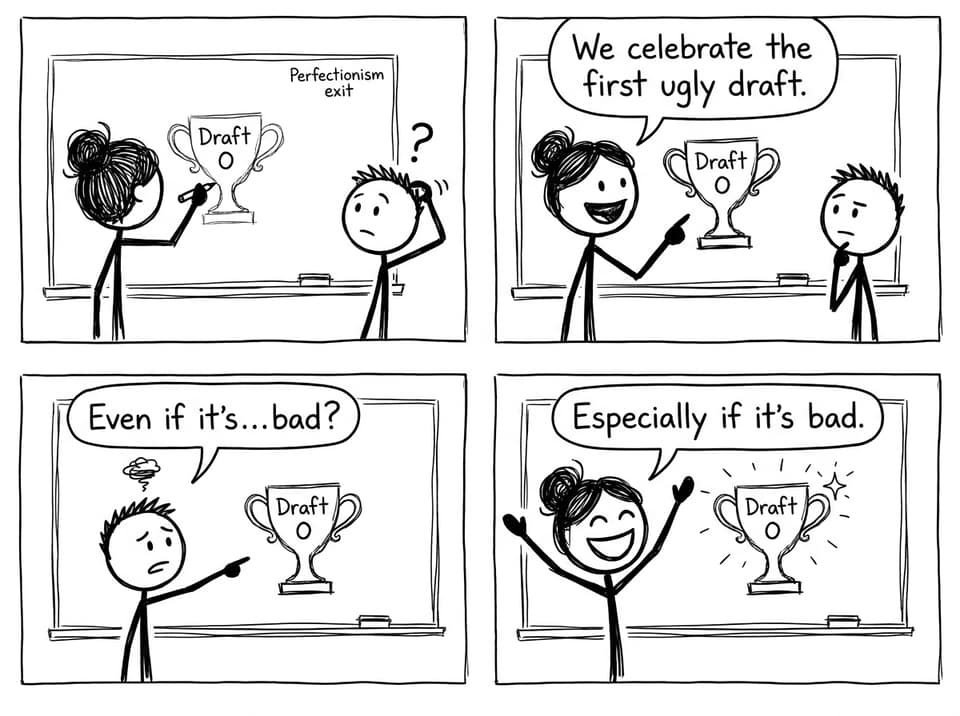
Defuse perfectionism: celebrate Draft 0
Perfectionism is procrastination wearing a fancy coat.
In IB exam prep, students often delay because they’re trying to produce a final answer on the first attempt. Teachers can actively separate drafting from judging.
Practical ways teachers can do this
-
Require “Draft 0” submissions that are graded only for completion
-
Share anonymised examples of rough early attempts (and how they improved)
-
Give feedback on one priority at a time (not 12 corrections)
-
Use “progress language”: “What’s the next improvement?” not “What’s wrong?”
Build exam stamina in small, realistic doses
A final reason IB students procrastinate: timed practice feels confronting.
But avoiding timed conditions keeps anxiety alive. Teachers can introduce stamina gradually: small timed sections, then longer blocks, then full rehearsals.
Students can also use structured practice tools like Mock Exams and Predicted Papers (simulations, not guarantees) to make exam conditions familiar. If you’re curious how to use these responsibly, read: IB Predicted vs Specimen Papers: What They Mean.
When students feel behind, it also helps to hear the truth without judgement: Can You Cram IB Exams? A Realistic 7-Day Plan and Is 1 Month Enough to Study for IB Exams?.
FAQ
What should I do if I procrastinate even when I care about IB exams?
Caring is not the missing ingredient; clarity usually is. When the task feels vague (like “revise Biology”), your brain can’t see the finish line, so it avoids starting. Shrink the task until it becomes a single action you can complete in one sitting, such as “do 10 Questionbank questions on enzymes” or “write one thesis statement.” Then make the next step visible before you stop, ideally written down as a 2-minute starter. If you can, ask your teacher to help you define what a good answer looks like and what the most common mark-loss patterns are. In IB, progress often comes from doing fewer things with more feedback. And if you need an external structure, using RevisionDojo’s Study Notes, Flashcards, and Questionbank can turn caring into a repeatable daily loop.
How can IB teachers support procrastinators without creating more stress?
The secret is to increase structure while lowering emotional threat. Teachers can do this by grading early attempts for completion, not quality, so students learn that starting is safe. Micro-deadlines also help because they replace one huge judgement day with small, manageable checkpoints. Feedback should be narrow and actionable: one improvement target, one example fix, then a reattempt. This keeps students from feeling flooded by corrections, which often triggers avoidance. Accountability should feel relational, like short check-ins and progress pairs, not public comparison. When students feel seen and guided, IB pressure becomes something they can organise rather than something they must escape.
What study tools help most when procrastination is linked to overwhelm?
Overwhelm usually comes from too many choices at once, not too little time. The most helpful tools are the ones that reduce decisions and increase feedback. For example, a topic-filtered Questionbank helps you pick one precise target rather than “study everything.” Flashcards help you keep daily momentum on low-energy days because 10 minutes still counts as real revision. Study Notes help you patch a specific confusion quickly, instead of rereading whole chapters. AI Chat helps when you’re stuck and tempted to quit, because a 60-second explanation can save an hour of spiralling. And timed Mock Exams help you practise pacing so exam day feels familiar rather than mysterious. For many IB students, RevisionDojo works because all these tools sit in one system, so you can keep moving instead of constantly restarting.
Closing: the teacher’s real gift is making progress feel possible
The most supportive IB teachers don’t just explain content. They reduce friction. They turn scary tasks into small steps, and small steps into proof.
If you’re an IB student preparing for exams, you don’t need a new personality. You need a plan you can repeat on tired days. If you’re a teacher, you don’t need to “motivate” students into discipline. You can scaffold momentum with micro-deadlines, gentle accountability, and fast feedback.
And if you want a single place where that momentum is easier to sustain, RevisionDojo brings the whole IB loop together: Questionbank, Study Notes, Flashcards, AI Chat, Grading tools, Predicted Papers, Mock Exams, Coursework Library, and Tutors. Start small, stay consistent, and let the results do the motivating.