


When the exam paper lands on your desk, it rarely feels like a test of knowledge.
It feels like a test of language.
For many IB students who are English as an Additional Language (EAL) learners, that pressure is constant: they understand the concept, they can see the argument, they might even be able to explain it out loud, but the marks are hiding behind phrasing, structure, and command terms. The good news is that the IB is not asking EAL students to be poets. It is asking them to be clear. And clarity can be taught, practised, and repeated until it becomes reliable.
This guide is written for IB students preparing for exams, but it’s also a quiet blueprint for what great IB teachers do: they turn language-heavy assessments into routines that feel learnable.
Quick checklist: EAL support that actually changes IB results
If you want the fast version, these are the highest-impact moves IB teachers use to help EAL students succeed in IB assessments:
-
Make IB command terms visible, predictable, and practised weekly
-
Pre-teach academic vocabulary (not just definitions, but how to use the words)
-
Plan answers with visual scaffolds before writing full paragraphs
-
Teach one paragraph structure and reuse it across tasks
-
Use oral rehearsal before timed writing
-
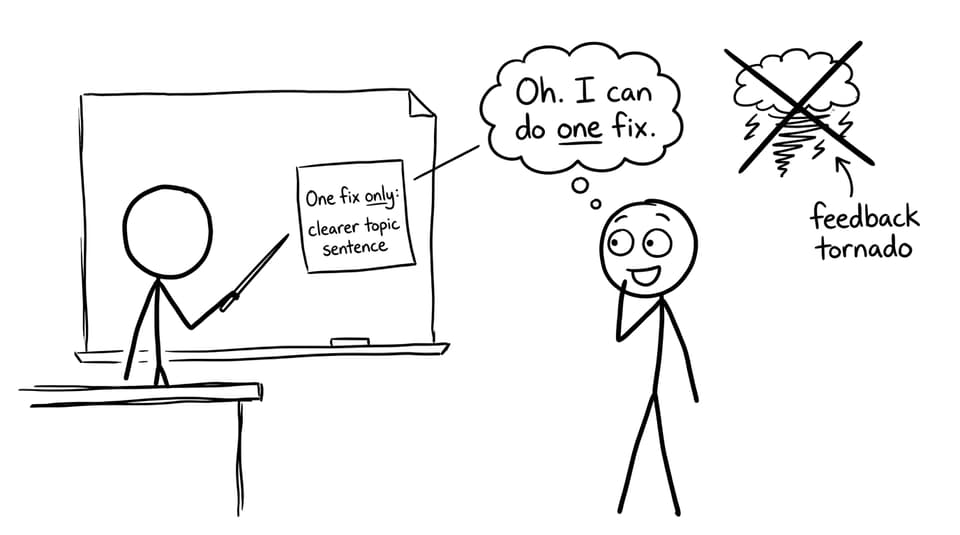
Give “one-fix” feedback cycles, tracked over time
-
Practise exam conditions in small doses with targeted questions
A lot of this becomes easier when practice, feedback, and tracking live in one place. That’s why many schools use RevisionDojo for Schools to support consistent IB assessment preparation.
Why EAL students can be strong in IB content but lose marks
EAL learners are often working with two different loads at the same time:
-
The thinking load: the actual IB concept, case study, method, or interpretation
-
The language load: decoding the question, choosing academic vocabulary, and building accurate sentences under time pressure
That second load is why EAL students sometimes misread an IB prompt, write an answer that is “right but not rewarded,” or lose easy marks on structure. It’s not a lack of ability. It’s a mismatch between what they know and what the assessment allows them to show.
The fix isn’t to make the IB “easier.” The fix is to make the assessment language familiar.
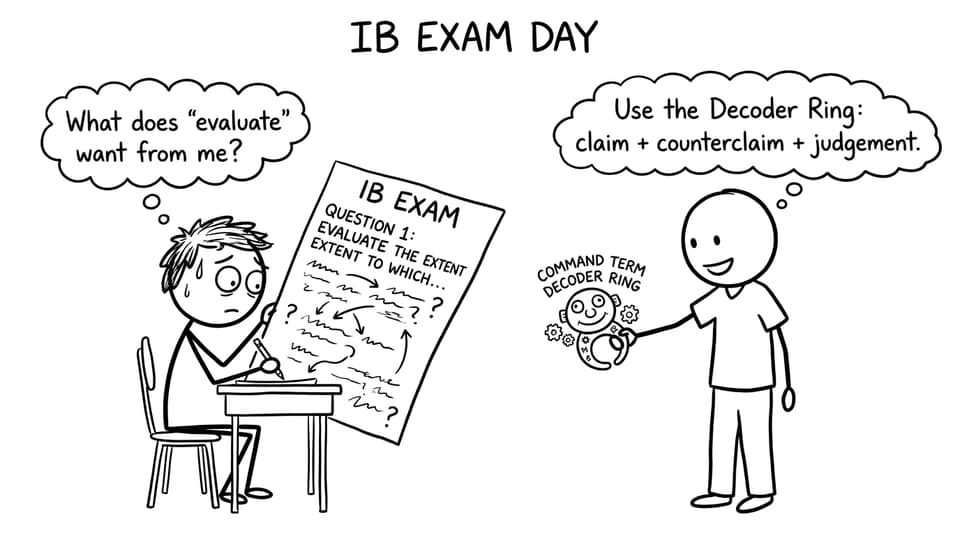
Teach IB command terms like they’re the real syllabus
In the IB, command terms are the steering wheel. If you steer wrong, you can write accurate content and still miss the mark.
An effective IB teacher treats command terms as a weekly skill, not a one-time poster on the wall. Students need to see how the same topic changes when the command term changes.
Two practical classroom routines that help EAL learners:
Mini “translation” drills
Take a single topic and rewrite the prompt three times:
-
Describe the process...
-
Explain the process...
-
Evaluate the process...
Then discuss what changes: detail level, cause-effect, judgement using criteria.
Sentence frames that match the command term
EAL students benefit from reusable scaffolds, such as:
-
“This suggests that… because…”
-
“A limitation of this view is… therefore…”
-
“Compared with X, Y is similar because… but differs because…”
If you want a student-friendly refresher on why this matters, this article on using command terms effectively in IB exams makes the logic very clear.
Pre-teach academic vocabulary (and make it usable)
Many EAL students know the everyday version of a word, but the IB rewards the academic version.
A teacher’s job here is to make vocabulary small, repeatable, and active:
-
Choose 8-12 words per unit that actually appear in markschemes and model answers
-
Teach each word with a short definition and a model sentence
-
Reuse the words in speaking tasks before expecting them in writing
For IB students, vocabulary practice becomes far more effective when it’s spaced and searchable. That’s why tools like IB Flashcards with spaced repetition (SRS) matter: you’re not just “learning words,” you’re rehearsing retrieval under pressure.
If you’re building a full IB routine, it also helps to connect vocabulary to notes and exam practice. RevisionDojo’s ecosystem is designed to link Study Notes, Flashcards, and Questionbank so language support becomes part of everyday revision, not an extra burden.
Use visual scaffolds that reduce language load without lowering IB rigor
EAL support works best when it protects the thinking and simplifies the pathway.
Visual scaffolds do that. They help students organise ideas before grammar and phrasing start competing for attention.
High-yield scaffolds for IB assessments:
-
PEEL / TEEL paragraph planners (Point, Evidence, Explain, Link)
-
Compare/contrast tables with “similarity” and “difference” columns
-
Flowcharts for processes and mechanisms
-
Claim, counterclaim, judgement templates for evaluative questions
Once the structure is clear, language becomes less scary because the student is not inventing the shape of the answer while writing it.
Model one excellent paragraph and reuse it everywhere
A subtle secret of the IB is that strong writing is often repeated structure, not repeated brilliance.
Teachers can help EAL students by explicitly modelling:
-
What a topic sentence does
-
How evidence is introduced
-
What analysis sounds like (not just what it means)
-
How to “link back” to the question
Then, keep the structure stable across tasks. Stability builds speed. Speed reduces anxiety. And anxiety is one of the biggest hidden drains in IB exams.
If you want a broader student-focused system for strengthening revision habits that support writing, Top 12 note-taking methods for IB students that work pairs well with structured paragraph practice.
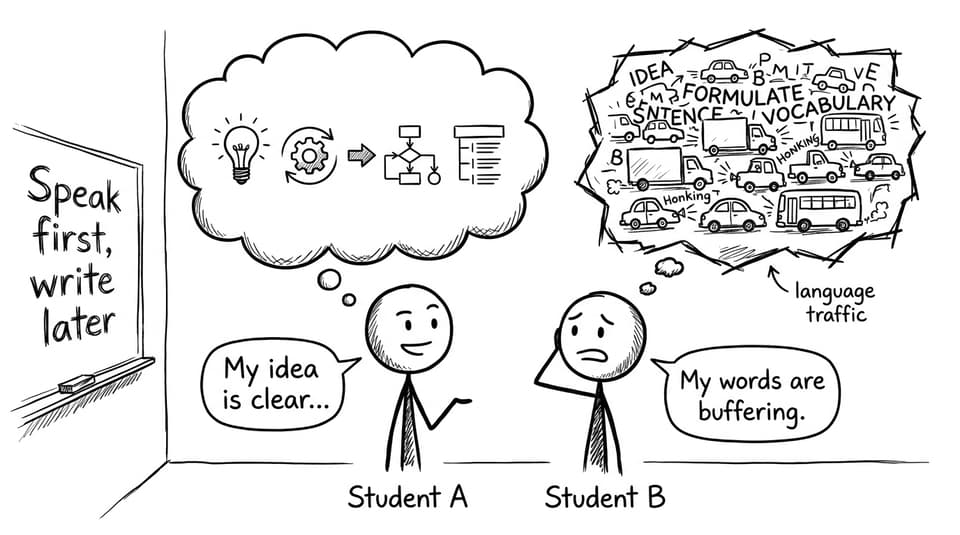
Oral rehearsal: the fastest bridge from ideas to exam writing
Oral rehearsal is not a “nice extra.” It is often the missing step between understanding and scoring.
Before a timed write, great IB teachers ask EAL students to:
-
Explain their argument to a partner in 30 seconds
-
Summarise the mechanism of a process out loud
-
Practise one key evaluative sentence (judgement + criteria)
Speaking does three things at once: it tests understanding, it makes vocabulary available faster, and it reduces the blank-page feeling.
For independent practice, students can also use tools like Jojo AI Chat in RevisionDojo to test explanations and clarify confusion early, before mistakes harden into habits.
Practice like the IB marks: targeted questions, tight feedback loops
EAL students improve fastest when practice is close to the assessment and feedback is simple enough to act on.
That’s where an exam-style question bank helps: it turns “general revision” into specific patterns.
Two useful RevisionDojo starting points for students:
-
Questionbank feature page for targeted drilling
-
IB question bank guide: how to use it effectively for a repeatable practice routine
A strong teacher-led loop looks like:
-
Do a short set of questions
-
Identify one recurring language or structure mistake
-
Apply one fix in the next attempt
-
Track improvement across weeks (not just one task)
RevisionDojo’s Grading tools can support this kind of feedback cycle, and schools often use it to make progress visible across classes and year groups.
Reduce assessment anxiety without lowering expectations
EAL assessment anxiety is often rational: students know language slips can cost marks.
IB teachers can help by making exam stress predictable:
-
Simulate exam conditions in short bursts (10 minutes, then 20, then full timing)
-
Let students plan with a template before writing full responses
-
Reward clarity improvements, not just final grades
For students, a calm plan matters as much as motivation. If you’re close to exams, IB: how to study in the last 24 hours (no panic) is a practical way to focus your energy.
FAQ
What if I understand the IB topic but my English makes my answers sound “simple”?
That usually means your thinking is ahead of your academic language. The fix is not to add fancy words randomly; it’s to learn a small set of high-utility phrases and sentence frames that match common IB tasks. Start with command terms like “explain,” “analyse,” and “evaluate,” and practise the sentence shapes that earn marks for each. Then build a personal vocabulary list that you actually reuse in writing, not just memorise once. If your teacher gives you a model paragraph, don’t just read it; copy the structure, then swap in your own content. Over a few weeks, your writing won’t just sound more advanced; it will become more markscheme-aligned.
Should IB teachers simplify questions for EAL students during assessment practice?
Teachers should simplify the language around the task without changing the level of thinking. In other words, keep the IB concept and difficulty, but remove unnecessary linguistic confusion. That can mean paraphrasing the prompt, clarifying a command term, or showing what “discuss” looks like in a response plan. The goal is fairness: students should be assessed on IB understanding, not on decoding awkward phrasing. Over time, though, the scaffolding should gradually fade as the student becomes more fluent with IB exam language. The best support is temporary training wheels, not permanent shortcuts.
How can I improve my IB writing quickly if I’m an EAL student and exams are close?
First, stop trying to improve everything at once. Pick one high-impact target: command terms, paragraph structure, or key vocabulary for your current unit. Next, practise in small timed blocks with real exam-style questions so your brain learns speed and clarity together. After each attempt, apply “one fix only” to the next response (for example: clearer topic sentence, or stronger judgement line). Use spaced repetition for definitions and key phrases so they come to mind faster under pressure; this is where tools like Flashcards help. Finally, get feedback that is specific enough to act on, whether from a teacher, a tutor, or a structured platform like RevisionDojo’s Grading tools.
A final note for IB students (and the teachers supporting them)
The IB is rigorous, but it’s also patterned. Once EAL students learn the patterns, including command terms, paragraph shapes, and the small phrases that signal analysis and evaluation, their knowledge becomes visible.
If you want one place to practise those patterns deliberately, RevisionDojo is built for exactly this: Study Notes to clarify content, Flashcards to make language automatic, Questionbank to turn understanding into marks, AI Chat to unblock confusion, Grading tools to sharpen writing, plus Predicted Papers, Mock Exams, a Coursework Library, and Tutors when you need human guidance.
The goal isn’t perfect English. The goal is IB clarity, repeated until it’s reliable.