


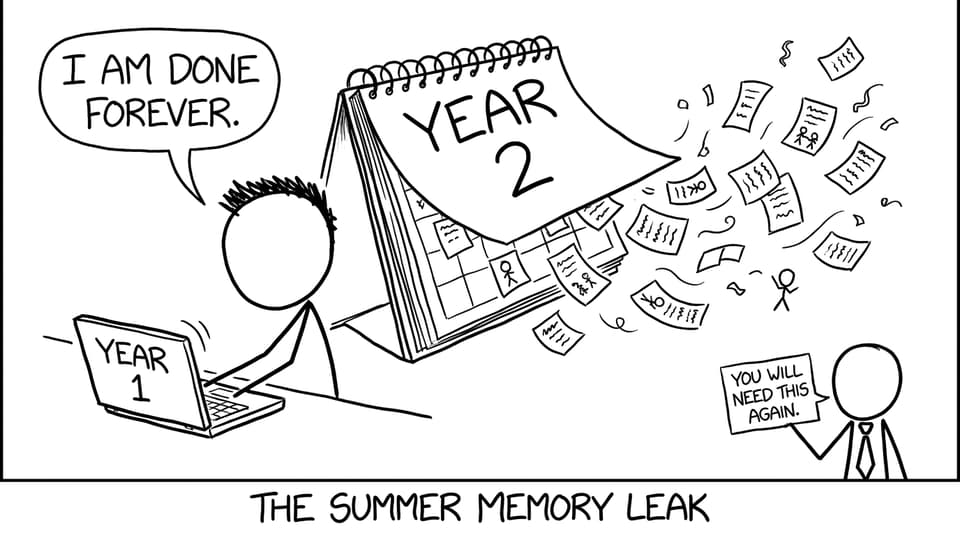
The end of IB Year 1 has a particular kind of silence. The folders close. The tabs disappear. Someone says, “I’ll remember this in August.”
Then August arrives. And the same students who were fluent in Topic 2 now stare at a question like it’s written in polite ancient Greek.
The IB Year 1 to Year 2 transition isn’t just “getting back into routine.” It’s the moment the programme stops feeling like learning content and starts feeling like performing under constraints: time, criteria, coursework deadlines, and confidence. Great teachers don’t fix this with a motivational speech. They fix it with continuity.
Why the IB Year 1 to Year 2 transition feels harder than it should
In most schools, the calendar creates a hidden trap: a long gap right after students finally built momentum.
For IB students preparing for exams, the difficulty usually comes from five predictable places:
-
Knowledge decay: even strong understanding fades without retrieval practice.
-
Coursework pressure: IAs (and drafts) expand to fill any available time.
-
Higher expectations: Year 2 rewards synthesis, not just recall.
-
Broken routines: summer resets sleep, structure, and study habits.
-
Unclear “what good looks like”: students often don’t see how Year 1 skills translate into exam marks.
This is why teachers often spend the first weeks reteaching. Not because students are lazy, but because the system is designed to forget.
Quick checklist teachers can use to keep IB students steady
If you want a smoother IB transition, aim for “small and repeatable,” not “intense and heroic.”
A practical Year 1 to Year 2 bridge
-
End Year 1 with a short consolidation unit (not new content).
-
Assign light summer retrieval: 10-15 minutes, 1-2 times per week.
-
Make expectations explicit: what changes in Year 2 and why.
-
Run Week 1 diagnostics to spot gaps early.
-
Protect confidence: frame review as “warming up,” not “starting over.”
RevisionDojo makes this easier to run at scale because the same loop works across subjects: Study Notes for clarity, Flashcards for retention, Questionbank for targeted practice, and analytics for what to do next.
How IB teachers can structure summer revision without burning students out
The best summer plan feels almost too small to matter. That’s the point.
Teachers can set an IB-friendly routine like:
-
One topic per week (selected from the biggest Year 1 mark-loss areas)
-
One short practice set using an IB-style question bank
-
One correction habit: students write a one-sentence “error rule” after feedback
On RevisionDojo, this is naturally supported by the ecosystem students already use during term time: Study Notes to refresh, Flashcards to keep concepts alive, and an IB Question Bank to make recall measurable.
The teacher move that matters most: reduce decision fatigue
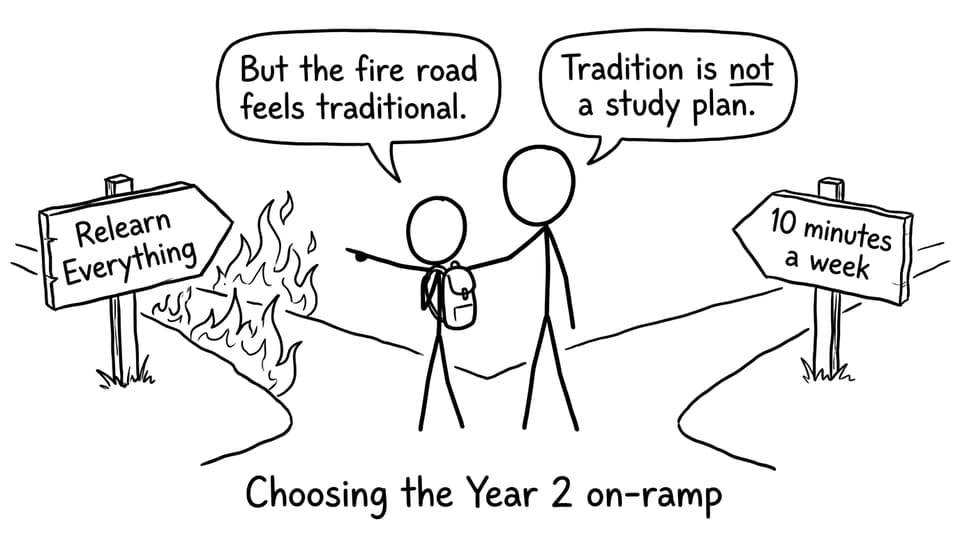
Students don’t just forget content over summer. They forget what to do next.
If the only instruction is “revise,” most students drift toward the easiest activity (usually rereading). But IB exams reward practice under constraints.
A tight, teacher-curated pathway helps students keep momentum without feeling watched. That’s why many teachers point students to a consistent workflow: notes, then flashcards, then practice questions, then feedback. If you want students to understand why notes matter in that chain, this guide on digital IB Study Notes pairs well with a summer plan.
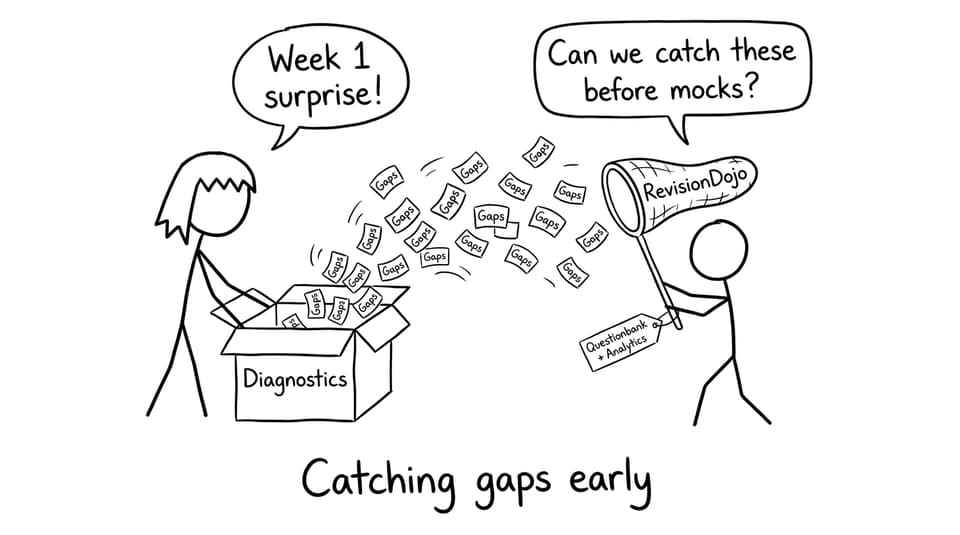
Week 1 diagnostics: the fastest way to stop the “Year 2 restart”
When Year 2 begins, teachers have a narrow window. The class is still willing to reset routines. Students are still open to changing how they study.
So don’t guess. Diagnose.
A good Week 1 diagnostic in IB should:
-
sample the highest-weighted Year 1 skills
-
include a mix of recall and application
-
be short enough to mark quickly
-
produce a clear “what to reteach vs what to review independently” map
RevisionDojo supports this with practice and performance tracking that carries over, so teachers can see patterns instead of anecdotes. Students can also use timed rehearsal later with custom IB mock exams and build realism with IB Predicted Papers (practice written by former IB examiners).
A quick example: turning “three weeks of reteaching” into “three days of warming up”
Picture an IB science class where Year 2 always begins the same way: a slow march back through last year’s foundational topics.
One teacher shifts the routine. At the end of Year 1, students get a short “bridge list” with three components: a handful of key Study Notes pages, a small Flashcards deck, and one weekly Questionbank set. Over summer, the total time stays low, but the contact stays consistent.
In Week 1 of Year 2, the teacher runs a diagnostic and groups students by patterns (not by “good” and “bad”). Some students need a short reteach. Many just need targeted retrieval. The class starts new content sooner, and students feel the difference: Year 2 begins like continuation, not punishment.
How RevisionDojo supports teachers and IB students in Year 2
A smooth IB transition is really a system problem: too many resources, too little continuity, and not enough feedback loops.
RevisionDojo is built as an all-in-one IB resource that helps teachers run that system with less friction:
-
Questionbank for exam-style practice and gap-spotting
-
Study Notes as a clean reference spine
-
Flashcards for spaced repetition and retention
-
AI Chat to unblock confusion quickly when students study alone
-
Grading tools to make criteria and markbands feel concrete
-
Predicted Papers and Mock Exams for timed rehearsal
-
Coursework Library and Tutors for support when deadlines stack
For schools coordinating this across cohorts, RevisionDojo for Schools helps departments align expectations, track progress, and avoid the yearly reset.
FAQ
How can my IB teachers help me transition from Year 1 to Year 2 if I already forgot content?
They can help most by making the first steps specific and small, because panic thrives in vague plans. A good teacher will start with a short diagnostic so you can see what is truly missing versus what is just rusty. They will also separate “relearn” from “refresh,” since many Year 1 ideas return quickly once you do retrieval practice. If your teacher gives you a weekly loop (notes, flashcards, practice, feedback), follow it even when it feels basic. The IB is not won by intensity once; it’s won by consistency across months. If your school uses RevisionDojo, ask your teacher to assign targeted Questionbank sets so your review matches the exact skills being assessed.
What should I do during summer to prepare for IB Year 2 without ruining my break?
The best answer is “do less, but do it regularly,” because memory responds to reminders, not marathons. Choose one or two sessions per week, keep them short, and focus on retrieval (flashcards and practice questions) instead of rereading. If you use Study Notes, treat them like a reference that supports practice, not the main event. The goal is to reduce the shock of returning, not to complete Year 2 early. A simple routine like 10-15 minutes of Flashcards plus a short Questionbank set can keep the IB foundation intact. If you can, write one sentence after each session: what you got wrong and what rule fixes it.
How do teachers balance IA deadlines with IB exam preparation at the start of Year 2?
Strong teachers protect exam skills by keeping them in the timetable, even when coursework feels urgent. They might run short, timed practice blocks that maintain exam technique while students work on IAs outside that window. They also help by clarifying what parts of coursework improve exam performance (for example, evaluation skills or data handling) and what parts do not. A platform workflow can reduce friction here: Flashcards keep content alive, while Questionbank practice keeps application sharp. Teachers can also use diagnostics and analytics to assign differentiated review so students don’t waste time revising what they already know. In the IB, balancing coursework and exams is less about willpower and more about structure.
The real goal: make Year 2 feel like continuation
The smoothest IB Year 1 to Year 2 transition is the one where students return and recognize themselves: “I still know this. I can build from here.”
If you want that feeling, ask your teachers for a bridge plan, keep summer revision light but consistent, and start Year 2 with diagnostics instead of guesswork. And if you want one platform that ties it all together, explore RevisionDojo for Schools and build your Year 2 routine around Questionbank, Study Notes, Flashcards, AI Chat, Grading tools, Predicted Papers, Mock Exams, Coursework Library, and Tutors, the full IB toolkit in one place.