When people talk about the IB Learner Profile, it can sound like a poster you pass in the hallway on your way to an exam. Nice words. Big ideals. Easy to forget at 11:47 p.m. when your brain is running on caffeine and panic.
But IB Digital Society has a strange advantage: it doesn’t let you keep the Learner Profile as decoration. The course keeps dragging those traits into real situations where the stakes feel familiar, privacy, manipulation, inequality, power, identity, and the systems quietly shaping your day.
If you’re revising for exams, this matters. Because the highest-mark responses in IB Digital Society aren’t just “accurate.” They sound like a student who thinks like an IB learner under time pressure.
Quick checklist: how to revise IB Digital Society through the Learner Profile
Use this as a fast pre-exam filter. If you can do these consistently, you’re basically practicing the Learner Profile while preparing for IB Digital Society:
-
Start every topic with a focused inquiry question (not a vague theme).
-
Define the digital system clearly before analyzing it.
-
Apply one or two course concepts repeatedly (power, identity, change, systems, ethics).
-
Evaluate trade-offs: who benefits, who is harmed, and what alternatives exist.
-
Use at least one counterclaim or stakeholder perspective in most paragraphs.
-
End with reflection: limits of evidence, uncertainty, or what you’d investigate next.
For structured revision paths, begin at the IB Digital Society resources hub, then move topic-by-topic using the Content topic page and Contexts topic page.
Why IB Digital Society fits the Learner Profile so naturally
Most subjects can teach the Learner Profile. IB Digital Society almost can’t avoid it.
That’s because the course asks you to make judgments about real systems in the real world, often with incomplete information. You don’t get rewarded for memorizing a perfect definition and stopping there. You get rewarded for thinking, writing, and evaluating like someone who understands that digital systems have consequences.
If you want a broader refresher, revisit the IB Learner Profile explained and then come back to this article with your exam mindset on.
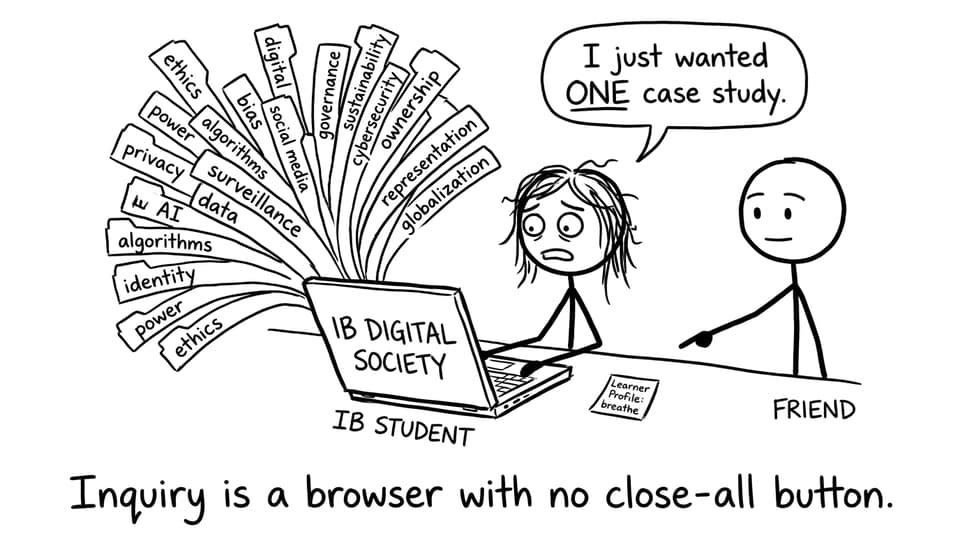
Inquirers and thinkers: asking better questions than “is it good or bad?”
The easiest way to spot a weaker IB Digital Society answer is how it begins. Many students start with a conclusion (“social media is harmful”) and then go hunting for support.
The course trains you to do the opposite: begin with a sharper question, then let your evidence and concepts shape your judgment.
That is the Learner Profile in practice: inquirers who chase clarity, and thinkers who tolerate complexity long enough to evaluate it.
To build this habit, try planning your revision around inquiry cycles:
-
Identify the digital system (platform, policy, algorithm, database, device).
-
Ask a narrow question about impact on a specific community.
-
Apply one main concept lens.
-
Evaluate responses or interventions.
RevisionDojo makes this workflow easier because your learning and practice stay connected: use the Digital Society Questionbank hub to stress-test your understanding, then go back to notes when your explanation starts drifting.
If you want the bigger picture of what makes the subject demanding, the expectations are laid out clearly in Is IB Digital Society hard?.
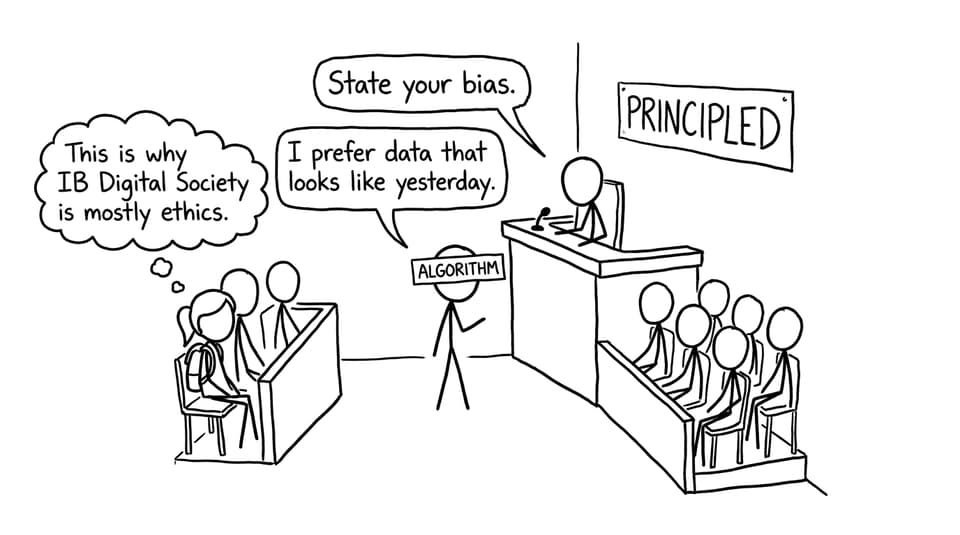
Principled and caring: ethics that actually change your argument
In IB Digital Society, being “ethical” is not a vibe. It’s a method.
A principled response:
-
distinguishes between what a system claims and what it incentivizes,
-
asks who has power to set the rules,
-
and looks for harms that are invisible until you name them.
A caring response goes one step further. It refuses to treat affected groups as abstract. It considers vulnerability, access, and unequal consequences.
You can practice this with almost any case study: surveillance tools, recommendation systems, targeted advertising, facial recognition, or AI in hiring. Your goal is to show you understand people, not just technology.
To build exam-ready ethical evaluation, review how themes connect in Key themes in IB Digital Society explained and keep a small bank of “ethical angles” you can apply quickly.
Open-minded and communicators: the difference between a hot take and a high score
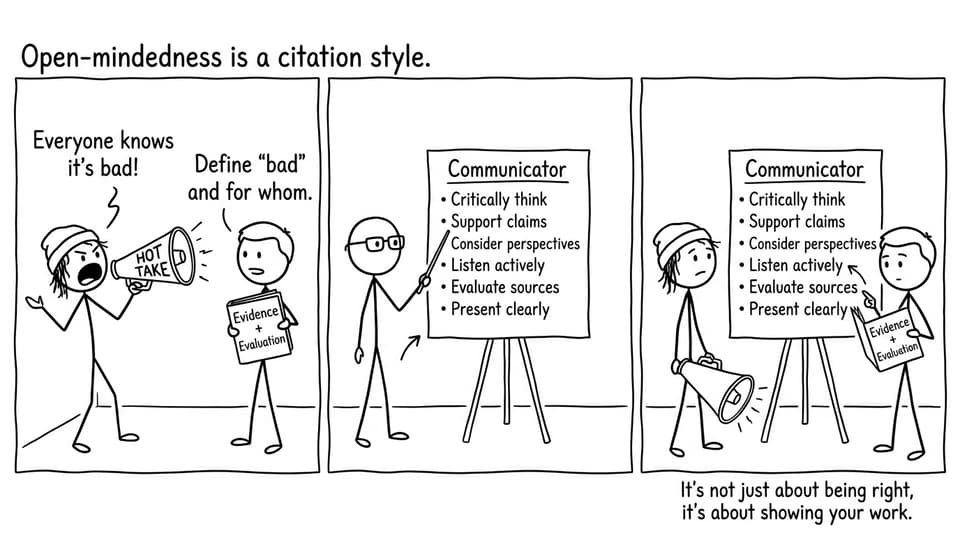
Exams reward writing that feels fair-minded. Not because IB wants neutral students, but because balanced evaluation is harder than confidence.
In IB Digital Society, open-mindedness looks like:
-
naming stakeholders explicitly (users, governments, companies, schools, marginalized communities),
-
acknowledging a plausible counterclaim,
-
and explaining why you still reach your final judgment.
Communication is where you turn that thinking into marks. A high-scoring paragraph tends to do four things: define the system, apply a concept, analyze impact, then evaluate.
If your essays feel messy, use this guide on how to structure high-scoring IB Digital Society exam answers. Then practice with timed sets inside RevisionDojo using Mock Exams, the Exam builder, and Grading tools so your structure becomes automatic.
Reflective, balanced, and risk-takers: how to revise without burning out
Here’s the quiet truth: IB Digital Society rewards students willing to take intellectual risks. You’re often asked to discuss controversial systems, defend a nuanced position, and admit limitations.
That’s risk-taking with discipline.
Reflection is what makes the risk safe. After practice questions, ask:
-
Which concept did I actually use, not just mention?
-
Where did my evidence become vague?
-
Did I evaluate, or did I just describe impacts?
Balance matters too. This course can expand endlessly if you let it, because the digital world has no natural boundary. Use a stable weekly rhythm: short reading, active recall, then writing.
Practical help: RevisionDojo’s Study Notes and Flashcards keep your definitions tight, AI Chat can unblock confusion fast, and Predicted Papers plus Mock Exams keep your practice realistic. If coursework is also on your mind, the Digital Society coursework guide and the IA research question guide keep your thinking focused.
Closing: make the Learner Profile practical
The IB Learner Profile was never meant to be inspirational wallpaper. It’s a description of what good thinking looks like when the problem is real and the answer isn’t obvious.
That’s why IB Digital Society fits it so well. The course asks you to inquire, evaluate, and communicate with ethical care, and that’s exactly what exams reward.
If you want a single place to train those habits efficiently, build your routine inside RevisionDojo: start with Study Notes and Flashcards, practice in the Questionbank, test yourself with Mock Exams and Predicted Papers, use AI Chat when you’re stuck, and tighten your writing with Grading tools. Your goal isn’t to know more about technology. It’s to think better about it, on demand, the way IB Digital Society expects.

