

Your body is doing revision without you.
Right now, it’s adjusting blood glucose, tweaking water balance, and keeping enzymes working in a narrow comfort zone. That quiet, constant work is homeostasis. And in IB Biology, homeostasis is one of those topics that shows up everywhere because it connects cell biology to whole-body physiology.
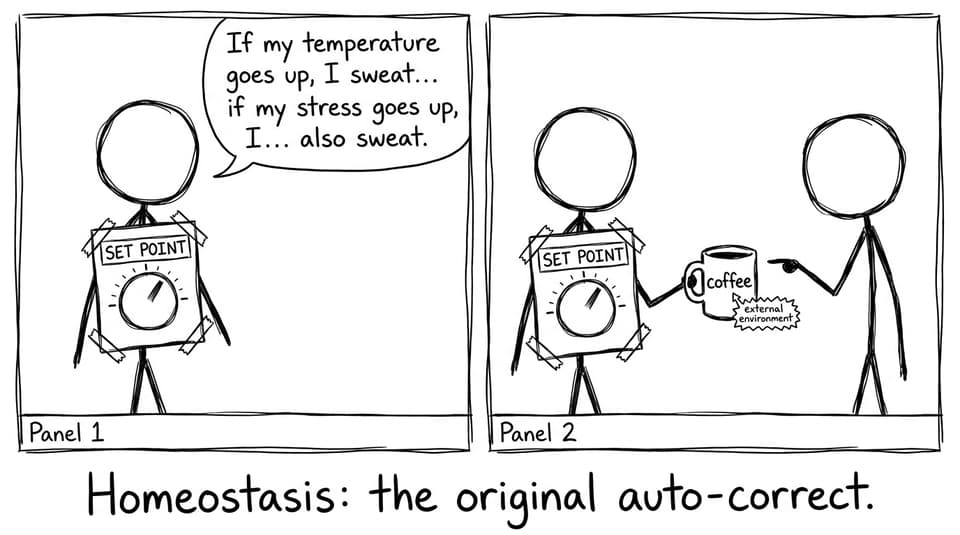
IB Biology homeostasis quick checklist
-
Know the definition: stable internal environment within safe limits
-
Memorize the loop: receptors -> coordination center -> effectors
-
Explain negative feedback with clear cause-and-effect
-
Use core examples: thermoregulation, blood glucose, osmoregulation, pH
-
Practice data skills with exam-style questions in the D3.3 Homeostasis Questionbank
Homeostasis in IB Biology: the idea behind the marks
In IB Biology, homeostasis isn’t “keeping everything constant.” It’s maintaining internal conditions within a functional range so cells can keep doing chemistry. Enzymes, membrane transport, and respiration all rely on stable temperature and pH, so even small drifts matter.
Most exam questions reward you for describing the feedback loop precisely. A typical structure is:
-
Stimulus (variable moves away from set point)
-
Receptor detects change
-
Coordination center compares to set point and sends signals
-
Effector acts to reverse the change
If you want a clean syllabus-aligned walkthrough, start with IB Biology Topic D3.3: Homeostasis and then reinforce with the D3.3 Homeostasis Notes.
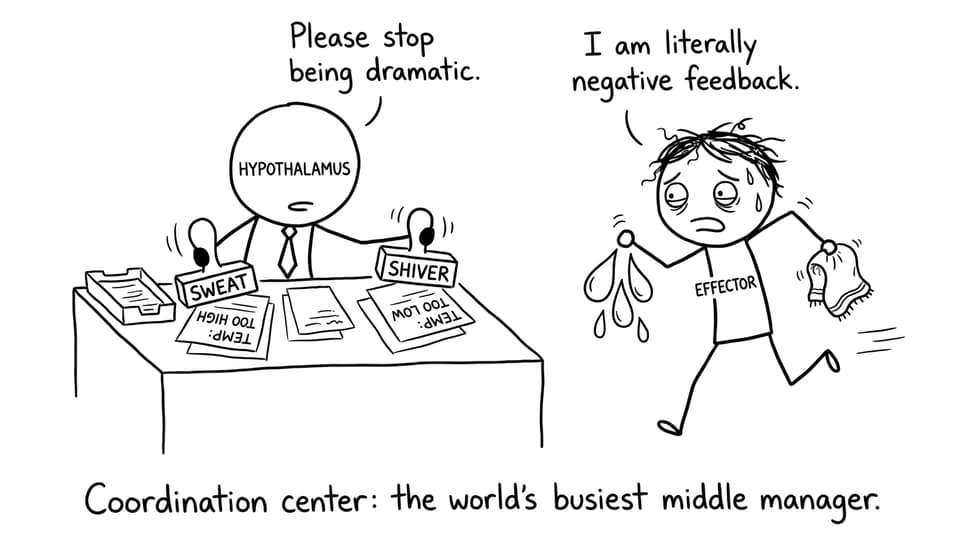
Negative feedback loops (the core IB Biology mechanism)
Negative feedback is the default pattern in IB Biology homeostasis questions because it counteracts the initial change.
Example: thermoregulation
-
If core temperature rises, the hypothalamus triggers responses such as sweating and vasodilation to increase heat loss.
-
If core temperature falls, shivering and vasoconstriction reduce heat loss and generate heat.
That “rise -> response -> return toward set point” storyline is exactly what examiners want. For extra targeted practice, use D3.3.2 Negative feedback loops in homeostasis.
High-yield homeostasis examples to revise for IB Biology
Blood glucose (glucoregulation)
Insulin lowers blood glucose by promoting uptake and storage (glycogen). Glucagon raises blood glucose by stimulating glycogen breakdown. It’s a neat two-hormone system that creates lots of short-answer and data-response opportunities.
Osmoregulation
Water balance is regulated largely through kidney function and hormones like ADH. It’s easy to mix up “more ADH” vs “more dilute urine,” so drill it with active recall.
For broader context that links hormones and regulation, review 6.6 Hormones, homeostasis and reproduction Notes and explore connected physiology topics in IB Biology Human Physiology.
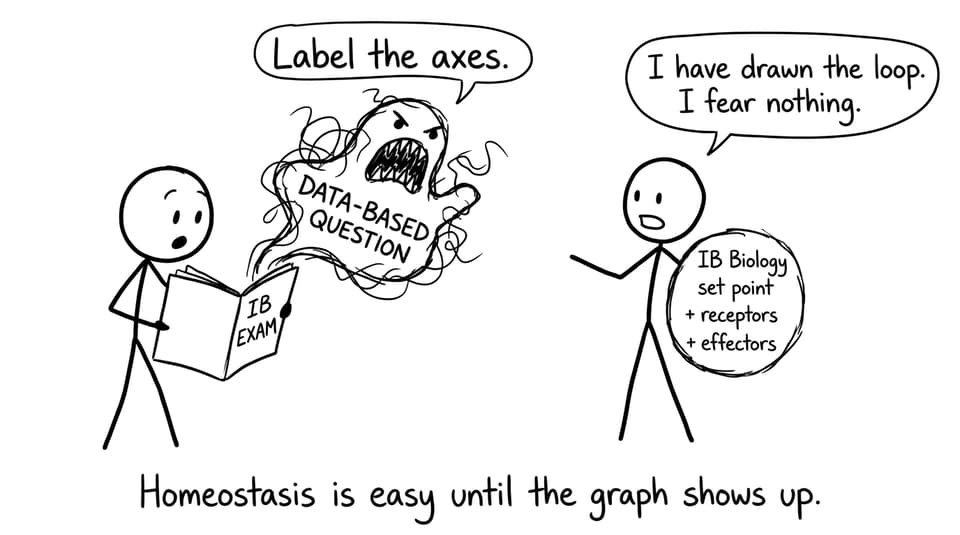
How to turn IB Biology homeostasis into exam points
First, learn the wording from notes. Then switch quickly to application.
A strong loop on RevisionDojo looks like this:
-
Clarify with D3.3 Homeostasis Lessons
-
Drill recall using Biology Flashcards
-
Prove it with the Homeostasis Questionbank
-
Build timing with Biology Predicted Papers and the wider IB Predicted Papers
Conclusion: make IB Biology homeostasis feel automatic
Homeostasis is the kind of IB Biology topic that rewards calm, repeatable thinking: define the variable, run the negative feedback loop, apply it to an example, interpret the graph.
If you want that to feel automatic under time pressure, build your revision around RevisionDojo’s Study Notes, Flashcards, Questionbank, AI Chat, and realistic practice via Mock Exams and Predicted Papers. Start with IB Biology Topic D3.3: Homeostasis, then practice until the loop becomes your default answer.