
A cell’s quiet decision that changes everything (IB Biology)
In the early weeks of revision, IB Biology can feel like a list of facts you’re meant to carry into an exam hall. But cell specialization is a different kind of topic. It’s more like a story about identical beginnings.
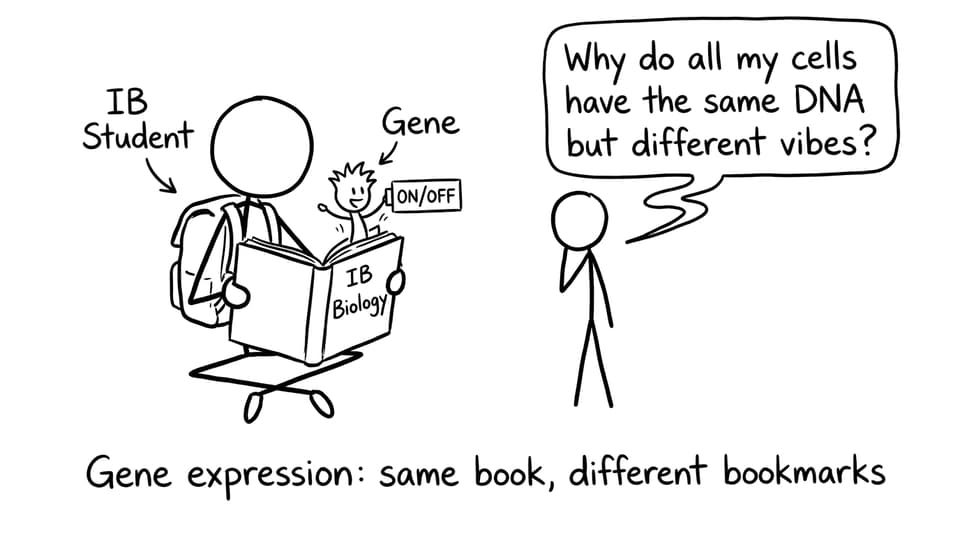
Every cell in your body starts with the same DNA. Same alphabet. Same chapters. Yet one cell becomes a neuron that fires electrical signals, while another becomes a muscle fiber built for force. The difference isn’t the genome. It’s which pages get read and which stay shut.
That “reading” is gene expression, and it’s the engine behind cell specialization.
Quick exam checklist: how gene expression creates specialization
Use this as a fast IB Biology paragraph plan:
-
Same DNA in nearly all body cells; different genes switched on/off
-
Transcriptional control via transcription factors, promoters, enhancers
-
Epigenetic regulation (DNA methylation, histone modification) changes chromatin accessibility
-
Post-transcriptional changes like RNA processing and alternative splicing
-
Translation and post-translational modification fine-tune protein levels and activity
-
Signals in development (hormones, morphogens, cell contact) push cells toward stable identities
For deeper syllabus alignment, keep these pages open while you revise: D2.2.1 Gene expression (HL) and Notes: D2.2.1 Gene expression.
Transcription factors: the first big filter (IB Biology)
The fastest way to explain specialization in IB Biology is this: cells don’t use all genes all the time. They use the genes they need.
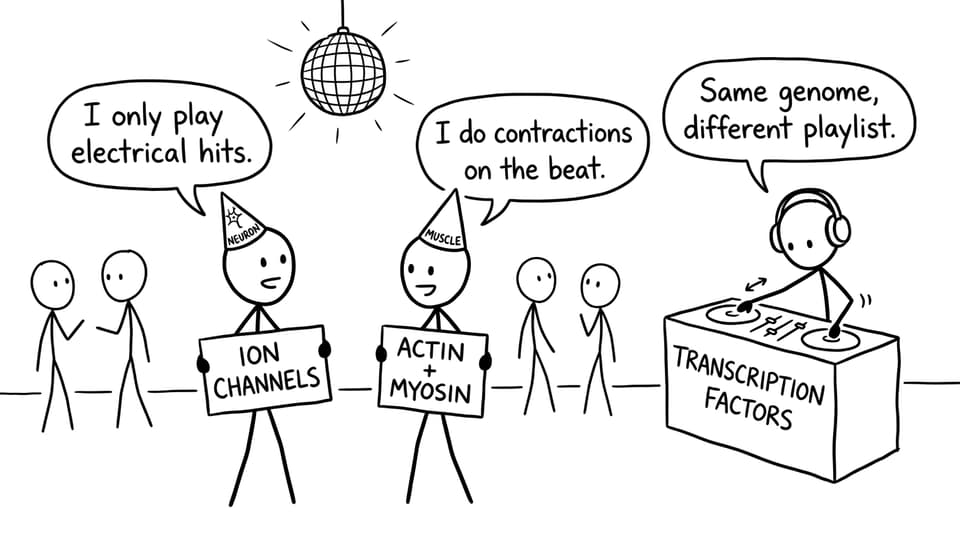
A major control point is transcription. Proteins called transcription factors bind to regulatory DNA sequences (like promoters and enhancers). Depending on the factors present, a gene becomes easier or harder for RNA polymerase to transcribe.
A muscle cell, for example, ramps up genes linked to actin and myosin. A neuron prioritizes genes for ion channels and neurotransmitter receptors. Same DNA, different regulatory proteins, different outcome.
If you want a clean exam-ready explanation, this is the best companion: How activators and repressors control genes and Notes: D2.2.2 Regulation of transcription by proteins.
Epigenetics: keeping some chapters permanently closed
Transcription factors explain “today’s choices.” But specialization also needs memory: a way for a skin cell to keep being a skin cell after thousands of divisions.
That’s where epigenetics comes in. In IB Biology, focus on two core mechanisms:
-
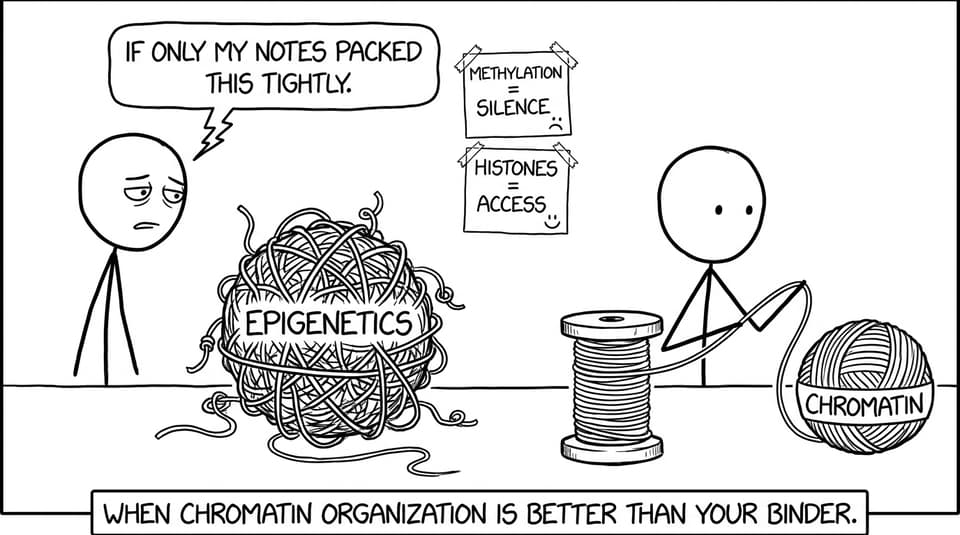
DNA methylation (often near promoters) usually reduces transcription
-
Histone modification changes how tightly DNA is wrapped, affecting chromatin packing
Tightly packed chromatin blocks access to genes. Looser chromatin makes genes available. The key idea is accessibility: epigenetic tags alter how readable DNA is without changing the DNA sequence.
To lock this in, revise with How epigenetics regulates gene expression and the syllabus-specific Notes: methylation of promoter and histones.
After transcription: one gene, many outcomes
Specialization isn’t only decided at transcription. After a gene is transcribed, eukaryotic cells can edit how the message is used.
RNA processing matters in IB Biology because it helps explain protein diversity. Alternative splicing can join exons in different combinations, so one gene can produce multiple polypeptides depending on the cell type.
Then translation efficiency and post-translational modification adjust what proteins actually do inside the cell. In exams, you don’t need to list every modification; you need to show you understand that control happens at multiple stages.
If you’re revising the central dogma alongside this, use 2.7 DNA replication, transcription and translation and Notes for D1.2 Protein synthesis.
Final takeaway: make IB Biology feel controllable
Cell specialization is the proof that IB Biology isn’t just memorization. It’s logic: same DNA, different access, different proteins, different cells.
When you revise, practice writing one tight paragraph that moves from transcription factors to epigenetics to RNA processing, and you’ll cover most markschemes.
If you want to make this topic feel automatic, RevisionDojo helps you drill it from every angle: targeted Study Notes, active-recall Flashcards, an exam-style Questionbank with feedback, and AI Chat to fix misunderstandings fast. When it’s time to test readiness, use Mock Exams, Predicted Papers, and Grading tools to sharpen your explanations, and lean on Tutors when you want a human walkthrough. Start with B2.3 Cell specialization notes and build outward from there.