


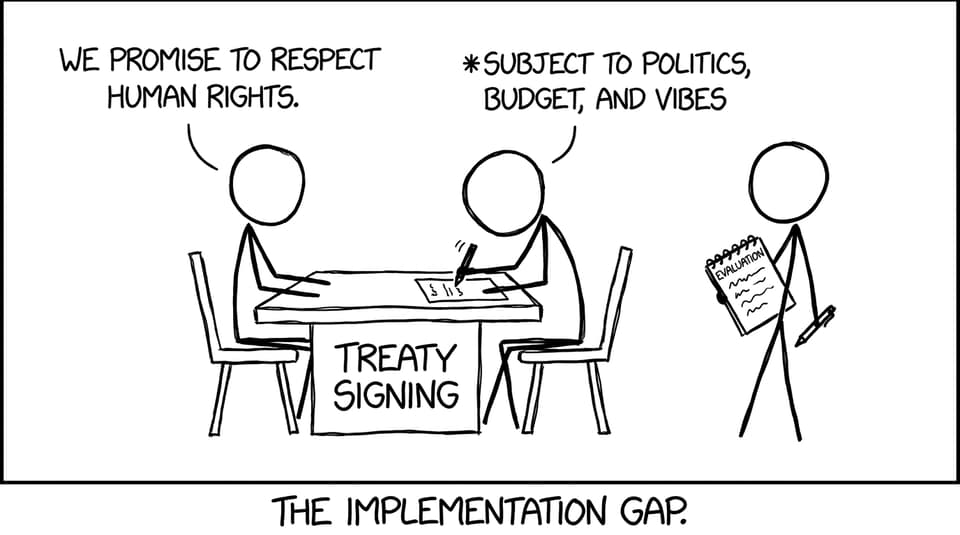
A treaty can be signed in five minutes.
A life can be broken in five.
That gap between elegant words and messy reality is exactly what makes IB Global Politics so interesting (and so examinable). When you’re asked, “How effective is international law in protecting human rights?” you’re really being asked to judge whether rules without a world government can still change state behaviour.
The quick exam checklist (what to evaluate)
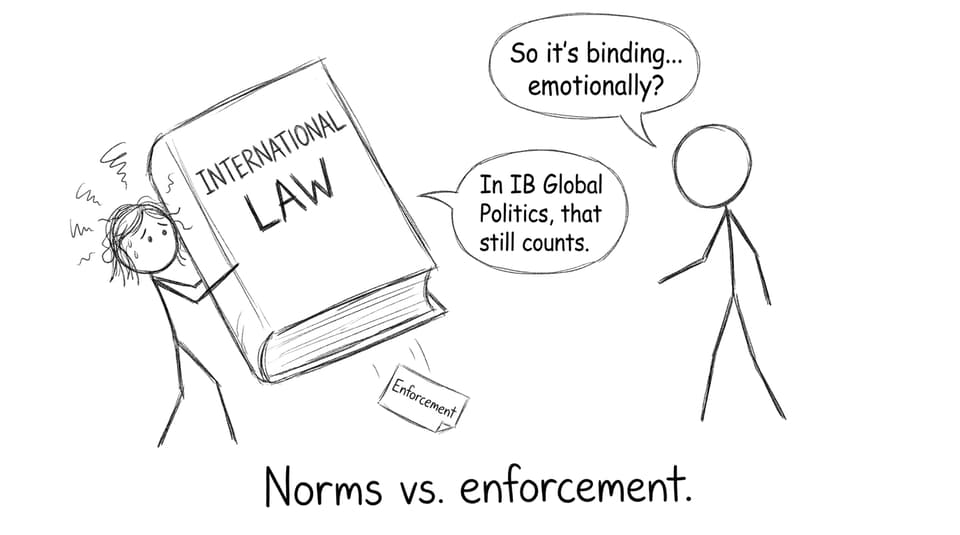
For IB Global Politics, strong answers usually weigh international law across three lenses:
-
Norm-setting: does law define what “acceptable” looks like?
-
Accountability mechanisms: can violations be investigated, recorded, and judged?
-
Enforcement and compliance: what happens when states ignore rules?
If you can balance all three, you avoid the common trap of sounding either cynical or naive.
How international law protects human rights (where it works)
International law is often most powerful before it ever “punishes” anyone. It sets the language of legitimacy: what governments should do, and what abuses they can no longer defend openly.
In IB Global Politics, this matters because legitimacy shapes power. A state accused of violating widely recognised human rights faces reputational costs: pressure from allies, media scrutiny, and domestic blowback. Even when enforcement is weak, the existence of shared standards changes the conversation.
To sharpen this part of your argument, pair the idea of universality with specific frameworks you revise from:
Accountability without a world police (where it helps, indirectly)
International law also creates pathways for accountability: reporting systems, review processes, and courts that document violations. Documentation sounds boring until you realise it turns suffering into evidence, and evidence into pressure.
That’s why mechanisms like treaty bodies and international courts can deter abuse when states care about reputation, aid, trade, or alliance politics. In IB Global Politics, you can frame this as indirect enforcement through legitimacy and scrutiny.
Explore the institutional side here:
The hard limit: enforcement depends on politics
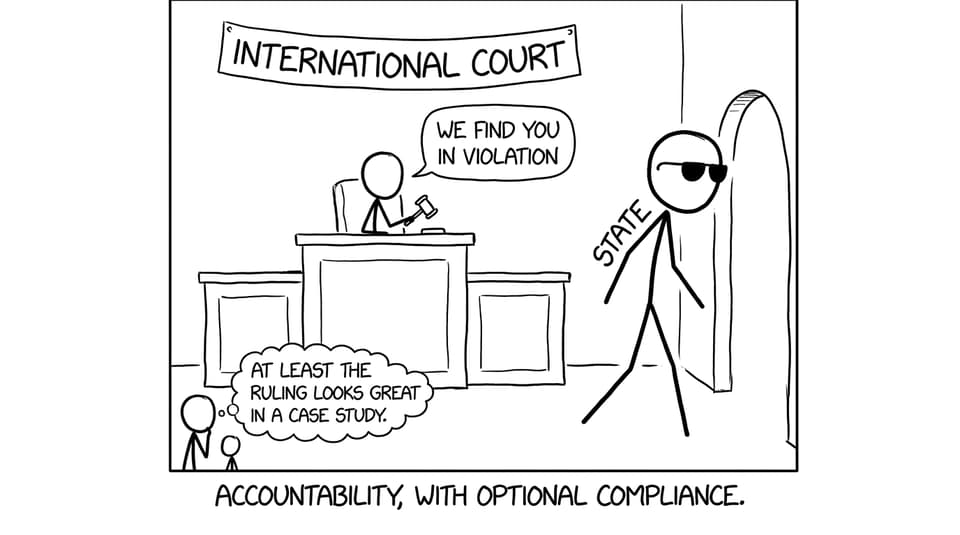
Here’s the uncomfortable truth you should say calmly in your IB Global Politics essay: international law usually cannot force compliance.
There is no global police, and sovereignty still shields states from external interference. States can sign agreements symbolically, delay implementation, or ignore rulings, especiallyespecially if they are powerful or strategically protected.
This is where top responses add nuance: the law may be clear, but enforcement is filtered through political will, power, and selectivity. That uneven application can weaken legitimacy and fuel accusations of bias.
To revise the law-to-practice gap efficiently, see:
How to write this as an IB Global Politics evaluation
Aim for a judgement like this: international law is partially effective. It is strong at setting norms and enabling accountability, but weaker at consistent enforcement.
Then prove it with structure. Use RevisionDojo to practise exactly how examiners reward balance:
RevisionDojo also helps you tighten the exam loop: build Mock Exams, revise with Study Notes and Flashcards, test with the Questionbank, then refine with AI Chat and Grading tools. If you’re HL, add Predicted Papers and targeted essay feedback from Tutors when timing starts to bite.
Conclusion: the IB Global Politics takeaway
International law is not a magic shield for human rights, butbut it is not meaningless ink either. For IB Global Politics, the best evaluation is balanced: law builds norms and accountability, yet enforcement remains inconsistent because sovereignty and power still decide what happens next.
If you want to turn that nuance into marks, practise it. Use the RevisionDojo Questionbank, tighten definitions with Flashcards, and test your argument structure with AI Chat and Grading tools, soso your final judgement lands like a conclusion, not a guess.