


A quick IB Physics moment you’ve probably lived
You’re revising circuits at midnight. The equation sheet stares back: V = E/Q. You know it’s important for IB Physics, but it can feel like a definition you’re supposed to accept rather than understand.
Here’s the calmer truth: potential difference (voltage) is just a way of counting energy, but in a fair way. Not “total energy” (which depends on how much charge flows), but energy per unit charge. That one idea explains why the same circuit can be “high voltage, low current” or “low voltage, high current” and still transfer energy.
The exam-ready definition (and the one equation to anchor it)
In IB Physics, potential difference between two points is defined as:
V = E/Q
-
V = potential difference (volts, V)
-
E = energy transferred (joules, J)
-
Q = charge moved (coulombs, C)
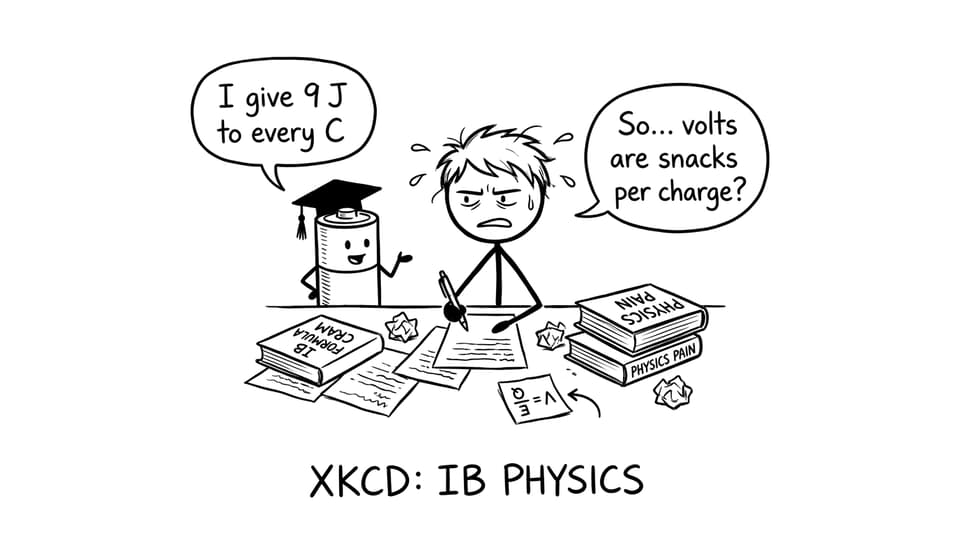
So 1 volt = 1 joule per coulomb. If a component has 9 V across it, then each coulomb that passes through can transfer 9 J of energy (into heat, light, motion, sound, etc.).
If you want the clean syllabus-aligned wording, RevisionDojo’s notes on voltage and current help lock this down: Electrical current and voltage notes.
Why potential difference is energy per charge (not “electrical push”): the story
Imagine a battery like a device that separates charges using chemical energy. That separation creates an electric field and a difference in electric potential between the terminals. When the circuit is closed, charges moving through components “spend” that energy.
The key is what the battery is promising: not a fixed total energy, but a deal per coulomb.
-
Move more charge through the circuit? Total energy transferred goes up.
-
Keep the same voltage? The energy transferred per coulomb stays the same.
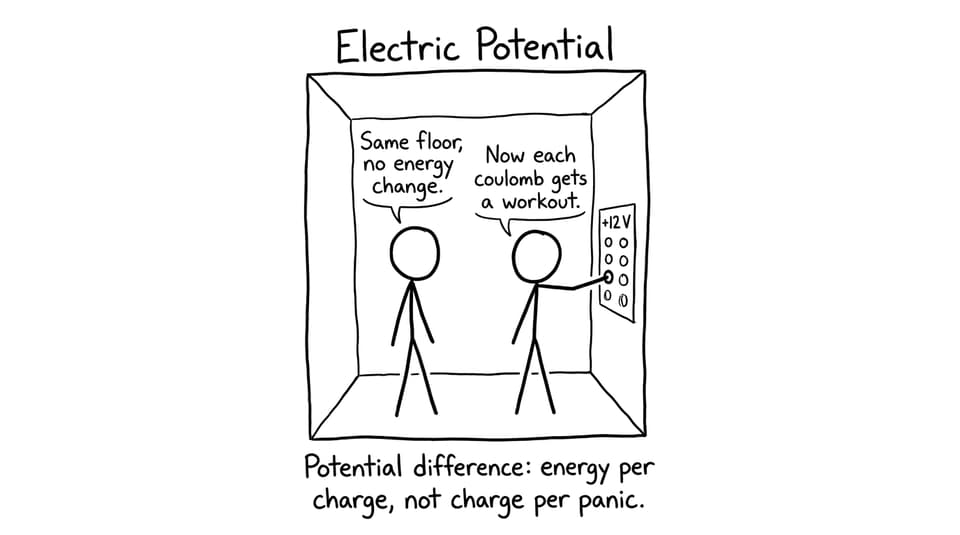
That’s why potential difference is such a powerful idea in IB Physics: it lets you talk about energy transfer without first knowing how much charge flows.
To connect voltage to sources like cells and emf, see: Energy sources and circuit representation notes.
A 20-second checklist for IB Physics circuit questions
When you see voltage in a question, run this mental checklist:
-
Are they asking about energy per charge? Use V = E/Q.
-
Are they mixing in current or time? Remember I = Q/t.
-
Are they linking voltage, current, resistance? Use Ohm’s law (V = IR).
-
Are they asking for power/energy transfer rate? Use P = VI.
For the bigger topic map, RevisionDojo’s hub is a solid launch point: B.5 Current and circuits.
The classic confusion: voltage vs current (and why it matters)
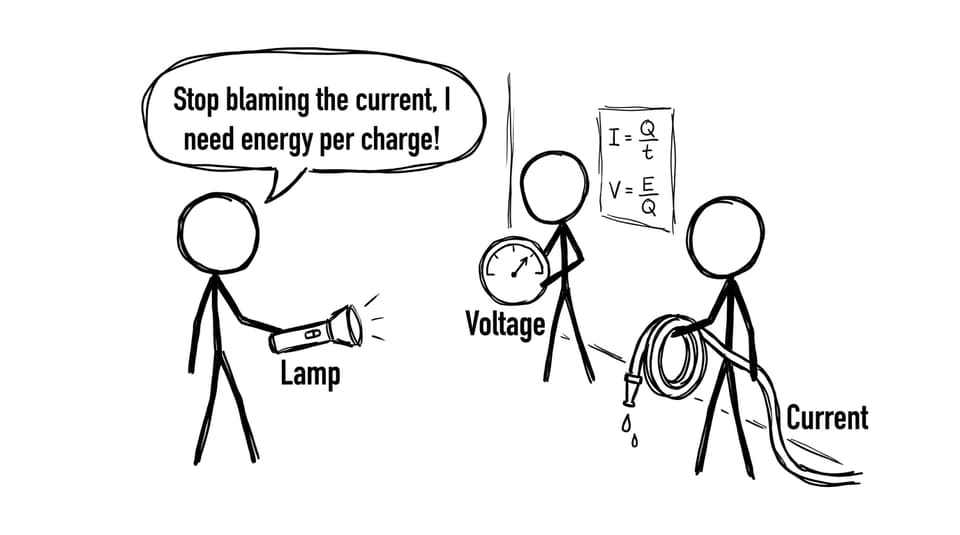
A common IB Physics trap is to treat voltage like “how much electricity is flowing.” That’s current.
-
Current (I) tells you how much charge passes per second.
-
Potential difference (V) tells you how much energy each coulomb carries.
A helpful way to see their teamwork is: Total energy transferred = (energy per charge) × (charge moved).
If you’re practicing the difference with exam-style prompts, use: Current and circuits questionbank and then reinforce the definitions with IB Physics key definitions.
Final takeaway for IB Physics revision
If you remember one sentence, make it this: potential difference is the energy transferred per coulomb. That’s why volts reduce messy circuit stories to a simple exchange rate: J per C.
To make this exam-ready, use RevisionDojo as your workflow: learn the concept in the Electrical current and voltage notes, drill it in the B.5 Current and circuits questionbank, and keep the language precise with the IB Physics glossary. That combination turns IB Physics definitions into marks.