

A quick story: the “two doors” problem in IB Business Management
The night before a mock, most IB Business Management students don’t panic over definitions. They panic over decisions. Not “what is internal growth?” but: Which one is riskier, and who stays in control? That’s the exam move, turning a simple contrast into sharp evaluation.
Internal (organic) growth and external (inorganic) growth both aim to expand a firm, but they pull on two different levers: risk and control. If you can explain why those levers move, you can write the kind of answer examiners trust.
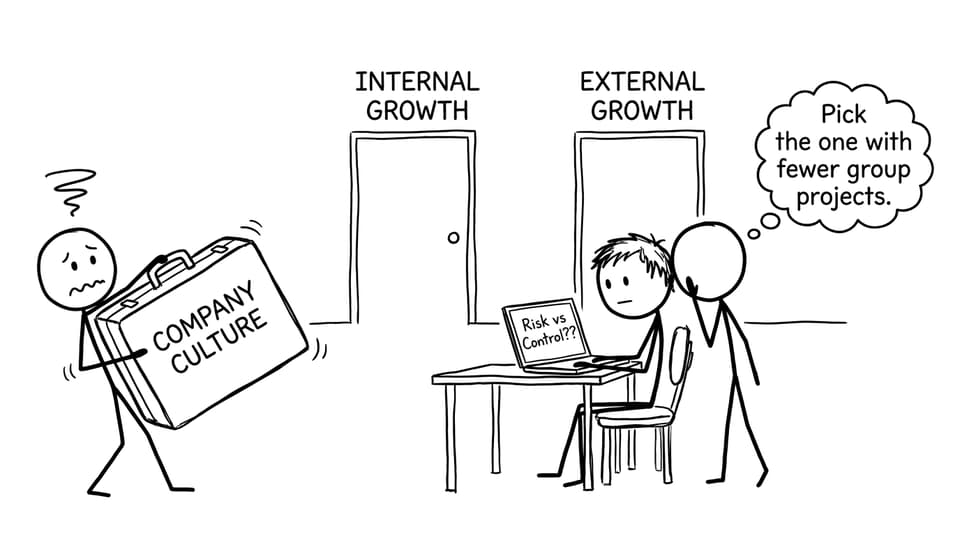
The exam checklist (risk + control in 20 seconds)
Use this IB Business Management mini-checklist when you see “internal vs external growth”:
-
Speed: internal slower, external faster
-
Risk exposure: internal typically lower, external typically higher
-
Control: internal higher (same owners/managers), external lower (shared power/integration)
-
Finance: internal often smaller, staged spending; external often large, upfront commitment
-
Integration: internal minimal; external heavy (systems, people, culture)
For syllabus-aligned definitions, keep the IB Business Management Key Definitions open while you revise.
Internal growth: more control, usually less risk
In IB Business Management, internal growth means expanding using the business’s own resources: increasing capacity, opening new outlets, developing products, or boosting marketing. It’s “slow growth” that often looks boring on a chart, and that’s exactly why it can be safer.
Why internal growth gives stronger control
Internal growth keeps ownership and decision-making centralized. The culture, processes, and leadership structure are already aligned, so managers don’t need to negotiate every decision with another organization. That makes it easier to protect brand identity and maintain consistent quality.
For a clean syllabus recap, revise 1.5.2 The Difference Between Internal and External Growth and then lock it in with the matching 1.5.2 Flashcards.
Why internal growth is usually lower risk
Because expansion happens gradually, the business can test, learn, and adjust. Financially, spending is often staged: invest, observe results, then invest again. Operationally, there’s no sudden requirement to merge IT systems, standardize policies, or blend two workforces overnight.
Want to connect growth to costs? Link it to economies/diseconomies with 1.5.1 Internal and External Economies and Diseconomies of Scale.
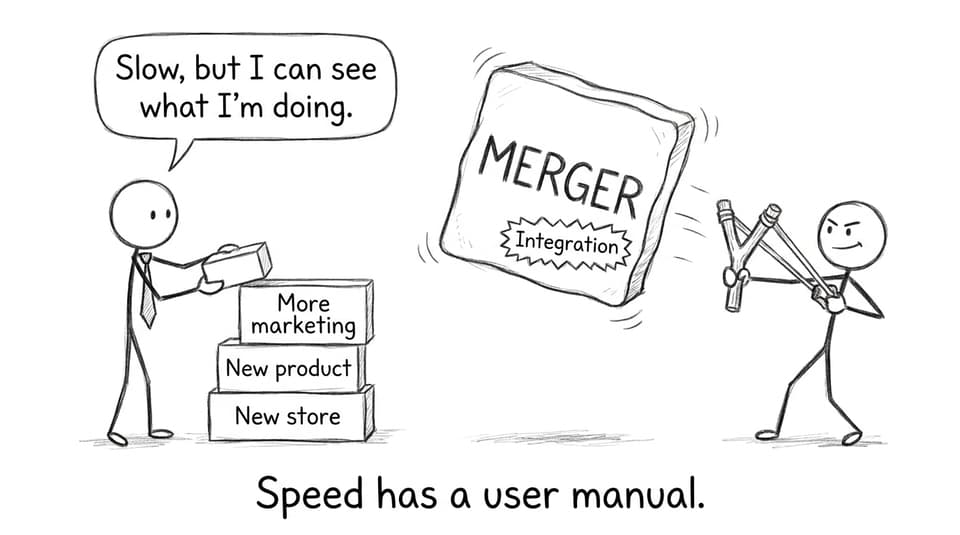
External growth: faster scale, higher risk, less control
External growth in IB Business Management includes mergers, acquisitions, alliances, and joint ventures. The appeal is speed: instant access to new markets, customers, technology, or capabilities.
Why external growth increases risk
External growth is riskier because you’re buying (or sharing) something you don’t fully control yet: people, routines, culture, and legacy systems. Integration can fail even when the strategy is logical. And the financial stakes are often higher, with large upfront payments and deal costs.
To revise the methods and the typical evaluation points, use 1.5.5 External Growth Methods.
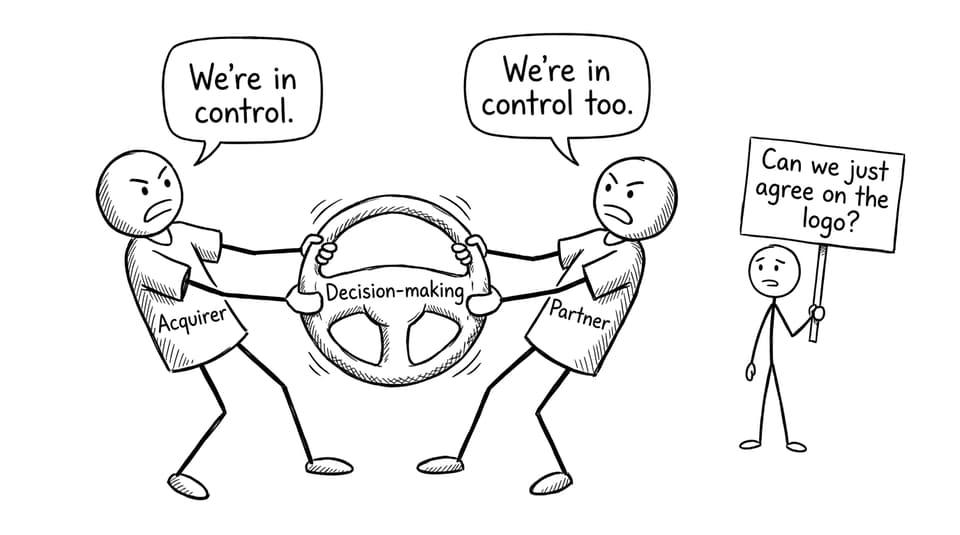
Why external growth reduces control
When two organizations combine, decision-making becomes negotiated. Even in an acquisition, informal power can stay with the acquired firm’s specialists, brand leaders, or regional managers. In alliances and joint ventures, control is explicitly shared, which can slow decisions and create conflict if objectives diverge.
If you want a broader chapter-level home base for this topic, use 1.5 Growth and evolution plus the companion 1.5 Growth and evolution Notes.
How to write the evaluation sentence examiners love
In IB Business Management, a top response usually ends with conditional judgment:
-
Internal growth is preferable if the firm values culture, steady cash flow, and low integration risk.
-
External growth is preferable if speed matters, competitors are consolidating, or the firm needs capabilities it cannot build quickly.
To practise that style under time pressure, use the 1.5 Growth and evolution Questionbank, then ask RevisionDojo’s AI Chat to challenge your assumptions and tighten your evaluation.
Conclusion: use risk and control to steer your answer
When you’re stuck in IB Business Management, don’t just compare internal vs external growth; evaluate it through risk and control. Internal growth usually protects control and lowers integration risk, but it can be slow. External growth can deliver rapid scale, but it raises financial and cultural risk while reducing control.
If you want to turn this into marks, revise with RevisionDojo’s Study Notes, drill definitions with Flashcards, and practise exam-style responses in the Questionbank. Then use AI Chat and Grading tools to polish your evaluation until it sounds like a decision a real manager would stand behind.