Join 650k+ students breezing through the IBReady to breeze through the IB?
When a “profitable” business still can’t pay rent
In IB Business Management, one of the most exam-tested surprises is also one of the most realistic: a business can look successful on paper and still run out of cash on a random Tuesday.
Picture a small cafe that’s busy every day. The owner smiles, the register rings, the brand looks healthy. But supplier invoices land before customer payments clear, wages hit before weekend sales arrive, and suddenly the cafe is negotiating “just one more week” with its landlord. That’s not a strategy. That’s a cash crisis.
Cash flow forecasting exists to stop that story from becoming the headline.
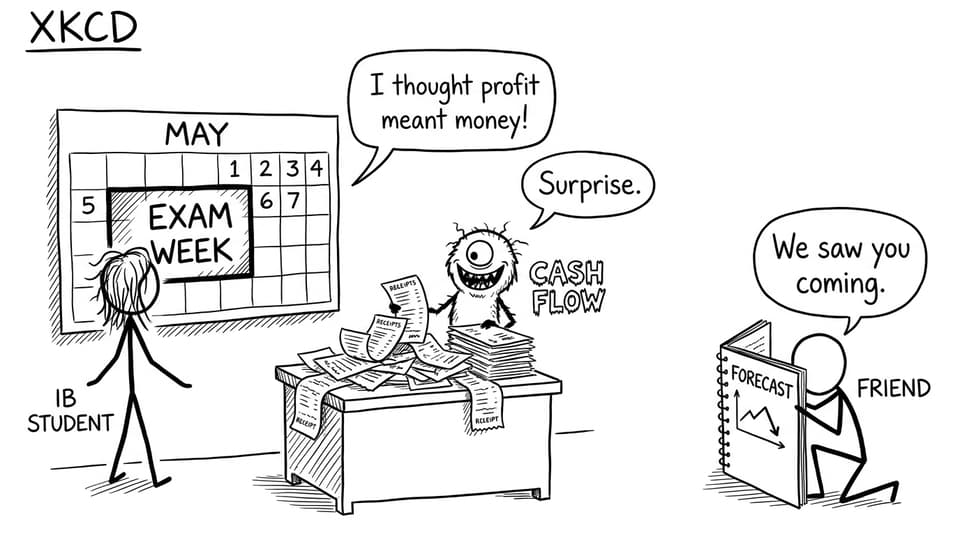
IB student vs cash flow monster
Quick checklist: what a cash flow forecast actually does
Use this as your IB Business Management mental model:
Predicts cash inflows and cash outflows over future periods
Reveals timing gaps (when payments are due vs. when cash arrives)
Helps managers plan actions before a shortage happens
Supports budgeting, financing decisions, and stakeholder confidence
For the syllabus version, revise the key definitions and structure in .
How cash flow forecasting prevents financial problems
It spots shortages early (before they become emergencies)
A cash flow forecast shows months (or weeks) where outflows exceed inflows. In IB Business Management, this is the heart of “avoiding financial problems”: visibility.
Once managers can see a negative closing balance coming, they can respond rationally: arrange short-term finance, delay non-essential spending, negotiate longer trade credit, or speed up receivables. Without a forecast, the same decisions happen under pressure, usually with worse terms.
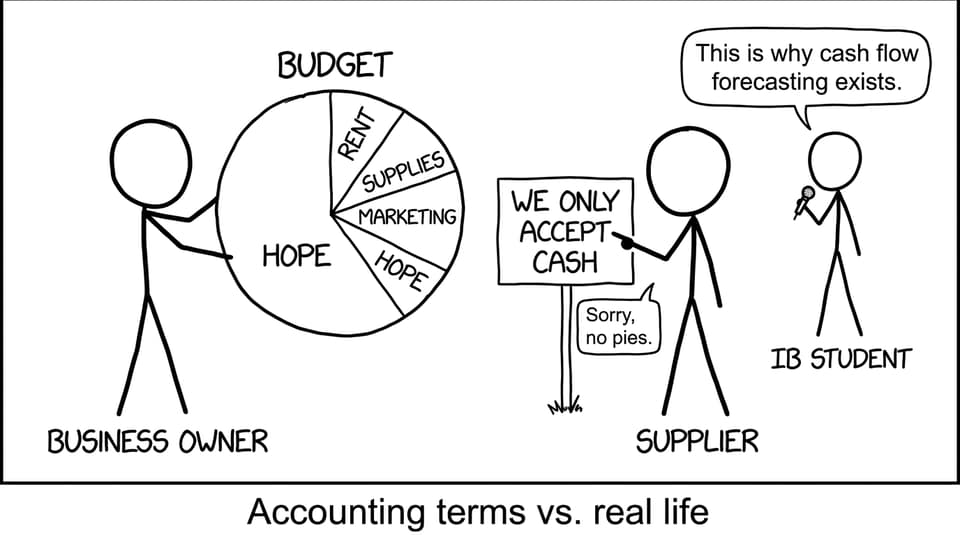
Budgets can be beautifully designed and still fail if they ignore timing. Cash flow forecasting forces the business to ask, “When will we actually have the cash?” not just “Is this expense reasonable?”
That’s why forecasting links naturally to budgeting logic in IB Business Management: it prevents big purchases, maintenance, or expansion plans from landing in the exact month where liquidity is weakest.
Forecasting turns “Should we hire?” into “Can we afford wages through the low-sales period?” It turns “Should we expand?” into “What happens to working capital if customers pay late?”
In IB Business Management, examiners reward students who link finance tools to operational decisions. A forecast is a bridge: it connects day-to-day choices to liquidity consequences.
It strengthens relationships with lenders and suppliers
When a business can explain future cash positions with a clear forecast, it signals control. Lenders see repayment planning. Suppliers see reliability. Both may offer better terms.
This is where IB Business Management gets practical: a forecast can be a negotiation tool. It shows the business isn’t guessing. It’s managing.
If you’re revising financing options alongside forecasting, pair this with 3.2 Sources of finance.
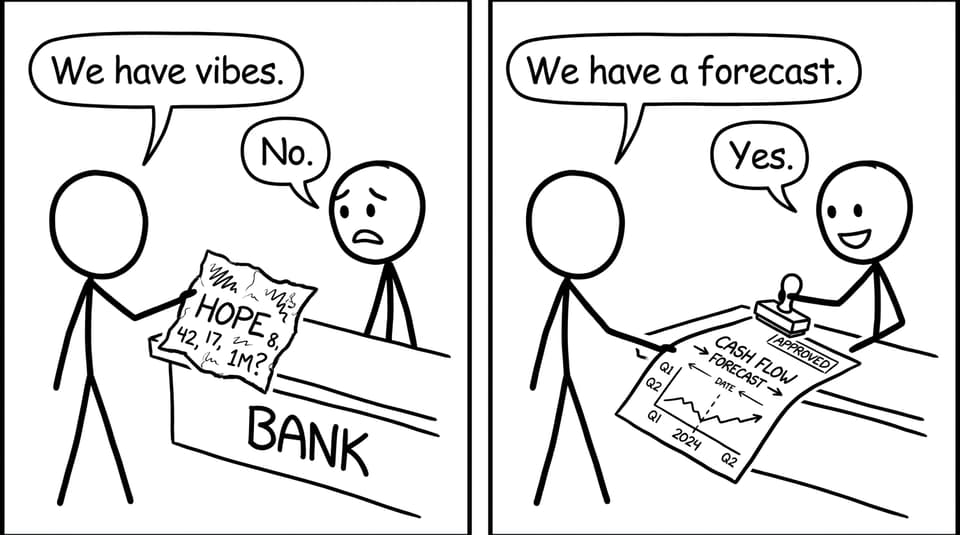
Hope vs forecast at the bank
It prepares for seasonality and highlights deeper issues
Some businesses earn in cycles: holiday spikes, summer dips, contract-based revenue. Forecasting helps them store cash in strong months and survive weak ones.
Even more important, repeated negative forecasts can reveal long-term problems: costs rising faster than revenue, inefficient operations, or over-reliance on credit. In IB Business Management, that’s the difference between a short-term cash issue and a strategic weakness.
Bring it back to your IB Business Management exam technique
Cash flow forecasting helps businesses avoid financial problems because it replaces surprise with planning: it exposes shortages early, supports budgeting, improves decisions, and builds trust with stakeholders.
If you want to turn that understanding into marks, RevisionDojo is built for exactly this: use the Questionbank for exam-style practice, Study Notes and Flashcards for fast recall, and AI Chat to test your explanations until they sound like an examiner’s markscheme. When you’re ready, combine Mock Exams, Predicted Papers, and Grading tools to sharpen timing and structure, then check examples in the Coursework Library or get targeted help from Tutors.