

The moment you realize profit isn’t the whole story
A friend once told me their small business was “doing great” because sales were up. Then the supplier called: payments were late. Nothing dramatic happened, but that quiet mismatch, profit on paper, stress in the bank account, is exactly why the balance sheet matters.
In IB Business Management, the balance sheet (also called the Statement of Financial Position) is your snapshot of reality at a specific date. It helps you see what the business owns, what it owes, and what’s left for owners. And for exam answers, that snapshot is often the difference between a descriptive response and a truly analytical one.
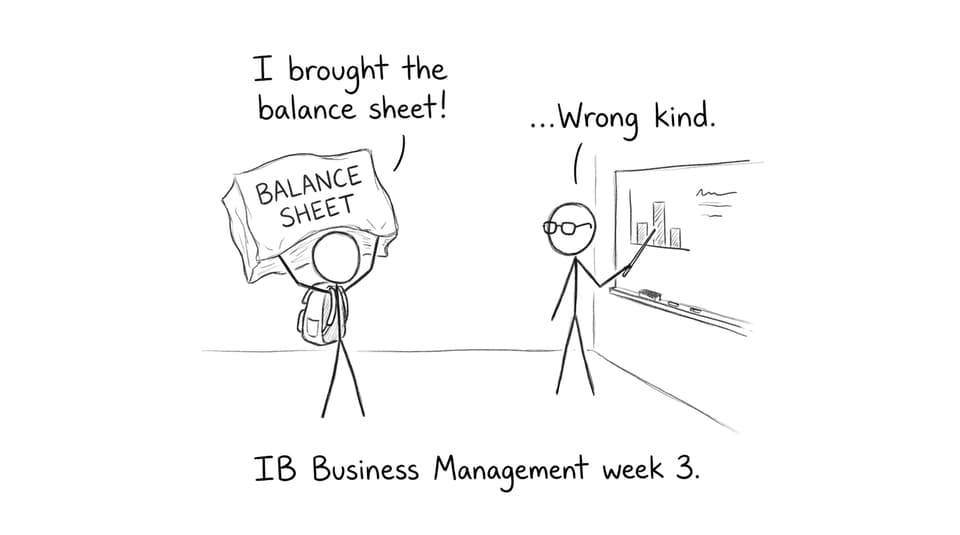
Balance sheet checklist (what to look for fast)
When you see a balance sheet in IB Business Management, scan it in this order:
-
Assets: What resources does the business control?
-
Liabilities: What obligations must it repay?
-
Equity: What value remains for owners?
-
Liquidity: Can it pay short-term debts soon?
-
Solvency: Can it survive long-term pressure?
If you want the syllabus-aligned structure, RevisionDojo’s 3.4 Final accounts hub keeps the definitions, formats, and exam-style expectations in one place.
The three building blocks: assets, liabilities, equity
Assets: the business’s “toolbox”
Assets are resources with economic value. In IB Business Management, you’ll usually split them into:
-
Non-current assets (long-term): buildings, equipment
-
Current assets (short-term): cash, debtors/receivables, inventory
Strong assets can signal operational strength, but examiners love nuance: lots of inventory might mean slow sales, and expensive equipment might mean higher depreciation later. For quick definitions that match IB wording, RevisionDojo’s Business Management glossary is a reliable anchor.
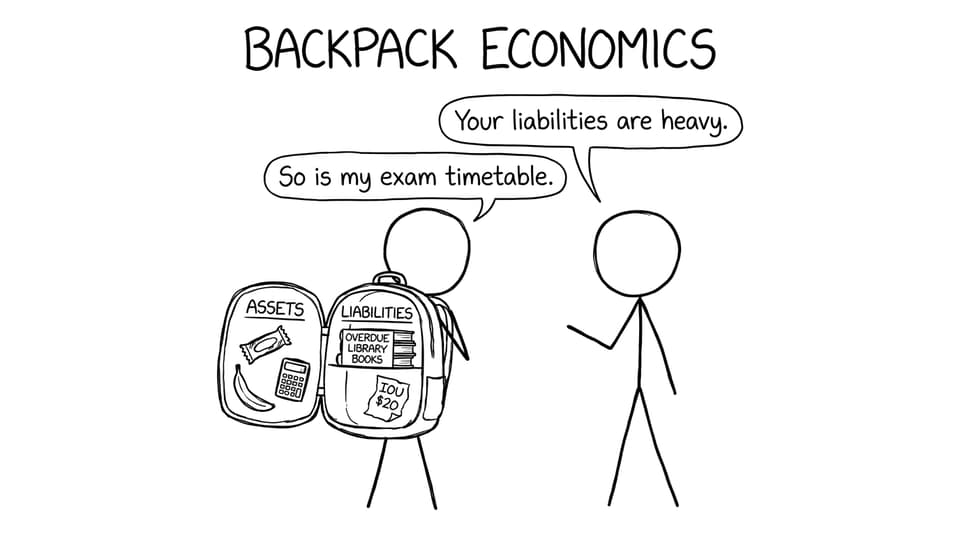
Liabilities: the price of borrowing and buying on credit
Liabilities are what the business owes. They often come in two time horizons:
-
Current liabilities: due within 12 months (overdrafts, accounts payable)
-
Non-current liabilities: due after 12 months (long-term loans)
In IB Business Management, liabilities aren’t automatically “bad”; they can finance growth. The key is risk: higher liabilities usually increase repayment pressure and vulnerability to interest rate rises.
Equity: what’s left for owners
Equity (or owners’ funds) is the residual claim: assets minus liabilities. Rising equity can suggest improving net worth, often helped by retained profit. Falling equity can signal losses, heavy borrowing, or asset values dropping.
For the clean IB layout and core rules (including why it must balance), use RevisionDojo’s 3.4 Final accounts notes or the deeper breakdown in 3.4.2 Final accounts notes.
What a balance sheet reveals: liquidity and solvency
Liquidity: can it pay soon?
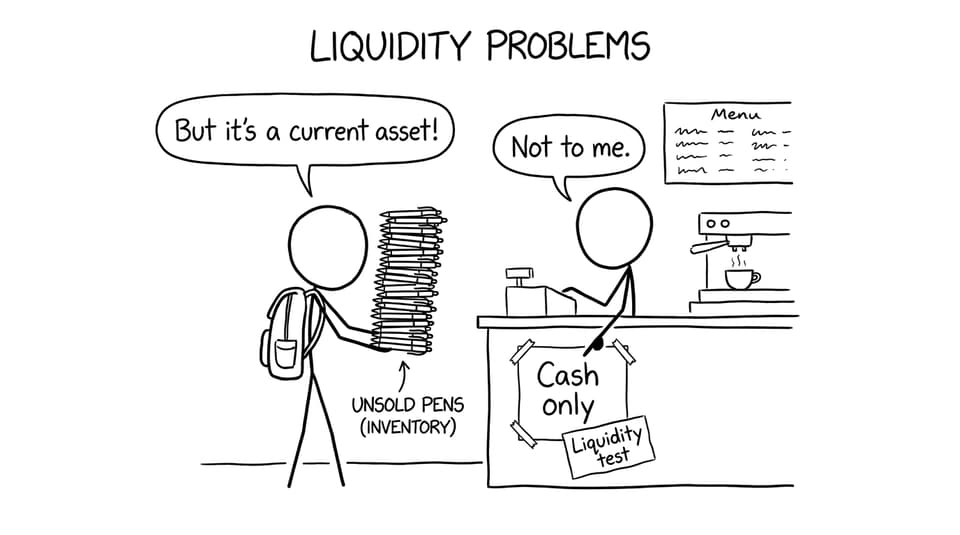
Liquidity is short-term safety. A business can be profitable and still struggle if cash is tied up in receivables or inventory.
In IB Business Management, you connect the balance sheet to liquidity ratios (especially the current ratio and acid-test ratio) to judge whether current assets can cover current liabilities. RevisionDojo’s Liquidity ratios notes make those interpretations exam-ready, and Liquidity position notes help you explain the real-world consequences.
Solvency: can it survive long-term?
Solvency is long-term survival. Even if a firm can pay its bills this month, too much long-term debt can become a future trap. In IB Business Management exam questions, link solvency to long-term liabilities, asset backing, and stakeholder confidence (especially lenders).
How businesses actually use this snapshot
A balance sheet supports decisions that show up constantly in IB Business Management case studies:
-
Should we expand? The balance sheet hints whether the business has spare capacity or needs external finance.
-
Can we borrow? Lenders judge stability using assets, liabilities, and liquidity ratios.
-
Are we financially resilient? Management can spot warning signs early, like rising current liabilities or shrinking equity.
To practise turning those insights into marks, RevisionDojo’s 3.4 Final accounts Questionbank and the broader IB Business Management resources are built for exam-style application.
Wrap-up: turn the snapshot into marks
In IB Business Management, a balance sheet helps businesses understand their financial position by revealing assets, liabilities, and equity, then translating those numbers into liquidity, solvency, and decision-making insight. If you can explain the snapshot, interpret what it suggests, and evaluate what it might hide, you’re already writing at a higher band.
To lock this in, use RevisionDojo’s Study Notes, Flashcards, and Questionbank for targeted practice, then check your answers with AI Chat and grading tools. Add Mock Exams, Predicted Papers, and the Coursework Library when you’re ready to simulate real pressure, and if you want guided structure, RevisionDojo Tutors can help you turn financial analysis into consistent exam marks.