




The moment your IA becomes real
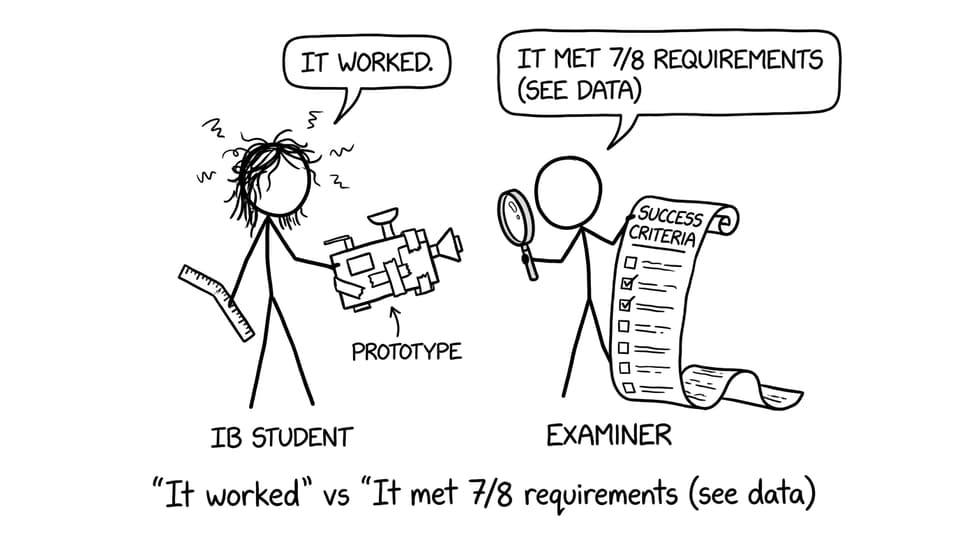
There’s a quiet trap in IB Design Technology: you spend weeks sketching, modelling, prototyping, refining… and then, in evaluation, you write something like “the solution worked well.”
It’s understandable. By the time you reach the end, you’re tired. You want closure.
But evaluation is where your project stops being a cool build and becomes assessable design thinking. In IB Design Technology, “success” is not a vibe. It’s a judgement you earn by showing evidence, measured against the requirements you set earlier.
If you want a rubric-level view of what earns marks, keep the IB Design Technology hub open as your home base: IB Design Technology Resources.
Quick checklist: what “success” must include
Use this mini-checklist before you write a single paragraph of evaluation in IB Design Technology:
-
You explicitly reference each design requirement (success criterion).
-
You state how well each requirement was met (not just “met”).
-
You support claims with testing data and/or user feedback.
-
You identify limitations honestly.
-
You explain why limitations happened.
-
You propose realistic improvements tied to evidence.
For a clear breakdown of how the IA is assessed overall, see: How Is the IB Design Technology IA Graded?
What evaluation means in IB Design Technology
Evaluation in IB Design Technology means assessing how effectively your final outcome meets the original user needs and design requirements, using evidence from testing, observations, and feedback.
A strong evaluation keeps circling back to three questions:
-
Did the solution satisfy the user’s needs in real use?
-
How well did it meet each requirement, specifically?
-
What still doesn’t work perfectly, and what caused that?
This lines up closely with what examiners repeatedly reward: visible thinking. If you want that perspective spelled out, read: What Do IB Design Technology Examiners Look For?
Why evaluation is a high-impact section for marks
In IB Design Technology, evaluation is the section that connects everything:
-
Your problem and user
-
Your research
-
Your design requirements
-
Your prototyping and tests
-
Your iteration decisions
When evaluation is vague, it quietly suggests earlier work was also vague. When evaluation is precise, it acts like proof that your process was real.
If you struggled to show development over time, pair your evaluation writing with this guide: How Do You Show Iteration in the IB Design Technology IA?
What top evaluations do differently
They evaluate each requirement one by one
High-scoring IB Design Technology evaluations don’t say “it met most requirements.” They create a simple rhythm:
-
Requirement (quoted or referenced)
-
Result (met / partially met / not met)
-
Evidence (numbers, observations, user comments)
-
Limitation (what reduced performance)
-
Improvement (realistic, test-linked)
This is what makes your writing moderator-proof: the reader can trace every judgement back to something you measured.
To self-check against the rubric language, use RevisionDojo’s built-in graders:
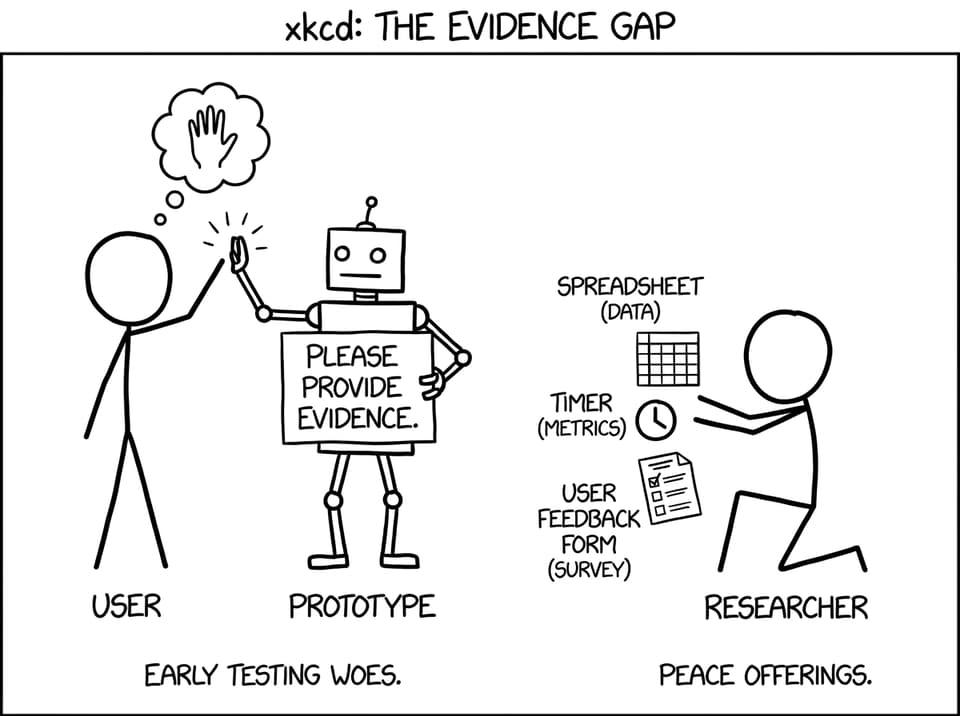
They use evidence, not adjectives
Replace “comfortable,” “strong,” “easy,” and “durable” with evidence:
-
Time to complete a task (seconds)
-
Load/force before failure
-
Error rate during use
-
User rating scale with short quotes
-
Before/after comparisons across iterations
A useful mindset in IB Design Technology is: if a claim can’t be tested, it can’t be evaluated.
They’re honest and balanced
The most convincing evaluations sound like a calm engineer, not a product advertisement.
If your design underperformed in one area, say so. Then explain why it happened (materials, manufacturing tolerance, ergonomics mismatch, battery drain, etc.). In IB Design Technology, that honesty reads as maturity.
If you want to avoid common traps across the whole project, this is worth scanning: Most Common IB Design Technology IA Mistakes
A simple structure you can copy into your IA
For each requirement, write one short paragraph using this template:
-
Requirement: “The product should…”
-
Judgement: met / partially met / not met
-
Evidence: test results + user feedback
-
Limitation: what prevented full success
-
Improvement: realistic next step linked to the limitation
Repeat. Cleanly. Don’t add new, untested ideas at the end.
When you’re close to submission, align your whole document with this finishing guide: How Do You Finalise and Submit the IB Design Technology IA?
Bring it home: make success measurable
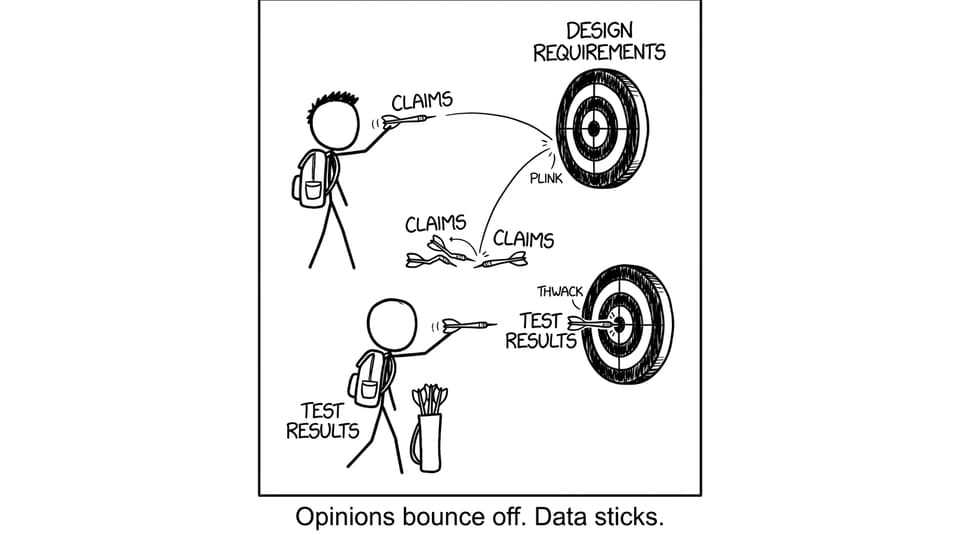
If you remember one line for IB Design Technology, let it be this: success is what you can demonstrate.
RevisionDojo helps you do that without guessing. Use the Study Notes to tighten definitions, the Questionbank and Mock Exams to build exam confidence, Flashcards to keep key terminology sharp, and AI Chat to turn vague claims into markscheme-style statements. When you’re drafting, the Grading tools and Coursework Library help you benchmark what strong evidence-based evaluation looks like. And if you want guided feedback, RevisionDojo Tutors can help you turn your testing into marks.
For a full workflow, start here: How to Use RevisionDojo for IB Design Technology Success and explore more targeted advice via All IB Design Technology Posts.