
Globalisation can feel like gravity: invisible, constant, and unstoppable. Then a government changes a rule, a border tightens, a sanction lands, or an alliance shifts, and suddenly the “natural” flow of goods, people, money, and information swerves.
That is why IB Geography treats political factors as more than background noise. In the Power, Places and Networks unit, politics is often the hand on the tap: it can open global interactions wide, or reduce them to a drip.
A quick IB Geography checklist (what to mention in answers)
When you see an essay or 10-mark question on global interactions in IB Geography, scan for these political levers:
-
Trade policy: tariffs, quotas, trade deals
-
Political stability and governance: corruption levels, rule of law
-
Alliances and international organisations: cooperation vs exclusion
-
Conflict and security: war, terrorism, sanctions, risk
-
Regulation and control: migration rules, border policy, media/internet controls
-
Global agreements: climate, resource governance, shared standards
For focused syllabus support, anchor your notes in the IB Geography unit pages like Power, Places and Networks and the wider IB Geography resources hub.
Government policy: the “rules of movement” behind global interactions
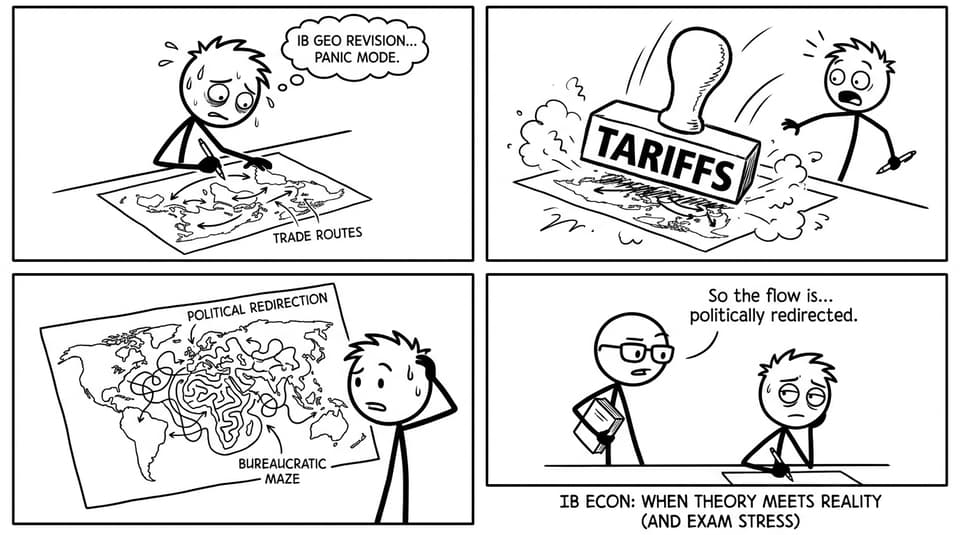
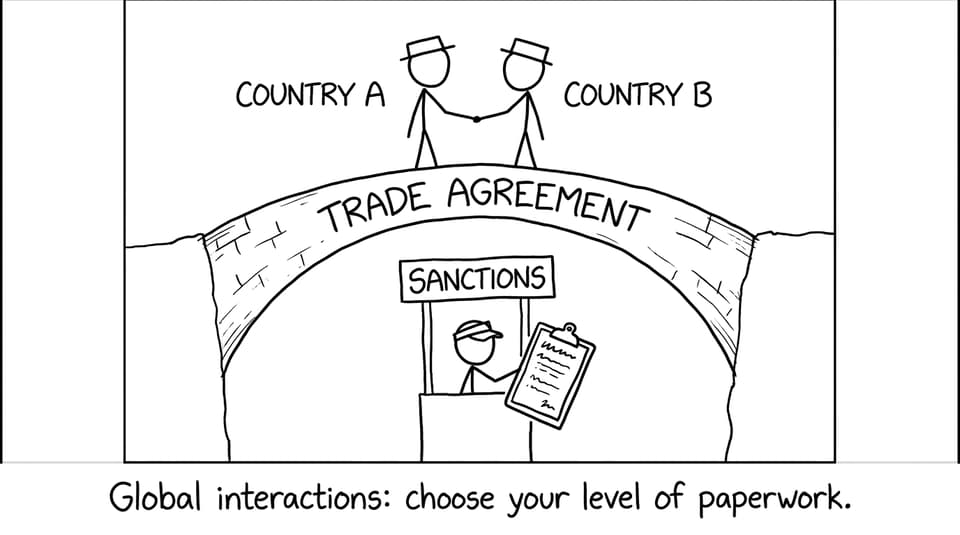
In IB Geography, government policy is the clearest way to show cause and effect. Trade policies shape how easily products and services cross borders. A free-trade agreement can reduce friction and increase connectivity; protectionist policies can raise costs and discourage exchange.
In exam terms, this is gold because you can evaluate winners and losers. Lower barriers might benefit consumers and export industries, but threaten domestic firms. Higher barriers might protect jobs short-term, yet weaken a place’s position in global networks long-term.
To practise writing this kind of balanced evaluation, use 4.1 Global interactions and global power Questionbank on RevisionDojo, where prompts push you to link policy to flows and power.
Political stability: why investors and migrants follow predictability
Political stability changes global interactions because it changes risk. Places with stable institutions, low corruption, and predictable laws tend to attract foreign direct investment, long-term business partnerships, and skilled migration. In IB Geography, you can frame stability as a “pull factor” for capital and people.
Instability does the opposite. Conflict, sudden policy swings, or weak governance can reduce investment and disrupt supply chains. Even if a country has strong resources or a strategic location, instability can stop it from becoming (or remaining) a hub in global systems.
If you want a clear way to link stability to connectivity, pair this with Why Do Some Places Become Global Hubs? and then apply it to examples you already know.
Alliances and organisations: cooperation that reshapes inclusion and exclusion
Membership in alliances and international organisations can increase cooperation by reducing barriers, standardising rules, and creating shared decision-making structures. That often strengthens global interactions for members, because trust and predictability make movement easier.
But alliances also create borders of a different kind: insiders vs outsiders. In IB Geography, this is a strong evaluation angle: global networks expand for some places while others are excluded or face higher costs.
To build topic confidence quickly, review IB Geography 4 Power, Places and Networks Notes alongside the Lessons for Power, Places and Networks.
Conflict and security: how global connections can break overnight
Security concerns can disrupt trade routes, damage infrastructure, restrict migration, and fracture cooperation. In IB Geography, conflict matters because it shows how fast flows can change: a once-busy corridor can become high-risk, rerouting transport and raising prices.
It also triggers political responses like sanctions and stricter border regimes. Those responses reshape patterns of global interaction and can intensify uneven development between places that remain connected and those pushed to the margins.
Regulation and control: migration rules and information flows
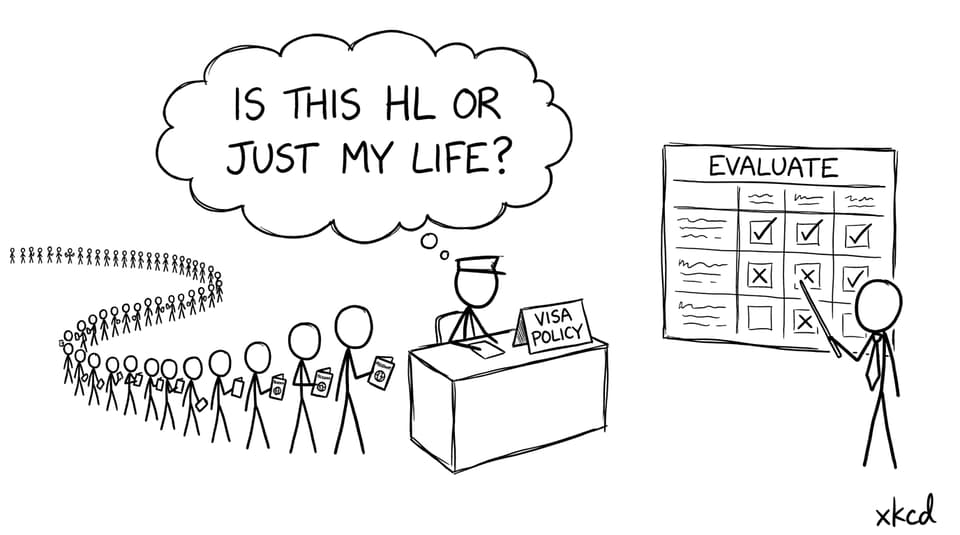
States manage global interactions not only through trade but also through people and information. Visa systems, asylum policies, and border controls shape who can move, where, and for how long. Media laws, internet regulation, and surveillance shape what information circulates and how freely.
This is a great place to bring in examples of migration as a flow. Link your analysis to What Is the Significance of Global Flows of People? and connect regulation to changing patterns of movement.
Conclusion: politics is the steering wheel of global flows
In IB Geography, political factors influence global interactions because they set the rules, the risks, and the relationships that make flows expand, shrink, or reroute. When you revise, don’t memorise lists; follow the flow: Which interaction changes? Who gains access? Who loses it? What happens at different scales?
If you want to turn that thinking into exam marks, build your revision routine around RevisionDojo’s Study Notes, Flashcards, Questionbank, AI Chat, Grading tools, Predicted Papers, Mock Exams, Coursework Library, and Tutors; and make IB Geography feel less like a guessing game and more like a system you can control.