
A city can change without announcing itself.
One extra language on a storefront. A new food stall near the station. A classmate who arrived mid-term and already knows more about your city than you do. That quiet drift is exactly why What Is the Significance of Global Flows of People? is a core question in IB Geography: movement is not just something people do; it is something places become.
In the Power, Places and Networks unit, global flows of people sit alongside flows of trade, finance, and information. But people are different: they bring skills, needs, families, and politics with them. If you can explain that clearly, you move from description to evaluation.

Quick exam checklist for global flows of people
Use this as a fast plan for short answers and essays on What Is the Significance of Global Flows of People?
-
Define the flow: voluntary migration, forced displacement, student mobility, labour migration
-
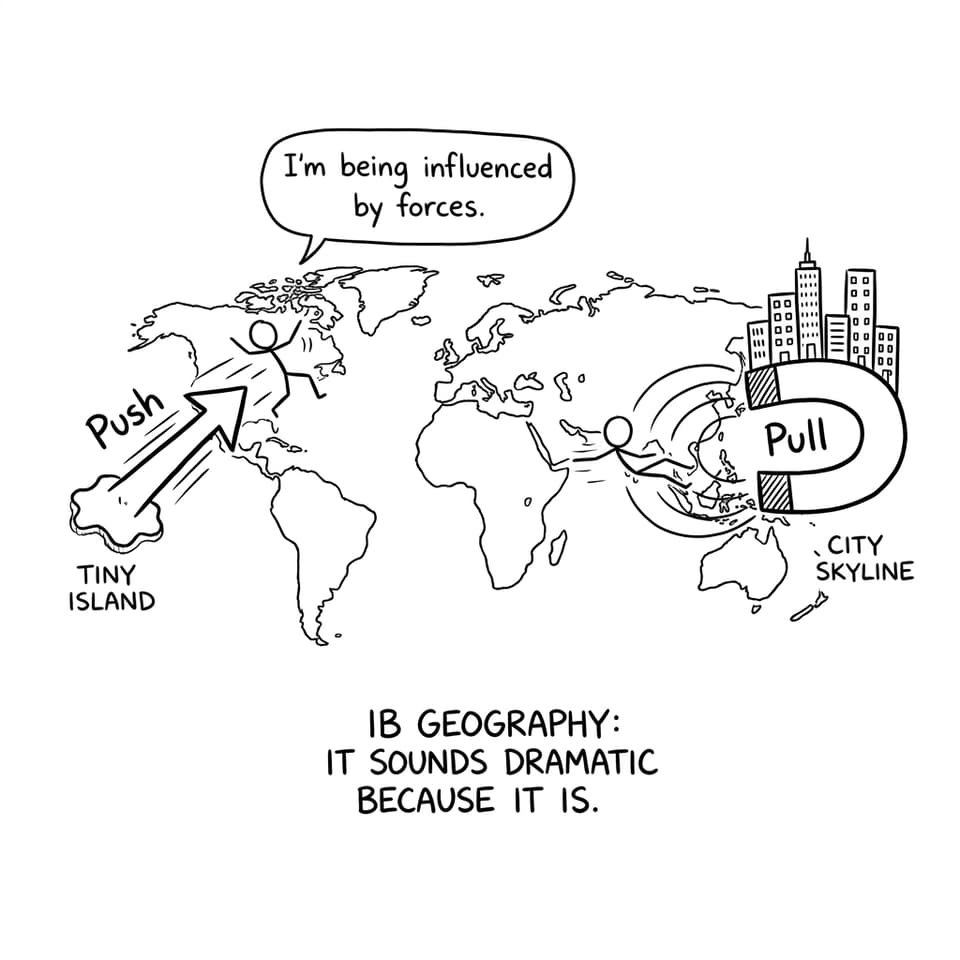
Identify drivers: push/pull factors, networks, policies, conflict, environment
-
Explain impacts on destination and source
-
Add a judgement: winners/losers, short vs long term, different scales
For syllabus-aligned support, pair your notes with 4.2 Global networks and flows and the 4.2 Global networks and flows Questionbank.
What Is the Significance of Global Flows of People economically?
Global flows of people reshape labour markets in ways examiners love because they are measurable. Many migrants move from lower- and middle-income countries to higher-income countries for work, often filling shortages in healthcare, construction, agriculture, and services. In destination countries, that can raise productivity and soften the pressure of ageing populations.
For source countries, the headline impact is remittances: money sent home that can fund education, healthcare, housing, and small businesses. It is development with a human face. But you should also evaluate: if a country becomes dependent on remittances, that income can mask weak job creation at home.
To link migration to broader development patterns, revise alongside Economic Development and Population Patterns Notes.
What Is the Significance of Global Flows of People for population and society?
The significance is not only “more people.” It is different population structures. Destination regions often gain a younger workforce and greater cultural diversity. Source regions can experience population decline and ageing if many young adults leave, creating skill gaps and labour shortages.
Socially, migration can enrich urban life through languages, traditions, and new ideas. It can also strain housing, schools, transport, and healthcare when growth is rapid or poorly planned. That tension, opportunity vs pressure, is where strong IB evaluation lives.
If you want a clean way to write this in exam paragraphs, use How Migration Reshapes Urban Populations and the G.2.1 Urbanization and Population Movements Notes.
What Is the Significance of Global Flows of People politically?
Migration pushes governments into trade-offs: economic needs vs public opinion, openness vs border control, and integration vs exclusion. Refugee movements linked to conflict, disasters, or climate stress can intensify debates about national identity and security. In IB Geography terms, global flows of people reveal how power operates through policy, media narratives, and uneven rights.
To connect this to the wider globalisation debate, see To What Extent Does Globalisation Benefit All Countries? and Globalization Vs. Nationalism Notes.

Conclusion: turning movement into marks
So, What Is the Significance of Global Flows of People? It is that migration is not a side-effect of globalisation; it is one of its engines. It redirects money, changes who lives where, and forces governments to make visible choices about identity and opportunity.
If you want those ideas to land in exam writing, revise the concepts with RevisionDojo notes, drill application in the Questionbank, and use Flashcards and AI Chat to keep your definitions sharp and your evaluation calm under pressure.