



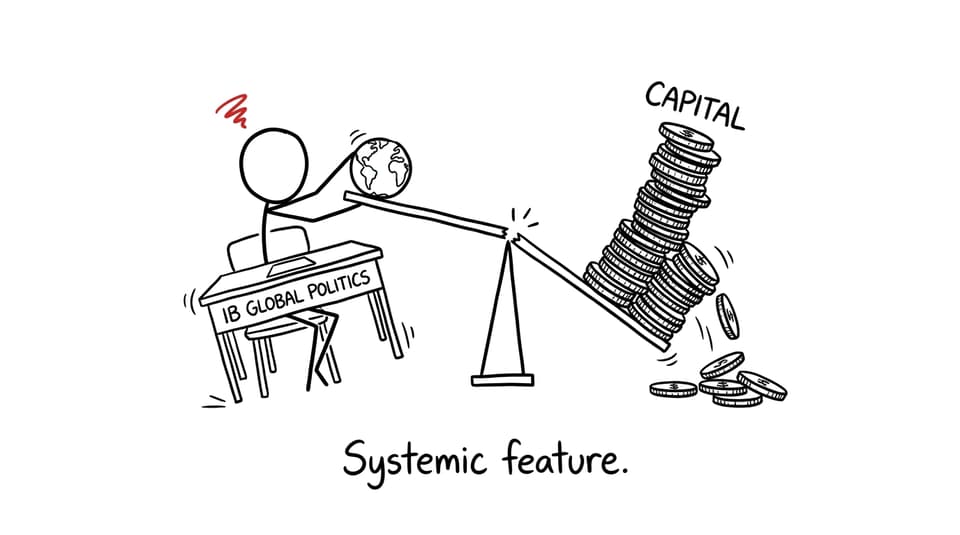
A strange thing happens when you start studying IB Global Politics: inequality stops looking like a sad accident and starts looking like a design choice. Not a conspiracy with villains twirling moustaches, something quieter. A system that rewards certain positions and penalises others, even when individuals inside it try to be fair.
Marxist theories are popular with examiners for exactly that reason. They give you language for the invisible parts of global inequality: the rules, incentives, and ownership patterns that keep wealth moving upward and outward.
Quick exam checklist for IB Global Politics (Marxism)
Use this when planning a paragraph or thesis in IB Global Politics:
-
Define inequality and the Marxist focus on economic structure
-
Explain exploitation (labour, resources, profits)
-
Link to structural power (institutions, rules, finance)
-
Add dependency/unequal exchange between states
-
Evaluate: what Marxism explains well, and what it underplays
For tight definitions, keep the IB Global Politics Key Definitions open while you revise.
The Marxist lens in IB Global Politics: inequality as structure
In IB Global Politics, Marxism sits in the “critical theory” family because it challenges mainstream stories that claim markets naturally lift everyone over time. Marxist theories argue global inequality is not temporary or random. It is a predictable outcome of capitalism organising production for profit.
At the centre is a simple divide: those who own and control the means of production, and those who sell their labour. When you scale that up globally, the pattern can look like wealthy industrialised states and corporations setting terms that poorer regions must accept.
To connect theory to the course framework, link Marxism to power as more than military force. Revision help: What Is Power in Global Politics?.
Exploitation: how wealth moves upward
A core Marxist claim is exploitation: profit is created by paying labour less than the value it produces. Globally, this can include low-wage supply chains, resource extraction, and profit repatriation by multinational corporations.
In essay terms for IB Global Politics, you can frame exploitation as a mechanism that connects “development” in one place to “underdevelopment” elsewhere. It is not that poorer states “failed to develop,” it is that they participate in a global economy where bargaining power is unequal.
For conceptual grounding, review RevisionDojo’s Inequality notes.
Structural power: rules that look neutral (but aren’t)
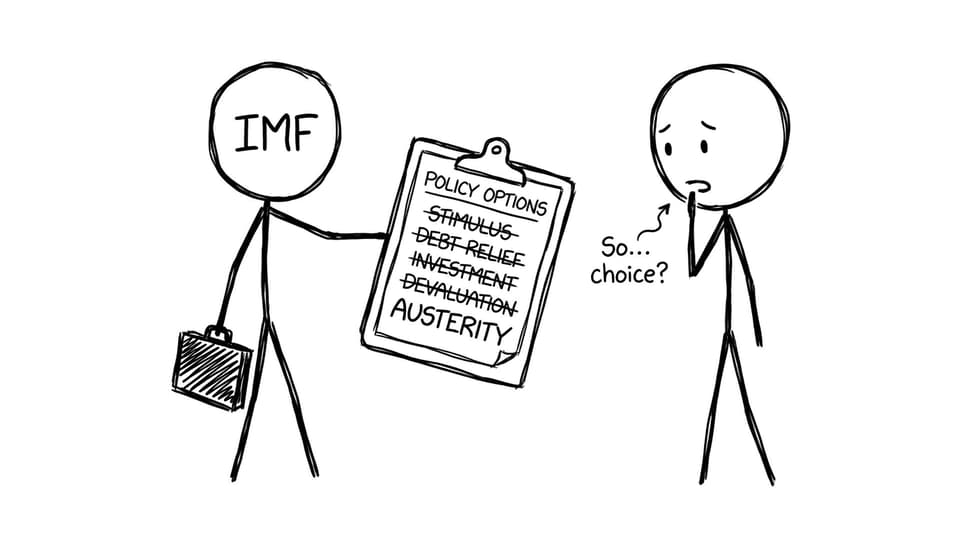
Marxist theories also stress structural power: the ability to shape the “rules of the game” so they consistently favour dominant actors. Trade rules, lending conditions, and global financial norms can appear neutral while still reflecting the priorities of powerful economies.
This connects neatly with IB Global Politics themes like justice and development. If institutions constrain what policies are “realistic” for poorer states, inequality reproduces itself across generations.
A strong supporting concept is structural harm. See What Is Structural Violence? to deepen evaluation language.
Dependency and unequal exchange: a global hierarchy
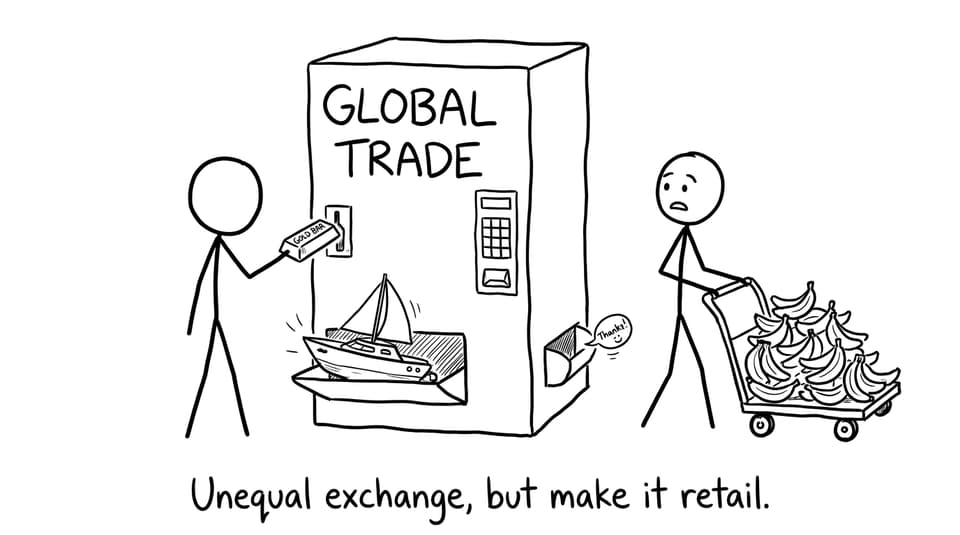
Marxist-inspired dependency approaches argue many states become locked into exporting low-value raw materials and importing higher-value manufactured goods. The result is “unequal exchange”: value is created at the top of the chain, while risk and low wages sit at the bottom.
In IB Global Politics, this is useful for explaining why growth can happen without broad improvements in living standards, and why some economies struggle to industrialise.
To practise turning this into exam paragraphs, use the IB Global Politics Paper 2 guide notes and build arguments in RevisionDojo’s Questionbank.
Globalization: expansion of capitalism, not a neutral process
From a Marxist view, globalization is not just “interconnectedness.” It is capitalism extending its reach, searching for new labour pools, new markets, and new resources. Benefits may increase overall wealth, but Marxists argue the distribution is skewed: profits concentrate among elites while inequality within and between states can widen.
To connect this to course content, pair Marxism with RevisionDojo’s explanation of How Does Globalization Impact Development? and the broader power angle in How Does Globalization Reshape Global Political Power?.
Conclusion: turn theory into marks with RevisionDojo
Marxist theories make global inequality legible in IB Global Politics: exploitation explains how value is extracted, structural power explains why the rules persist, and dependency explains why the hierarchy can feel sticky. Your job in the exam is to turn those ideas into clear mechanisms, then evaluate what they miss.
If you want to practise this with precision, RevisionDojo is built for it: use the Study Notes for quick theory refreshers, Flashcards for definitions, the Questionbank for timed practice, AI Chat to test counterclaims, and Grading tools to tighten evaluation. When you are ready, build exam confidence with Predicted Papers, Mock Exams, targeted Tutors, and the Coursework Library for strong examples.
For more support across the course, start here: Global Politics - IB Resources | RevisionDojo and browse the IB Global Politics blog tag.