
A quick story to start: the day the “invisible” map appeared
In IB Geography, you spend a lot of time looking at maps. Borders. Regions. Ports. Cities.
But the most important map for economic development is usually the one you cannot see. It is the web of connections that decides which places get investment, which places get jobs, and which places wait.
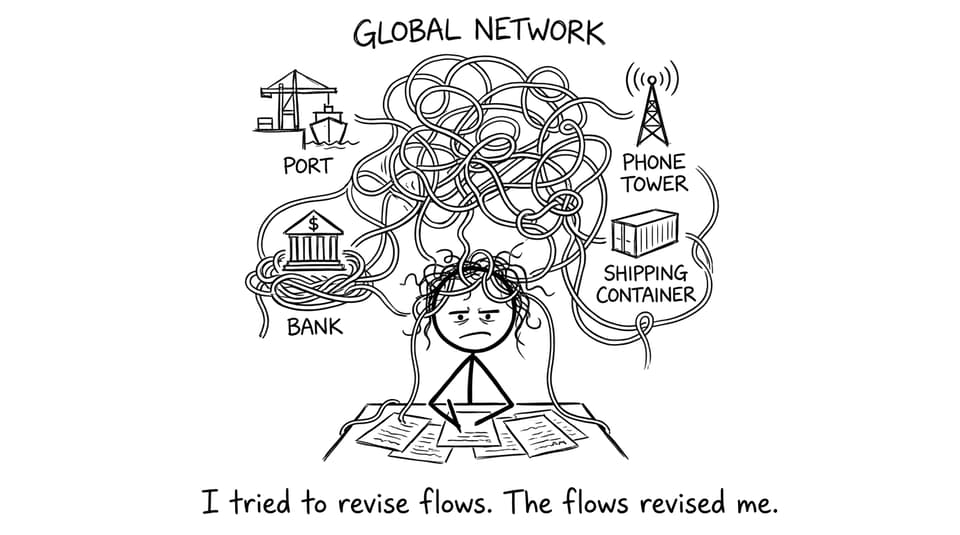
That web is global networks: the flows of goods, money, information, and people that link places together. For IB exams, the big idea is simple: when a place plugs into powerful networks, development can accelerate. When it is disconnected or locked into unequal roles, development can stall or become dependent.
IB Geography checklist: what to mention in an exam answer
Use this mini checklist to keep your IB Geography explanation focused:
-
Define global networks (connections and flows between places)
-
Name at least 3 network types (trade, transport, finance, digital)
-
Explain how each one changes economic development
-
Evaluate: winners/losers, unequal integration, vulnerability to shocks
If you need a syllabus-aligned refresher, start with IB Geography 4 Power, Places and Networks and the Power, Places and Networks Notes.
Trade networks: the growth engine (and the trap)
Trade networks shape economic development by letting countries specialize and exchange. In IB Geography, this often appears as comparative advantage: producing what you are relatively efficient at, exporting it, and importing what you lack.
When trade links are strong, export income can fund infrastructure, education, and industrial growth. Manufacturing clusters can form. Jobs grow.
But trade also has a darker side for development. Some places become locked into low-value exports, while higher-value processing and branding happens elsewhere. That can reinforce uneven development between core and periphery.
To practice how this becomes an evaluation point, try 4.2 Global networks and flows - IB Questionbank.
Transport networks: the quiet multiplier
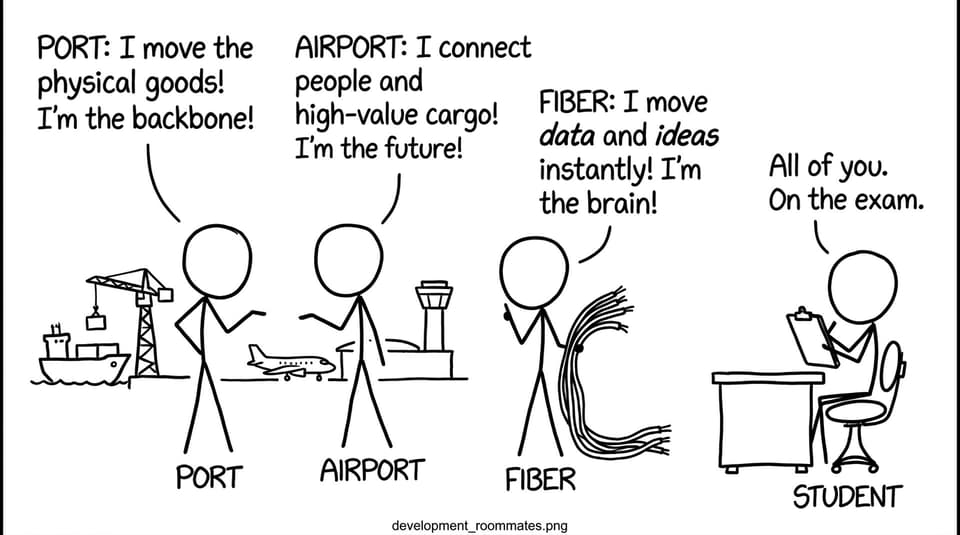
Transport networks are the physical skeleton of global networks: ports, airports, rail, roads, logistics corridors. Strong connectivity lowers time and cost, making exports more competitive and attracting investment.
In IB Geography, a useful line is: transport infrastructure increases accessibility, which increases competitiveness, which can increase development.
Places that become highly connected often evolve into hubs, concentrating services, headquarters, and high-skilled jobs. RevisionDojo’s case-style explanation in Why Do Some Places Become Global Hubs? is a great model for structuring your paragraphs.
Financial networks: fast capital, faster consequences
Global financial networks steer where capital goes: banks, stock markets, global institutions, and investment flows.
Foreign direct investment (FDI) can boost economic development by building factories, transferring technology, and training workers. But finance is also volatile. Places deeply tied to global finance can be exposed to sudden outflows, debt stress, or global downturns.
For an exam-ready overview of connected topics, explore IB Geography 4.2 Global Networks and Flows.
Digital networks: development at the speed of signal
Digital networks change economic development by shrinking distance. With broadband and mobile access, firms can reach markets, outsource services, and build platform-based businesses.
In IB Geography, this is where you can score evaluation marks: digital connectivity can leapfrog traditional barriers, but digital divides can widen inequality. If some regions lack reliable internet, skills, or affordability, they fall behind in the fastest-growing sectors.
To revise this sub-topic cleanly, use Notes for 4.2.1 Contemporary Networks and Flows.
Unequal integration: why networks rarely benefit everyone
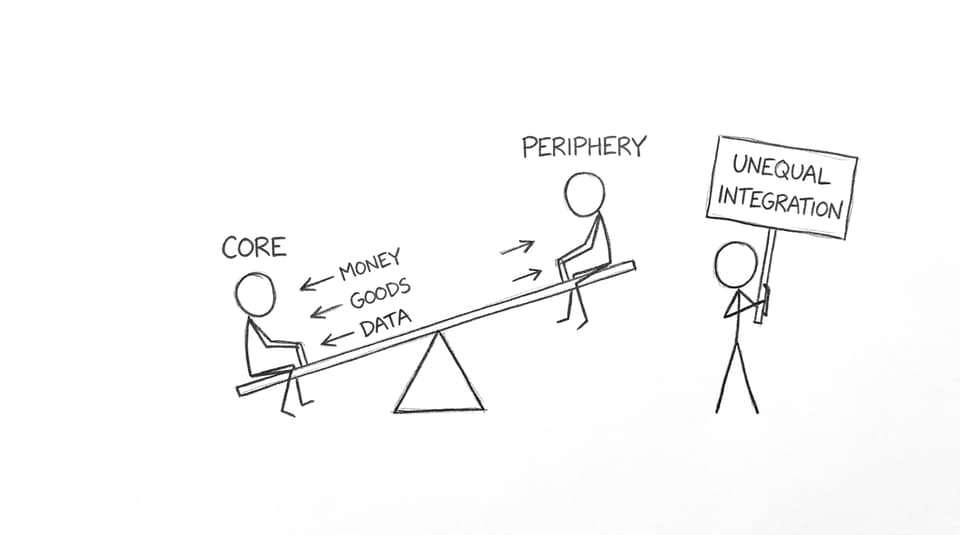
A key IB Geography insight is that networks have power structures. Core regions often control high-value decision-making (finance, design, data), while peripheral regions may supply raw materials or low-wage labor.
So global networks can increase national GDP while also increasing regional inequality. They can create dependency relationships and vulnerability to disruptions.
How RevisionDojo helps you turn this into marks
Knowing the theory is not enough in IB Geography. You need exam structure.
RevisionDojo helps you move from ideas to high-scoring responses with Study Notes, targeted Flashcards, and the Questionbank for timed practice. When you write longer evaluations, AI Chat can help you test counterarguments, and the Grading tools can highlight missing evaluation. If you are building full exam stamina, use Mock Exams and Predicted Papers (without relying on memorization) to practice planning under pressure. And if you are working on fieldwork or extended writing, the Coursework Library and Tutors give you models and feedback.
For more topic-linked exam support, browse All IB Geography posts or the main IB Geography Resources.
Conclusion: the network is the story
In the end, IB Geography is not just about where places are. It is about what they are connected to.
Global networks shape economic development because they determine access to markets, mobility, investment, and information. But they also distribute power unevenly, creating hubs and margins, winners and losers.
If you want to turn this into confident exam writing, use RevisionDojo to practice the exact skills the papers reward: tight definitions, clear mechanisms, and calm evaluation under time pressure.