
Economic crises feel abstract until they show up in ordinary places: a parent’s overtime disappears, the price of staples jumps, and school fundraisers suddenly matter more than ever. In IB Geography, that everyday squeeze is the point. Economic shocks are not just “finance news”; they are stress tests for how resilient societies really are, at household, national, and global scales.
What this means in IB Geography
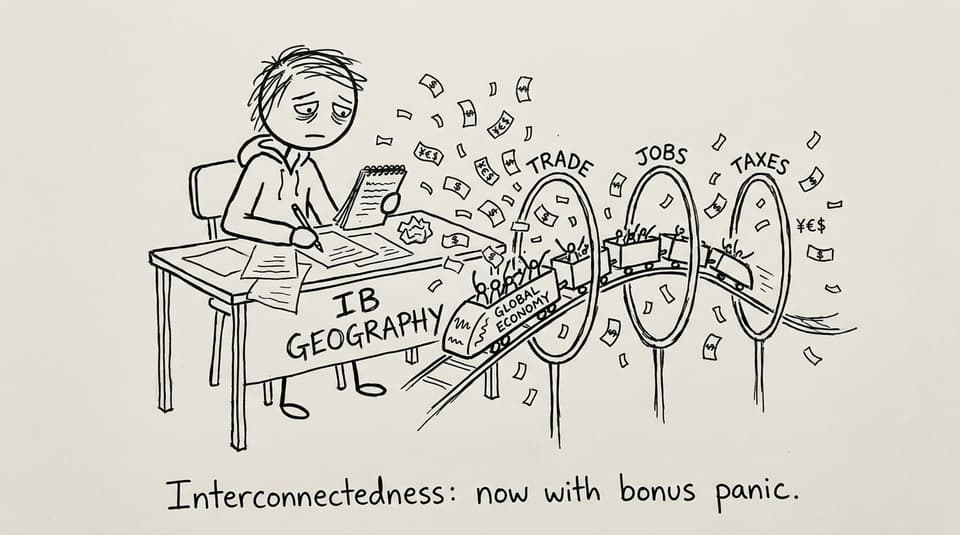
In IB Geography, especially the Global Risks and Resilience unit, an economic crisis is usually defined by sharp downturns: recession, financial instability, unemployment spikes, and falling trade. Because the world economy is tightly connected, shocks spread fast, weakening global resilience (the ability to anticipate, absorb, recover, and adapt).
If you want a quick refresher on resilience language, use What Is the Role of Resilience in Managing Global Risks? alongside the Global Risks and Resilience overview.
Exam checklist: how economic crises reduce resilience
Use this fast checklist in IB Geography essays and 10-mark responses:
-
Livelihoods weaken (unemployment, underemployment, informal work hit hardest)
-
State capacity shrinks (lower tax revenue, higher debt, cuts to services)
-
Supply chains fracture (trade disruption, shortages, price volatility)
-
Inequality widens (uneven recovery, social cohesion drops)
-
Risk interactions intensify (economic stress amplifies political and environmental risks)
For practice in exam style, drill these themes in the Global Risks and Resilience Questionbank.
Livelihoods: resilience starts with paychecks
The first crack in resilience is often personal. When firms cut staff or hours, households lose the buffer that helps them cope with other shocks: health emergencies, rent increases, or hazard events. In IB Geography, link this to vulnerability: groups with low savings, insecure contracts, or informal employment are less able to absorb shocks.
An easy evaluation angle: short-term coping strategies (taking on debt, selling assets, pulling students from school) may protect survival now but reduce long-term resilience.
Governments: the budget is also a hazard map
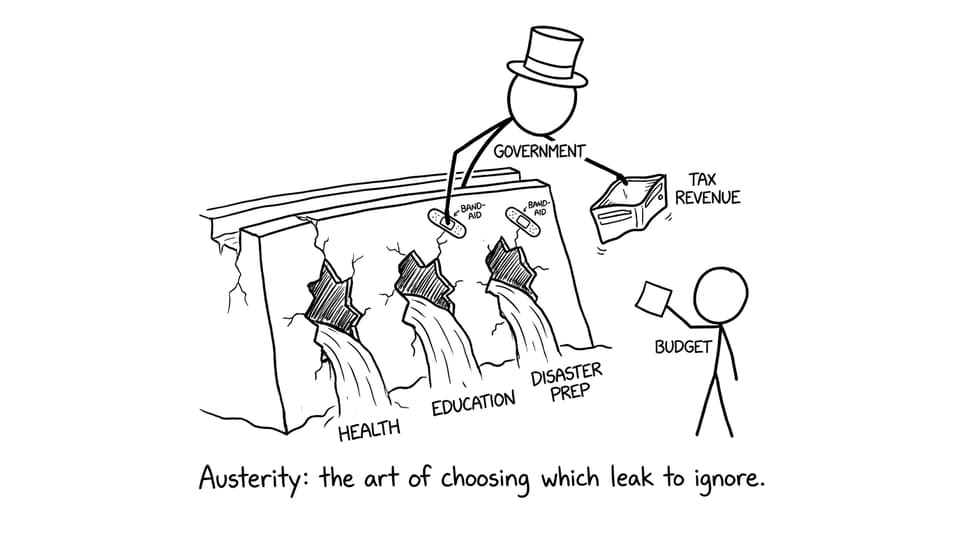
When economies contract, governments collect less tax while spending pressures rise. The result is reduced capacity to fund healthcare, education, infrastructure, and social protection. In IB Geography, this is where you connect economic stability to adaptive capacity: weaker states struggle to prepare for future hazards or invest in long-term adaptation.
To tighten your terminology, review resilience-building pathways in 6.3.2 Building Economic and Technological Resilience Notes.
Trade and supply chains: interdependence cuts both ways
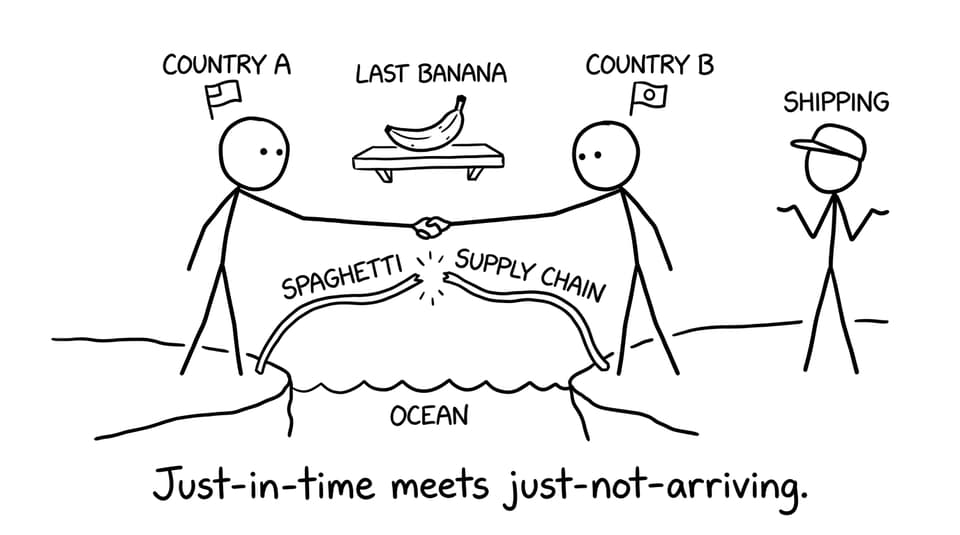
Economic crises disrupt demand, credit, and trade flows. Countries dependent on exports, tourism, or imported essentials can face rapid shortages and price spikes. In IB Geography, this is a classic “globalization” argument: interdependence increases efficiency in normal years, but increases exposure in crisis years.
To build strong synoptic links, pair this with how other risks cascade through systems in How Does Climate Change Increase Global Risk?.
Inequality: why recovery speeds are never equal
Economic crises often deepen inequality. Wealthier households and HICs tend to recover faster due to savings, access to credit, and stronger safety nets. Poorer communities experience longer setbacks in health, education, and employment. In IB Geography, you can evaluate how inequality reduces social cohesion and trust, making coordinated recovery harder.
If you need a wider development lens, practice similar evaluation skills in the Human Development and Diversity Questionbank.
Turning crisis into resilience (the high-mark evaluation move)
Not every impact is purely negative. Some crises trigger reforms: tighter financial regulation, expanded welfare systems, or diversification away from a single export. In IB Geography, that’s your “build back better” argument: resilience improves when recovery plans reduce vulnerability rather than just restoring the old system.
To strengthen your exam technique, use RevisionDojo’s IB Geography Resources hub and then reinforce definitions with the Global Risks and Resilience Flashcards.
Final takeaway: use IB Geography to think like a systems analyst
Economic crises reduce global resilience by weakening livelihoods, shrinking government capacity, disrupting supply chains, and widening inequality. But in IB Geography, the goal is not just to list impacts; it’s to show how one shock travels through connected systems, and how smart policies can reduce vulnerability next time.
If you’re revising this topic, build a fast workflow on RevisionDojo: start with Study Notes, lock in terms with Flashcards, practice under pressure with the Questionbank, and use AI Chat and grading tools to sharpen your evaluation until it sounds like the markscheme.