


The decision nobody notices… until it fails
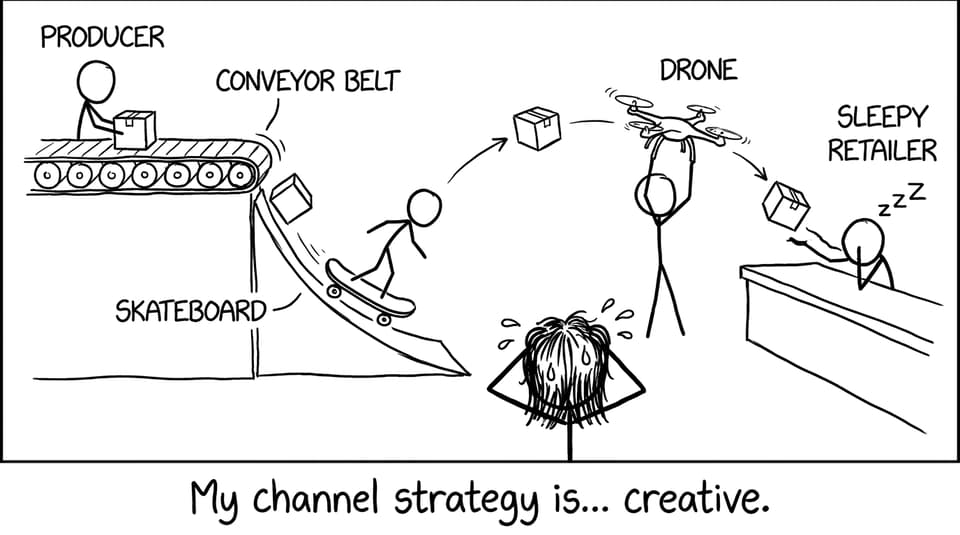
A product can be brilliant and still disappear. Not because the price is wrong or the promotion is weak, but because it is simply hard to buy. In IB Business Management, that invisible make-or-break choice is the distribution channel: the route a product takes from producer to customer. If you remember one thing for exams, it is this: distribution is not “logistics trivia.” It is strategy, because it shapes cost, speed, brand image, and customer experience.
A quick exam checklist for distribution channel choice
Use this mini-checklist when you see “Place” or distribution in an IB Business Management case study:
-
Who is the target customer and how do they prefer to buy?
-
What is the product type (perishable, technical, luxury, convenience)?
-
What are the costs (transport, storage, commissions, platform fees)?
-
How much control does the business want over price and branding?
-
What is the desired market coverage (intensive, selective, exclusive)?
-
What are competitors doing, and does copying them help or hurt?
For syllabus wording and clean definitions, keep the IB Business Management Key Definitions open while you practice.
Target customers decide what “convenient” means
In IB Business Management, “the target market” is not just demographics; it is behaviour. A customer who buys in five seconds on a phone is asking for a different channel than a customer who wants to touch, test, and ask questions.
If the buyer expects speed, online ordering and direct delivery may fit. If the buyer expects reassurance (for example, a technical product), a specialist retailer or trained sales staff might matter more than sheer reach. When you write exam answers, make the channel choice feel like a response to customer habits, not a guess.
If you need to anchor this to the marketing mix, review 4.5.5 Place Notes.
Product characteristics: speed, support, and suitability
Different products “want” different distribution.
-
Perishable goods usually need short, fast channels to reduce spoilage and stock waste.
-
Durable goods can tolerate longer channels and often benefit from intermediaries such as wholesalers and retailers.
-
Expensive/technical goods often need customer support, explanations, and trust-building, which can push firms toward selective distribution or specialist outlets.
-
Convenience products (low involvement, frequent purchase) typically aim for intensive distribution: available everywhere the customer already is.
In IB Business Management, the best answers explicitly connect product features to channel requirements: speed, storage, service, and risk.
Costs and profitability: reach is not free
A wider channel can increase sales, but it can also quietly eat margins. Transport, warehousing, retailer commissions, returns handling, and online platform fees all add up.
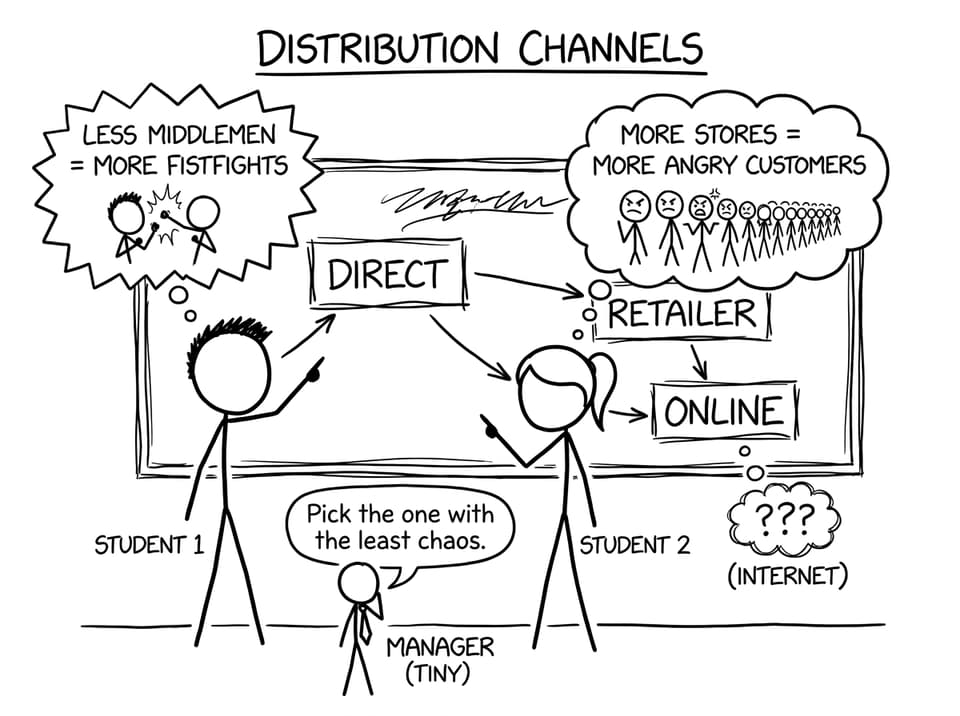
Direct channels can raise margins by removing intermediaries, but they often increase fixed costs because the firm must manage delivery, customer service, and sometimes inventory. Indirect channels can reduce operational burden, but the business trades profit per unit and some brand control for access to established networks.
To build stronger evaluation, link “costs of distribution” to the finance toolkit you use elsewhere in IB Business Management (think: profitability and sustainability, not just revenue). Revision practice helps here: try targeted questions in 4.2 Marketing Planning Questionbank.
Control vs reach: the strategic trade-off
A simple way to phrase it in IB Business Management:
-
Direct distribution gives more control over pricing, branding, and customer experience.
-
Indirect distribution usually gives more market reach, because intermediaries already have locations, traffic, and trust.
Examiners like when you acknowledge the trade-off and then judge it against the business’s objectives (growth, premium positioning, convenience, or differentiation). If you want a broader marketing map, explore the IB Business Management resources hub.
Market coverage goals: intensive, selective, exclusive
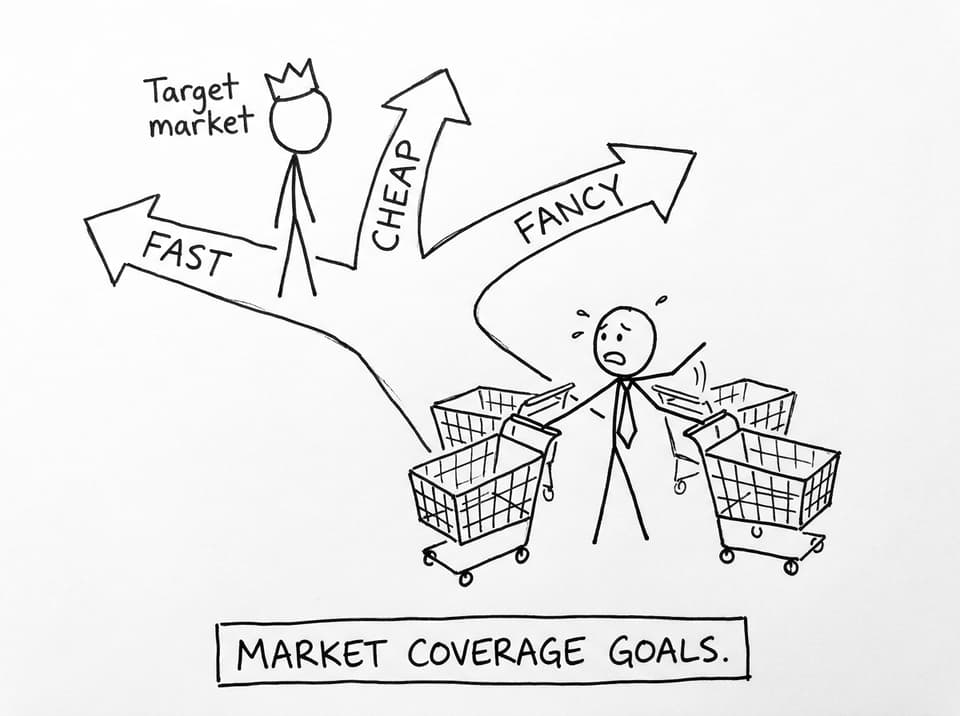
Market coverage is about how “available” the product should be.
-
Intensive distribution aims to be everywhere (great for convenience goods).
-
Selective distribution chooses fewer outlets to balance reach and brand.
-
Exclusive distribution limits outlets to protect a premium image.
Write it as a brand story: the channel signals what the product is. In IB Business Management, that signalling is part of the value proposition.
Competitors: copy, avoid, or out-position
Competitors matter because customers build habits. If rivals dominate supermarkets, a new entrant might differentiate with direct-to-consumer delivery, pop-ups, or partnerships with niche retailers. But if the category standard is a particular channel (for example, certain electronics), refusing it may reduce credibility.
In IB Business Management, the smartest evaluation often sounds like: “It depends on objectives and resources, but competitors change the minimum expectations customers have.”
Bring it home to your exam answers
When a case study asks how a business chooses distribution channels, treat it like a strategic fit problem: customer behaviour, product demands, costs, control, and coverage goals. Then finish with a judgement that sounds like a manager, not a textbook.
To sharpen this fast, use RevisionDojo’s Study Notes for Place, drill definitions with the glossary, and practise application in the Questionbank. If you want to push into exam conditions, build timed sets with Mock Exams and check your structure with AI Chat and Grading tools. That is how IB Business Management stops being content to memorise and becomes decisions you can defend.
Explore more support via the IB Business Management tag archive and the free IB Business Management Predicted Papers.