

If you’ve ever revised a whole science unit, walked into an assessment, and thought, “I studied this... so why does this question feel new?” that moment is basically the MYP in one sentence.
In MYP Sciences, you’re not being trained to recognise a worksheet. You’re being trained to recognise ideas. The programme is built around concept-based learning, which means the facts matter, but they’re never the finish line. Once you see the pattern, MYP science stops feeling like a moving target and starts feeling like a system you can actually prepare for.
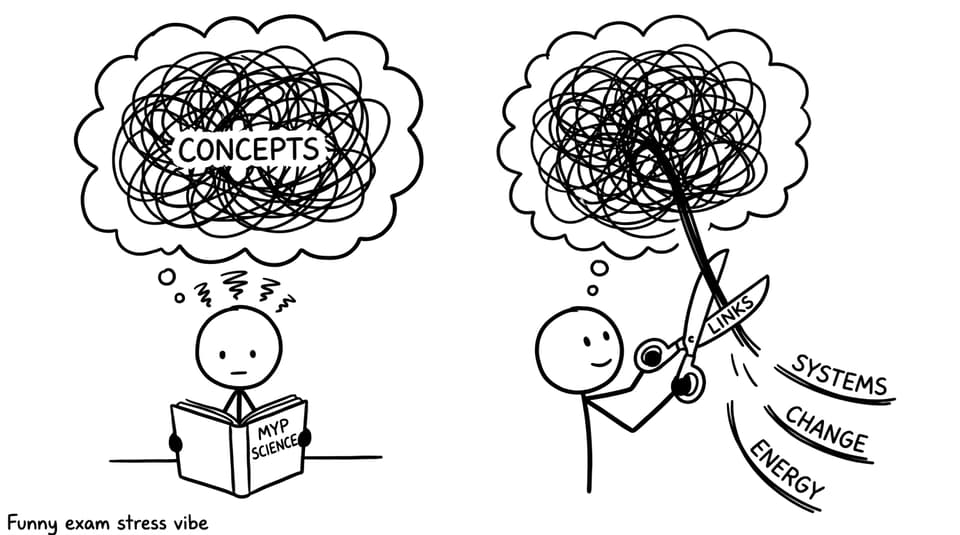
MYP concept-based learning: a quick checklist
Use this before you revise any topic in MYP Sciences:
-
Name the concept (systems, change, relationships, cause and effect, energy).
-
List 2--3 examples from biology, chemistry, and physics where it shows up.
-
Practise explaining the concept in a new context (not the one from class).
-
Answer at least a few exam-style questions and review your reasoning.
-
Turn mistakes into one sentence rules you can reuse.
If you want a structured loop for that, the RevisionDojo MYP hub is a good starting point.
What concept-based learning really means in MYP Sciences
Concept-based learning in MYP flips the usual revision question.
Instead of asking, “What facts do I need to memorise?” you ask, “What idea is this topic an example of?”
So a unit on cells isn’t only “cells.” It’s a way to explore systems (organelles working together), relationships (structure and function), and cause and effect (what happens when a variable changes). A unit on forces isn’t just formulas. It’s relationships between variables and change over time.
The content shifts year to year. The concepts stay useful across your whole MYP journey.
For broader programme context, this breakdown of MYP Sciences curriculum (Biology, Chemistry, Physics) helps you see how the pieces fit.
Why MYP uses concepts: transfer beats familiarity
The hidden goal of MYP Sciences is transfer.
Transfer means you can take what you know and use it somewhere you haven’t rehearsed. Real science works like that. And MYP assessments often work like that too.
That’s why questions can feel “broader” than classwork. They’re not testing whether you remember the example your teacher used. They’re testing whether you can recognise the concept underneath and apply it to a new scenario.
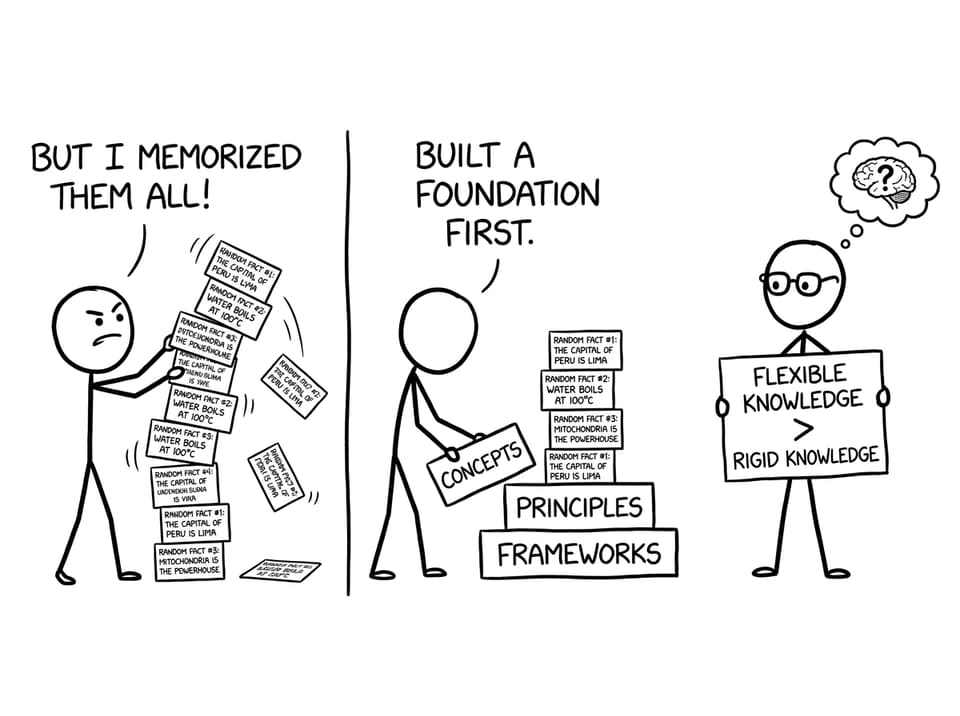
This is also why pure memorisation tends to stall out. You might know a definition perfectly, but if the context changes, your answer can collapse.
If that sounds familiar, read how to revise for MYP Sciences without memorising everything and borrow the idea of practising explanation, not just recall.
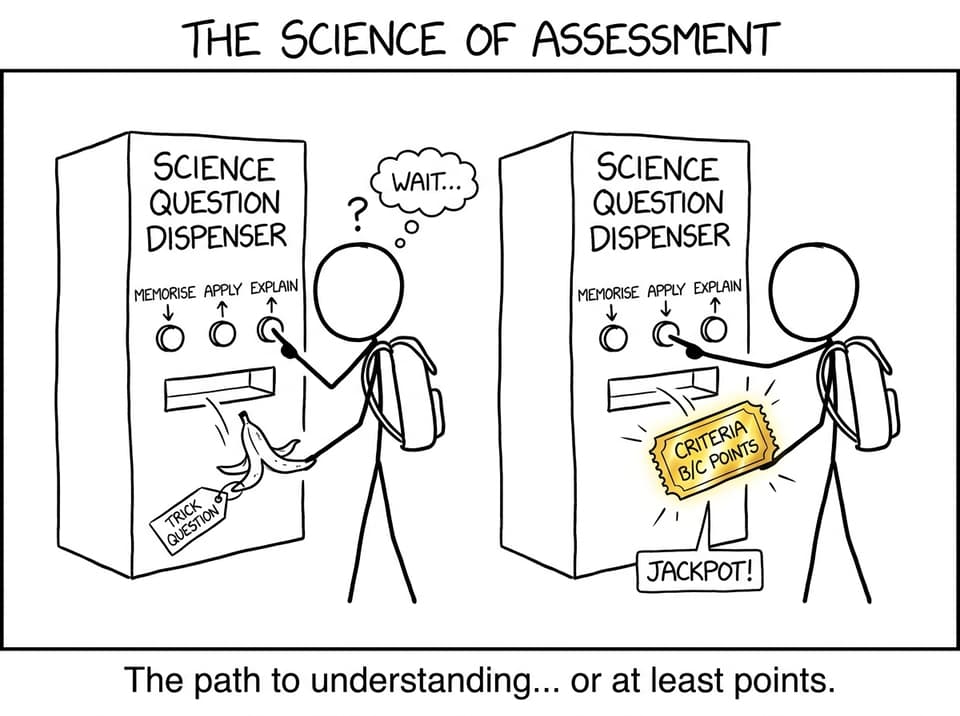
How MYP concept questions show up in exams
A concept-based MYP question often does at least one of these:
-
Introduces a new scenario you haven’t seen.
-
Blends ideas from more than one unit.
-
Rewards explanation and reasoning over listing facts.
For example, instead of “Define diffusion,” you might be asked to explain how diffusion changes outcomes in an unfamiliar biological setup, or to link diffusion to a data trend.
That’s why practice matters. On RevisionDojo, the Questionbank is designed for exactly this kind of transfer: you practise applying concepts, then tighten your reasoning with feedback.
The power move: using MYP concepts across biology, chemistry, and physics
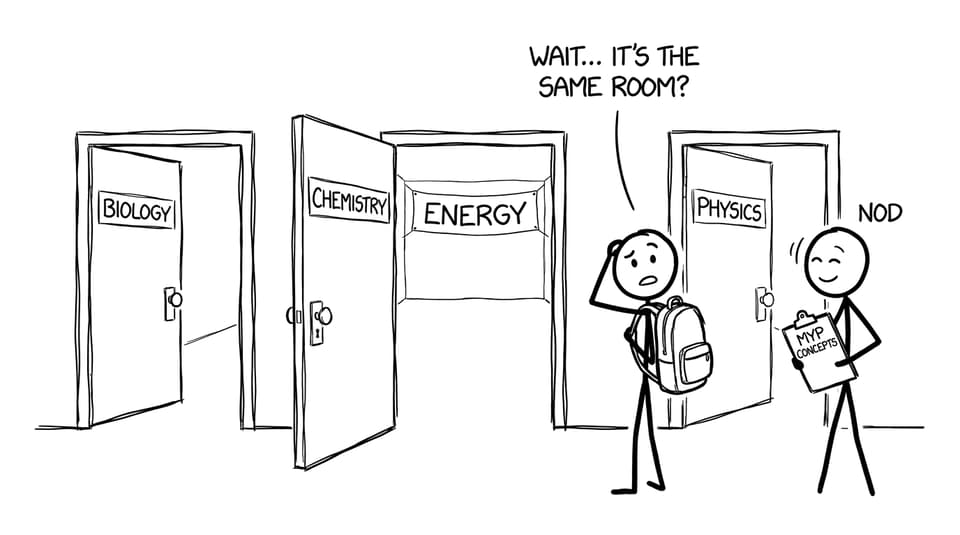
One of the most underrated exam advantages in MYP Sciences is that concepts travel.
-
Energy appears in ecosystems, reactions, and motion.
-
Systems applies to cells, circuits, and Earth processes.
-
Change sits behind rates, adaptation, and forces.
If you revise by concept, you end up revising three subjects at once, in a way that actually sticks.
Try pairing resources for this: use MYP Biology resources for one concrete example, then contrast it with MYP Chemistry resources. The goal isn’t to collect more notes. It’s to train your brain to spot the same idea wearing different clothes.
How to revise for MYP concept-based science (without burning out)
A simple MYP routine that works:
-
Study Notes (10 min): rebuild the core idea fast.
-
Questionbank (25 min): practise applying it to unfamiliar prompts.
-
Error log (10 min): write one rule from each mistake.
-
Flashcards (10 min): keep key terms and relationships alive.
RevisionDojo supports that loop naturally with Study Notes, Flashcards, AI Chat, and Grading tools, plus Mock Exams and Predicted Papers when you want timed stamina and exam realism.
If you want a fully structured schedule, use MYP eAssessments: 30-day study plan. It’s practical, repeatable, and very MYP-aligned.
The shift that makes MYP Sciences click
The breakthrough in MYP Sciences is quiet: you stop chasing every detail and start chasing the idea.
Ask, “Which concept is this testing in MYP?” then prove you can apply it. Build that habit with targeted practice, feedback, and short review loops.
When you’re ready to make that routine simple, start with RevisionDojo’s Questionbank and the MYP hub--and let concept-based learning become the easiest part of your exam prep.